Bird
Bird
White-faced Whistling Duck
Dendrocygna viduata
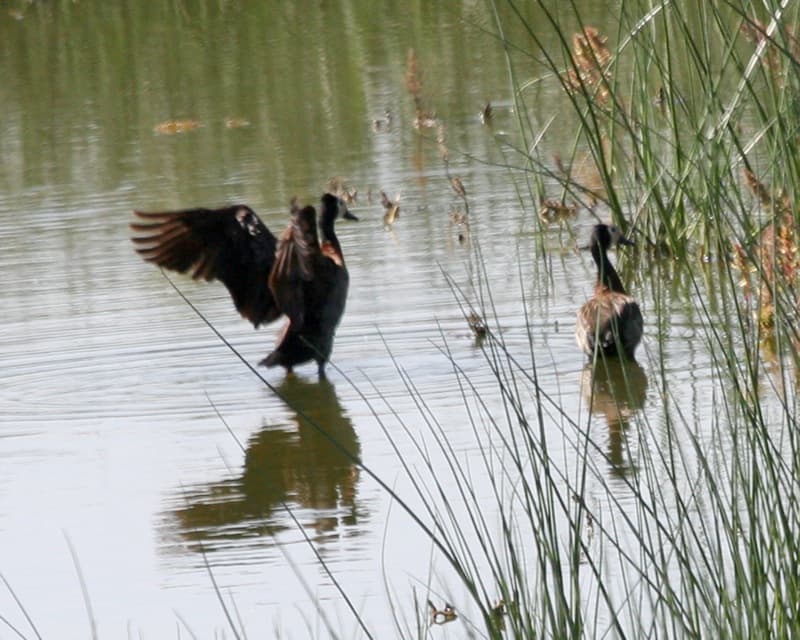
The White-faced Whistling Duck is a striking, gregarious duck of Trinidad's freshwater wetlands, its bold white face contrasting with a black crown and chestnut breast, usually seen in tight, vocal flocks moving between feeding grounds at dusk.
The White-faced Whistling Duck is a striking, gregarious duck of Trinidad's freshwater wetlands, its bold white face contrasting with a black crown and chestnut breast, usually seen in tight, vocal flocks moving between feeding grounds at dusk.
Identification
A medium-sized duck around 43 to 48 cm long, with a diagnostic pure white face and foreneck sharply set off against a black crown and hindneck, a chestnut breast and upper back, and finely barred black-and-white flanks. The long legs and upright, long-necked posture are typical of whistling ducks. In flight and at rest, flocks are highly vocal, giving frequent whistling calls that carry well over wetland habitat.
Ecology
Highly gregarious, the White-faced Whistling Duck typically occurs in dense, tightly packed flocks on freshwater marshes, floodplains, and rice fields, feeding by dabbling and grazing on seeds, aquatic vegetation, and grain, often moving between daytime roosts and nighttime feeding grounds. It nests on the ground in dense marsh vegetation, and pairs form strong bonds, with both parents tending the brood.
Status in T&T
Found on freshwater wetlands and rice-growing areas of Trinidad, generally less numerous locally than the Black-bellied Whistling Duck but present in suitable habitat. It is not threatened. It falls under the "Ducks, Wild" game category in the Second Schedule of the Conservation of Wildlife Act, but the Waterfowl State Game Licence category has been revoked since at least the 2019-2020 season, so hunting it is currently prohibited T&T-wide.
Threats
- Wetland and rice-field habitat loss
- Illegal hunting