Bird
Bird
Black-collared Hawk
Busarellus nigricollis
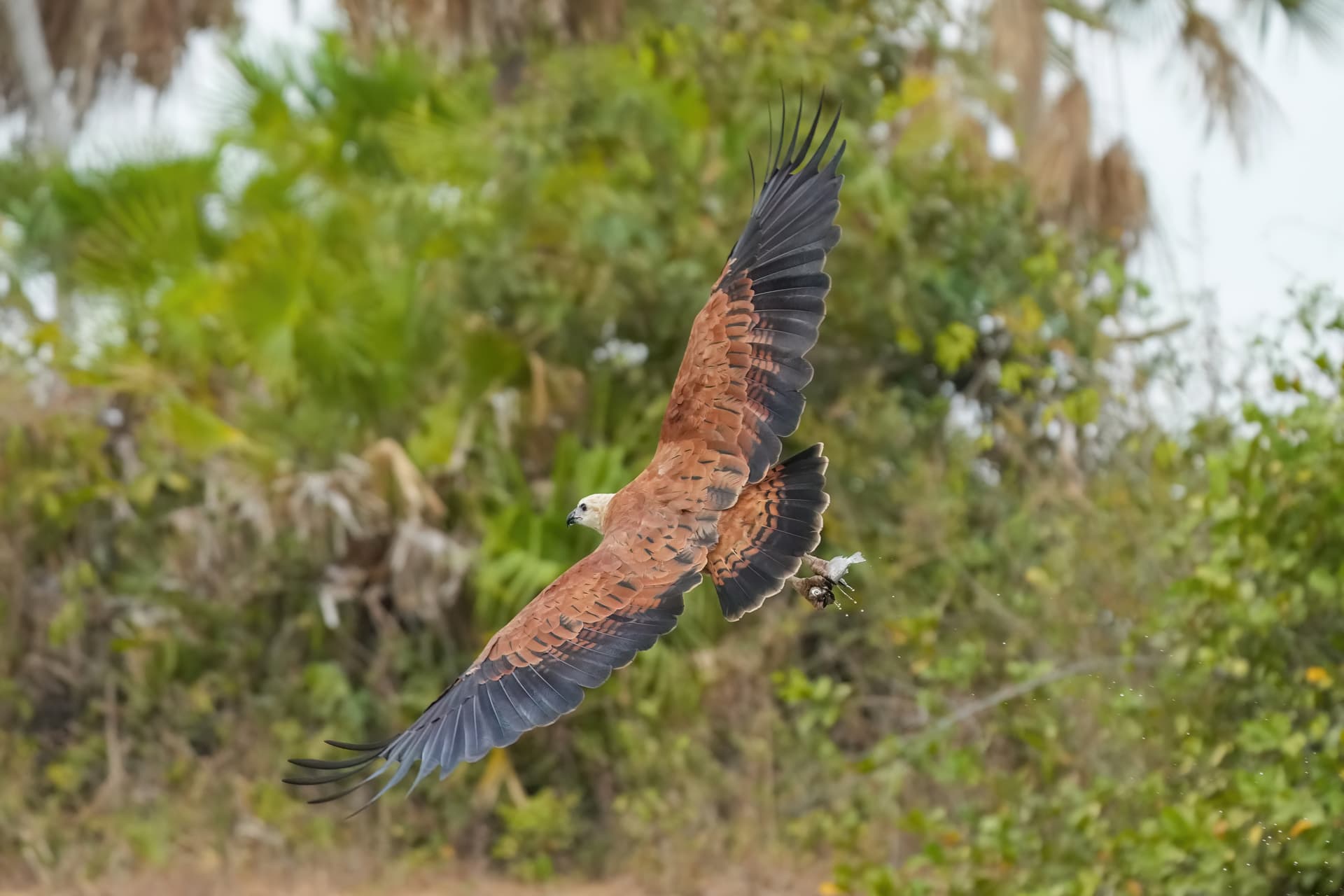
The Black-collared Hawk is a striking, specialist fish-eating raptor of freshwater and coastal wetlands in Trinidad, immediately identifiable by its vivid rufous-cinnamon plumage, white head, and diagnostic black crescent-shaped collar across the upper breast.
The Black-collared Hawk is a striking, specialist fish-eating raptor of freshwater and coastal wetlands in Trinidad, immediately identifiable by its vivid rufous-cinnamon plumage, white head, and diagnostic black crescent-shaped collar across the upper breast. Superficially resembling an osprey in its fish-hunting habits, it is a buteo with highly specialised adaptations for catching fish at the water surface, including rough-soled feet for gripping slippery prey. Found in mangrove edges, freshwater swamps, and coastal lagoons, it is one of the most distinctive raptors of T&T's wetland habitats.
Identification
The Black-collared Hawk measures 46 to 56 cm. The plumage is vivid rufous-cinnamon on the body and wings, contrasting sharply with a white head and the diagnostic black necklace across the upper breast from which it takes its name. The flight feathers are dark brown-black, visible as dark wingtips in flight. The tail is barred rufous and dark. The face is bare and pale yellow around the eye. In flight the rufous body and white head are immediately distinctive at a distance. Juveniles are streaked brown and less cleanly patterned, lacking the sharp white head of adults.
Ecology
Black-collared Hawks are specialist fish hunters, hunting over shallow water by soaring slowly and then dropping feet-first to the surface to snatch fish, much like an osprey but typically in shallower, more vegetated waters. The feet have rough, spicule-covered soles to help grip slippery fish, convergently similar to the adaptations of the osprey. They also take frogs, snakes, and large aquatic invertebrates. They are generally solitary outside the breeding season and maintain territories along water margins. Nests are large stick platforms placed in trees near or over water.
Status in T&T
The Black-collared Hawk is an uncommon resident of Trinidad found in freshwater swamps, mangrove margins, coastal lagoons, and large river edges. It does not occur on Tobago. Key sites include the Caroni and Nariva wetland systems. The species is fully protected under the Conservation of Wild Life Act and is not a game species. Wetland loss and water pollution reducing fish prey are the primary concerns for its status in T&T.
Threats
- Freshwater wetland drainage and coastal development
- Water pollution reducing fish prey
- Nest tree loss at wetland margins