Bird
Bird
Caribbean Coot
Fulica caribaea
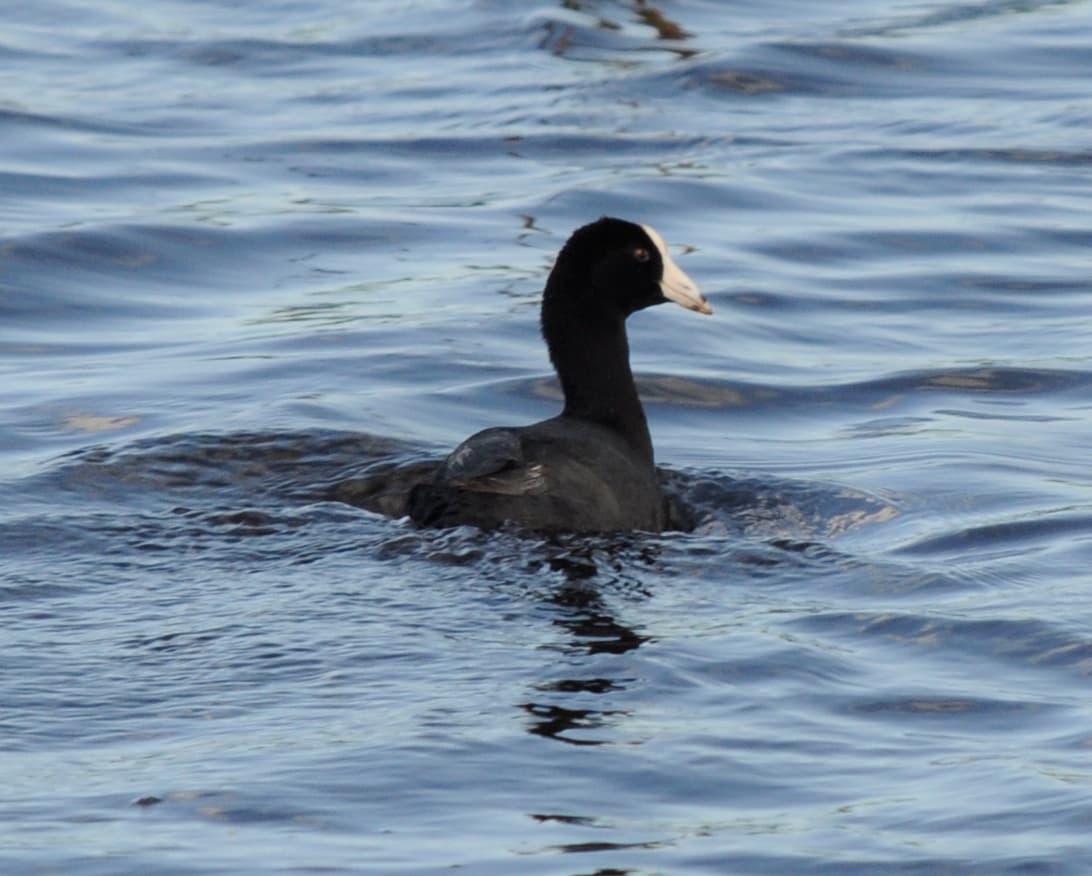
The Caribbean Coot is a dark, duck-like waterbird of freshwater ponds, lagoons, and marshes across Trinidad and Tobago, distinguished from the closely related American Coot mainly by the extent of white on its frontal shield, a feature debated by taxonomists as either a full species or a variant of a single widespread coot.
The Caribbean Coot is a dark, duck-like waterbird of freshwater ponds, lagoons, and marshes across Trinidad and Tobago, distinguished from the closely related American Coot mainly by the extent of white on its frontal shield, a feature debated by taxonomists as either a full species or a variant of a single widespread coot.
Identification
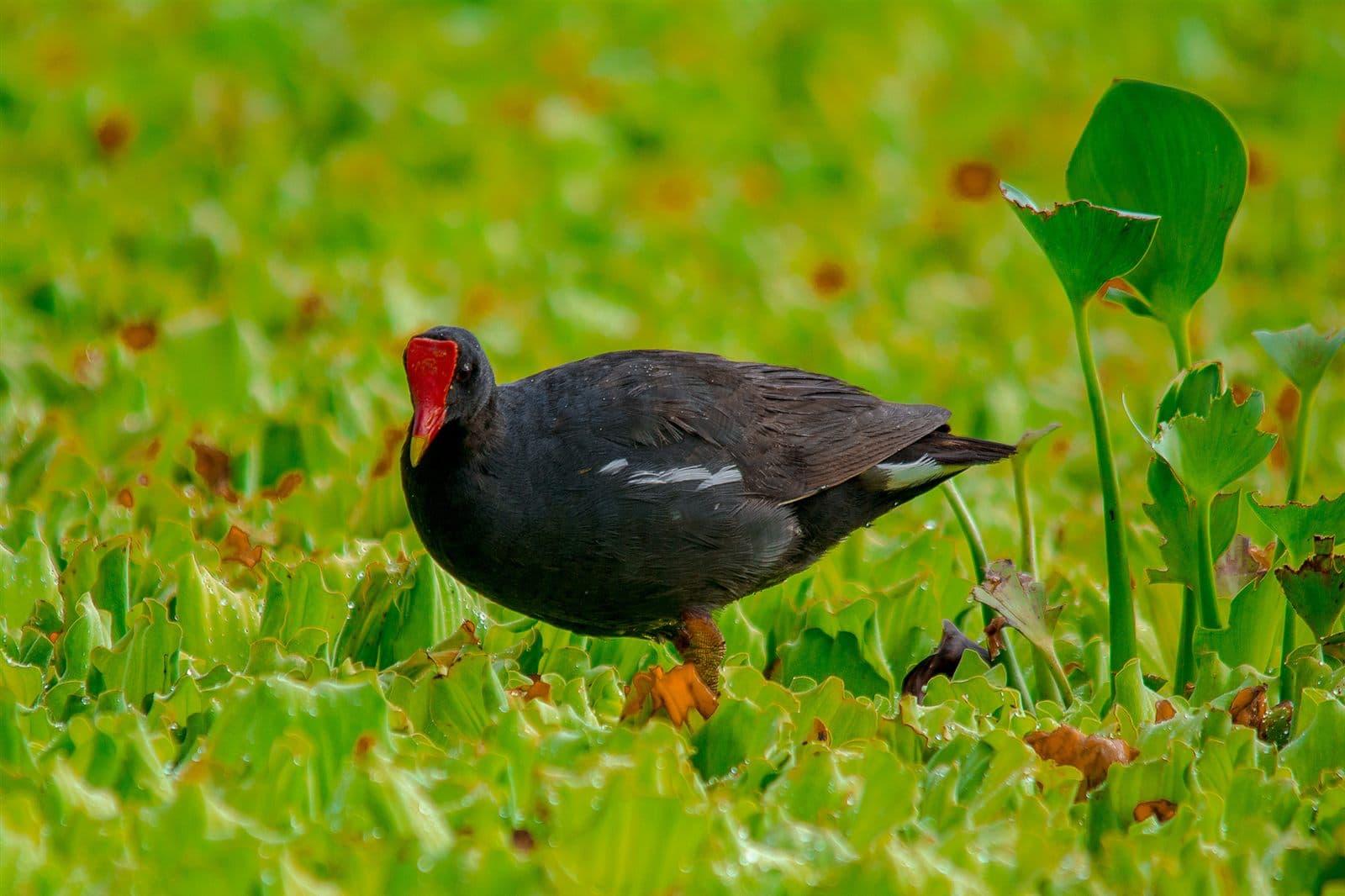
A medium-sized waterbird around 33 to 38 cm long, entirely slate-black with a short, thick white bill and a broad, extensively white or pale frontal shield extending well up the forehead, larger and cleaner white than the small reddish-topped shield of the American Coot. The legs are greenish with distinctive lobed toes adapted for swimming, and the eyes are red.
Ecology
The Caribbean Coot feeds on aquatic vegetation, seeds, and small invertebrates, dabbling at the surface and diving in freshwater ponds, lagoons, and marshes, often in the company of other waterbirds. It swims buoyantly, using its lobed toes for propulsion, and can dive briefly to reach submerged vegetation. It builds a floating or emergent platform nest anchored to marsh vegetation, and is generally social, forming loose groups on suitable open water.
Status in T&T
Found on freshwater ponds, lagoons, and marshes on both Trinidad and Tobago, generally in modest numbers at suitable wetland sites. It is not threatened. It is protected under the Conservation of Wildlife Act and is not a game species.
Threats
- Freshwater wetland pollution and habitat loss