Bird
Bird
Blue-winged Teal
Spatula discors
The Blue-winged Teal is a small, fast-flying dabbling duck that visits Trinidad and Tobago's wetlands as a non-breeding migrant from North America, one of the most numerous and long-distance-travelling of the Nearctic ducks that pass through the Caribbean each year.
The Blue-winged Teal is a small, fast-flying dabbling duck that visits Trinidad and Tobago's wetlands as a non-breeding migrant from North America, one of the most numerous and long-distance-travelling of the Nearctic ducks that pass through the Caribbean each year.
Identification
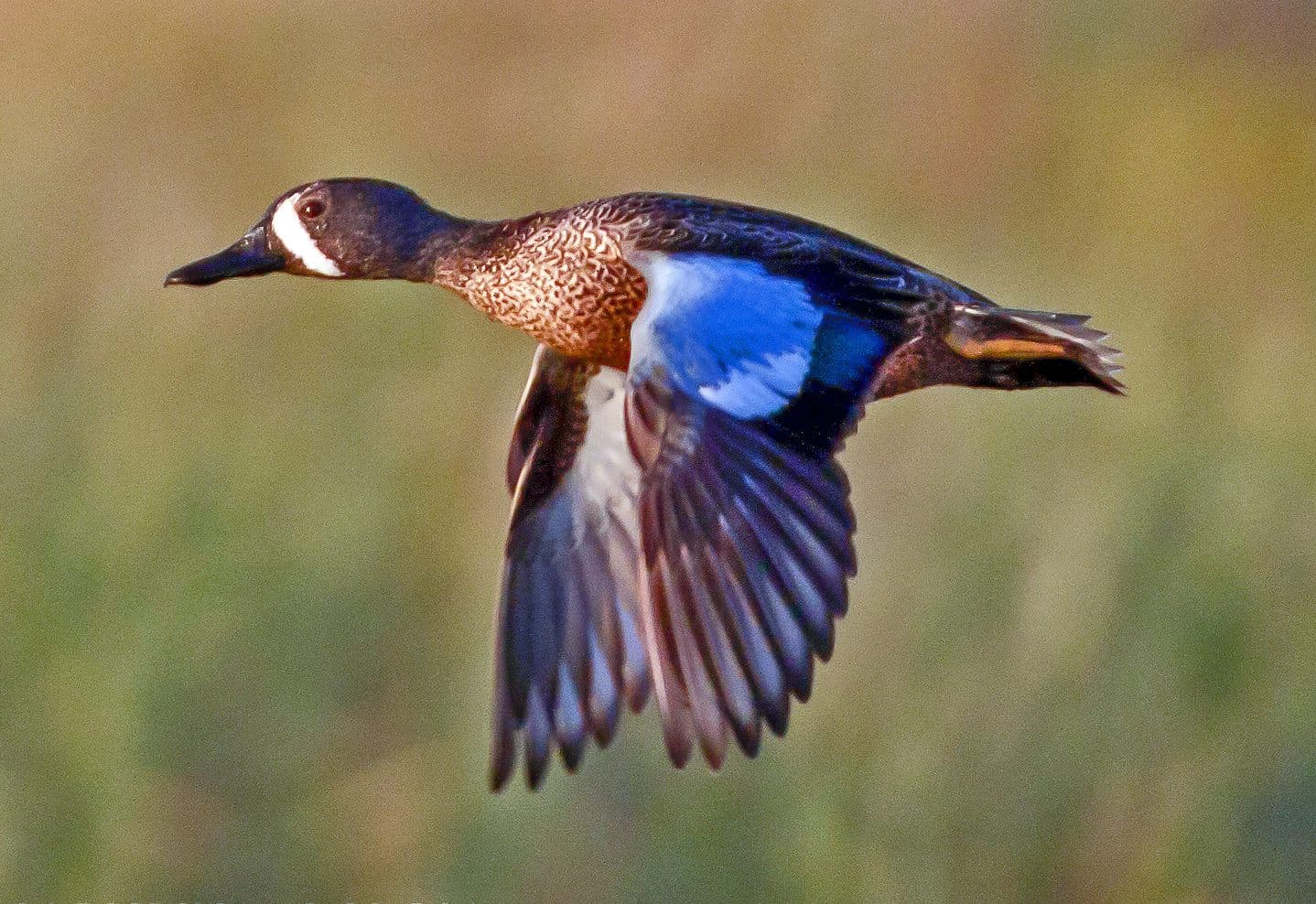
A small duck around 36 to 41 cm long. Breeding males show a distinctive white crescent on the face in front of the eye, a slate-grey head, and mottled brown body, but are often seen in T&T in eclipse or non-breeding plumage resembling the mottled brown females. Both sexes show a bold pale blue shoulder patch on the upperwing in flight, the feature giving the species its common name, along with a green speculum.
Ecology
Blue-winged Teal feed by dabbling and up-ending in shallow freshwater wetlands, flooded fields, and marshes, taking seeds, aquatic plants, and small invertebrates. They are highly migratory, breeding across much of North America and undertaking one of the longest migrations of any dabbling duck, with many individuals wintering as far south as northern South America. Flocks travel and roost together, often mixing with other migratory waterfowl at wintering wetlands.
Migration
The Blue-winged Teal does not breed in T&T; birds recorded here are non-breeding winter visitors from North American breeding grounds, present mainly from the northern autumn through spring before returning north. Numbers can be locally significant on suitable wetlands during the winter season, making it one of the more commonly encountered migratory waterfowl in T&T.
Threats
- Wetland habitat loss along the migratory range