Bird
Bird
Black-bellied Whistling Duck
Dendrocygna autumnalis
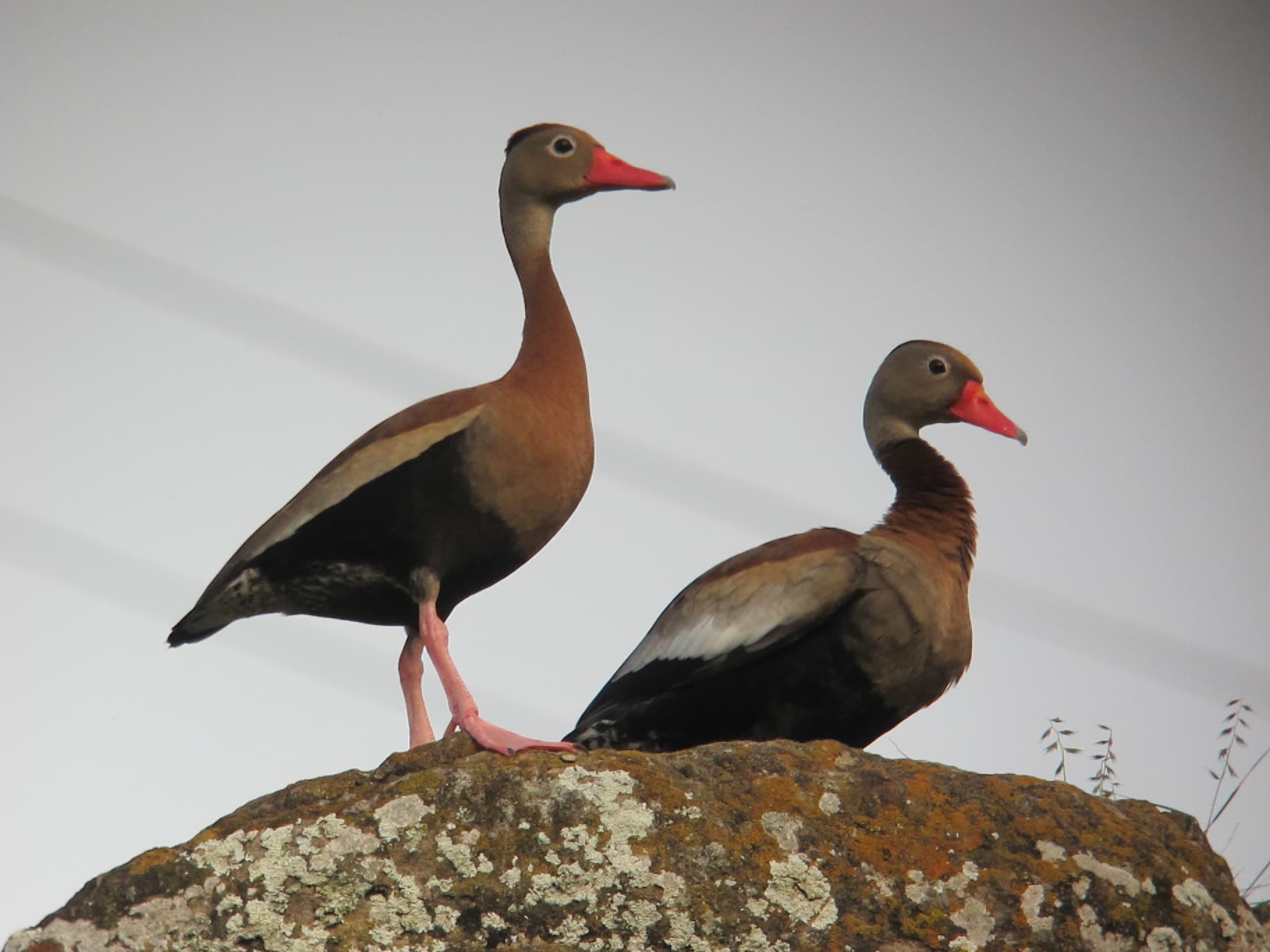
The Black-bellied Whistling Duck is a distinctive, long-legged, tree-perching duck found on freshwater wetlands across Trinidad and Tobago, named for both its dark belly and its high-pitched, whistling flight call, given frequently as flocks move between feeding and roosting sites, often at night.
The Black-bellied Whistling Duck is a distinctive, long-legged, tree-perching duck found on freshwater wetlands across Trinidad and Tobago, named for both its dark belly and its high-pitched, whistling flight call, given frequently as flocks move between feeding and roosting sites, often at night.
Identification
A slender, long-necked, long-legged duck around 47 to 53 cm long, with a rich chestnut-brown breast and back, a black belly and undertail, and a bold white wing patch visible in flight. The bill and legs are bright coral-pink to red, and the face is grey with a thin white eye-ring. Unlike most ducks, it perches readily on trees, fence posts, and rooftops thanks to its relatively upright stance and grasping feet.
Ecology
Highly social and often nocturnal in its movements, the Black-bellied Whistling Duck feeds mainly on seeds, aquatic vegetation, and grain, dabbling in shallow freshwater wetlands, flooded fields, and rice paddies, and often grazing on land at night. It frequently nests in tree cavities as well as on the ground, and pairs form long-term bonds, both sexes sharing incubation and chick-rearing duties. Flocks fly with a distinctive whistling call, especially audible during evening and nighttime movements between roosts and feeding grounds.
Status in T&T
Common on freshwater wetlands, rice fields, and flooded agricultural land across Trinidad and Tobago, including the Caroni and Nariva systems. It is not threatened and has expanded in range and abundance across much of the Americas in recent decades. It is named as a game species (as "Ducks, Ouikiki") in the Second Schedule of the Conservation of Wildlife Act, but the Waterfowl State Game Licence category has been revoked since at least the 2019-2020 season, so hunting it is currently prohibited T&T-wide.
Threats
- Wetland and rice-field habitat conversion
- Illegal hunting