Vines
Vines
Yellow Granadilla
Passiflora laurifolia
Photo: Wikimedia Commons contributor (CC BY-SA 3.0)
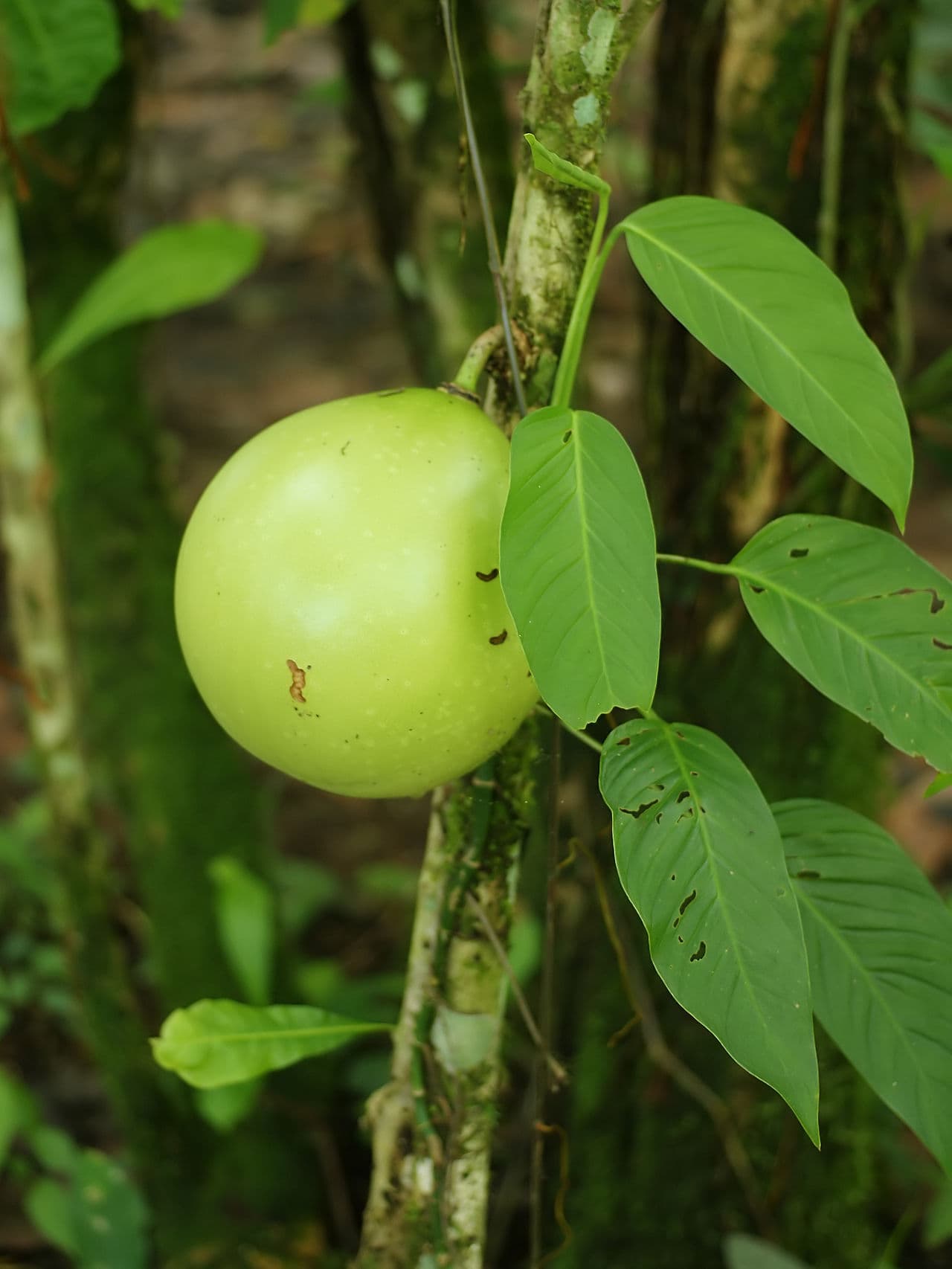
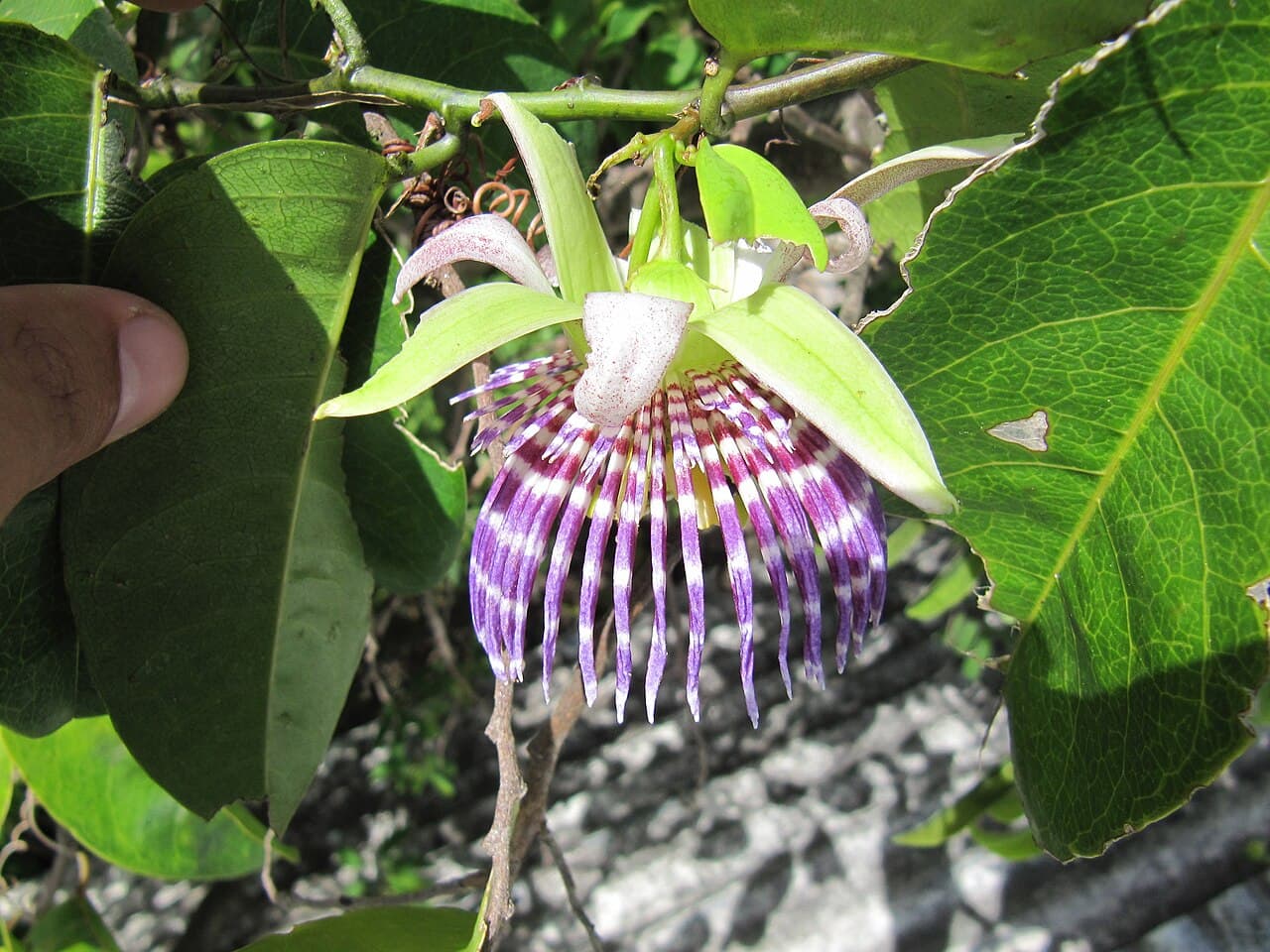
The Yellow Granadilla is a native passion flower vine of Trinidad and Tobago, producing the spectacular, intricately structured flowers characteristic of the Passiflora genus alongside a small, oval, pale yellow fruit whose sweet, gelatinous pulp is eaten fresh or used in drinks.
The Yellow Granadilla is a native passion flower vine of Trinidad and Tobago, producing the spectacular, intricately structured flowers characteristic of the Passiflora genus alongside a small, oval, pale yellow fruit whose sweet, gelatinous pulp is eaten fresh or used in drinks. One of several wild and cultivated passion fruit species in T&T, it grows in humid forest edges and secondary vegetation, its twining tendrils and bright flowers making it a striking component of the forest edge flora. The fruit, though smaller than the cultivated purple passion fruit, is flavoursome and widely collected in the wild.
Description
A vigorous, woody-stemmed climbing vine reaching 6 to 12 metres into the canopy, clinging by coiled tendrils. Leaves are oval to oblong, simple, glossy, dark green. Flowers are the most striking feature: 6 to 8 cm across, with five white petals and five white sepals forming the outer ring, and a corona of thread-like filaments banded in blue, white, and purple surrounding the central reproductive structure. The fruit is oval, 5 to 7 cm long, with a thick, smooth, pale yellow to orange rind and a cavity filled with gelatinous, sweet pulp surrounding many flat seeds. The rind contains aromatic oils.
Ecology
Yellow Granadilla grows naturally in humid forest edges, secondary vegetation, and along watercourses in Trinidad and Tobago. It uses tendrils to climb into the light, draping over shrubs and small trees at forest margins. The complex flowers are pollinated by large carpenter bees and other large-bodied bees that are strong enough to push through the corona to reach the nectar. The fruit is eaten by birds and mammals, which disperse the seeds. In some areas of T&T the vine is considered semi-cultivated: wild plants around villages are tended and harvested.
Use and Culture
The pulp of the Yellow Granadilla is eaten fresh, scooped from the halved rind, and is used to make juice, punch, and ice cream. The fruit has a distinctive, aromatic, sweet flavour somewhat different from the more widely cultivated purple or giant passion fruits. In T&T it is often called "water lemon" in addition to granadilla. The rind is occasionally candied. The vine is a representative of a large and ecologically important genus in T&T's flora; the country has several native and naturalised Passiflora species, all contributing to the diet of frugivorous birds and mammals.
Threats
- Loss of forest-edge habitat to development and clearing
- Competition from introduced Passiflora species in disturbed areas