Vines
Vines
Monkey Ladder
Entada gigas
Photo: Wikimedia Commons contributor · Veracruz, Mexico (CC BY-SA 4.0)
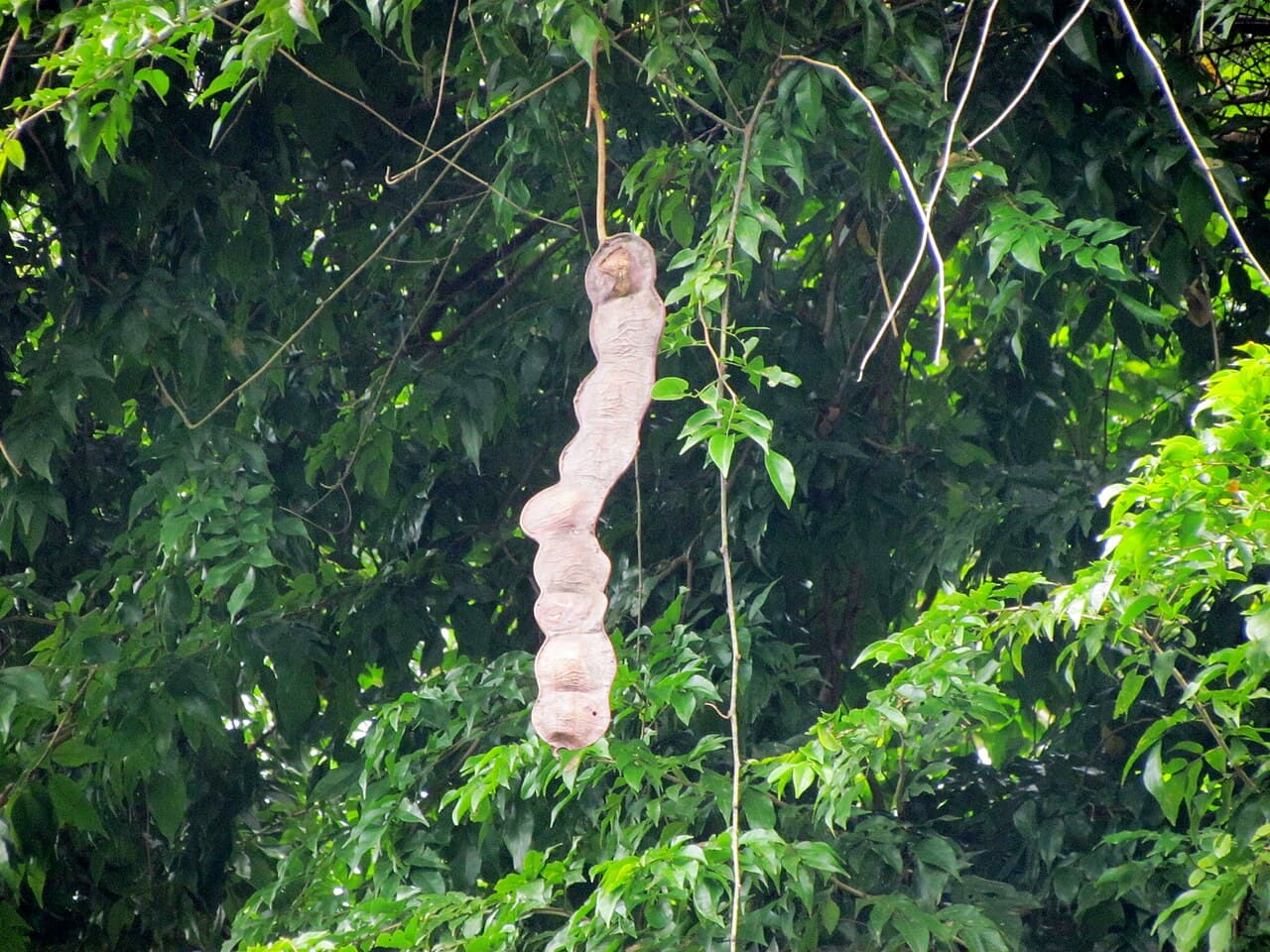
The Monkey Ladder is one of the most dramatic lianas of Trinidad and Tobago's forests, producing the longest seed pods of any plant in the world - woody, flattened, twisted ribbons that can reach 1.5 metres in length and contain large, hard, mahogany-brown seeds.
The Monkey Ladder is one of the most dramatic lianas of Trinidad and Tobago's forests, producing the longest seed pods of any plant in the world - woody, flattened, twisted ribbons that can reach 1.5 metres in length and contain large, hard, mahogany-brown seeds. These seeds, known as sea beans or sea hearts, are dispersed by ocean currents and wash up on beaches worldwide; they have been found on the shores of Ireland, Norway, and the Azores after drifting from the Caribbean. In the forest, the heavy woody stems of mature plants twist up tree trunks and span the canopy like a ladder, giving the vine its common name.
Description
A massive, robust liana with thick, woody, twisted stems that can reach 30 metres or more into the forest canopy. Young stems have a distinctive, deeply fluted or winged cross-section. The bark is grey-brown and fissured. Leaves are bipinnately compound; the leaf tips are modified into tendrils that grip the support tree. Flowers are very small, cream-coloured, and produced in dense, finger-like spikes up to 30 cm long; individually insignificant but produced in large numbers. Pods are extraordinary: flat, woody, and segmented, up to 1.5 metres long and 12 cm wide, each segment containing a single, large, round, hard, mahogany-brown seed about 4 to 6 cm across.
Sea Bean Dispersal
The large, buoyant, hard-coated seeds of Entada gigas are among nature's great long-distance travellers. They fall into streams and rivers, are carried to the sea, and can remain viable while floating for months or even years. Ocean currents carry them from the Caribbean to the shores of Western Europe and beyond; the seeds wash up regularly in Britain, Ireland, and Scandinavia, where they have been prized as lucky charms and used in traditional medicine for centuries. A hollowed-out sea heart is used in the Caribbean as a small container or snuff box.
Forest Role
Monkey Ladder is a component of mature lowland and coastal forest in both Trinidad and Tobago. The massive, woody stems, which can be 10 to 20 cm thick, climb by tendrils to the forest canopy and can dominate the canopy of their host trees. When a tree falls, the connected liana can pull neighbouring trees down with it, creating large gaps. The pods and seeds are eaten by agoutis and other large rodents in the forest understorey. The tough stems have been used as rope and for ladder-making in forest communities.
Threats
- Loss of mature forest habitat to coastal development
- Clearing of large liana-bearing trees reduces canopy connectivity