Bromeliads
Bromeliads
Wild Pine
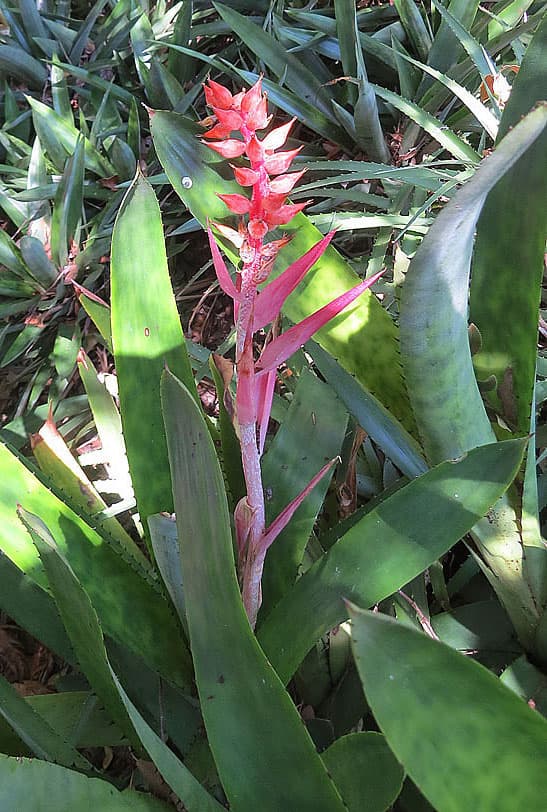
Aechmea aquilega
Photo: BotBln · Berlin Botanical Garden (CC BY-SA 3.0)
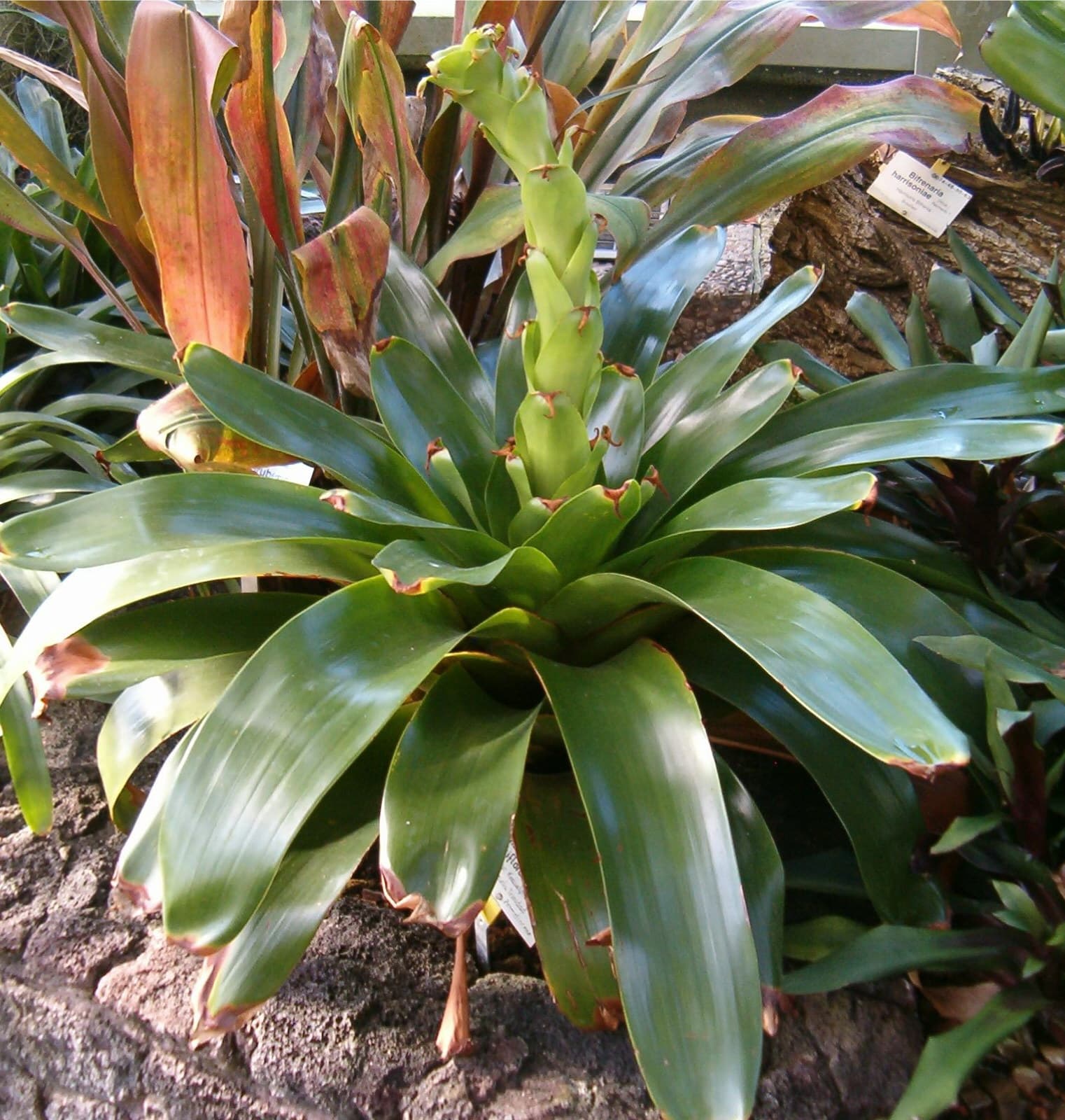
The Wild Pine is one of the most familiar and ecologically important tank bromeliads of Trinidad and Tobago, its stiff, spiny-edged leaves forming a rosette that holds a permanent pool of rainwater at the heart of the plant.
The Wild Pine is one of the most familiar and ecologically important tank bromeliads of Trinidad and Tobago, its stiff, spiny-edged leaves forming a rosette that holds a permanent pool of rainwater at the heart of the plant. This miniature freshwater world - contained entirely within the bromeliad - supports a dedicated community of aquatic insects, frogs, and microorganisms found nowhere else, making each plant a self-contained ecosystem within the forest.
Description
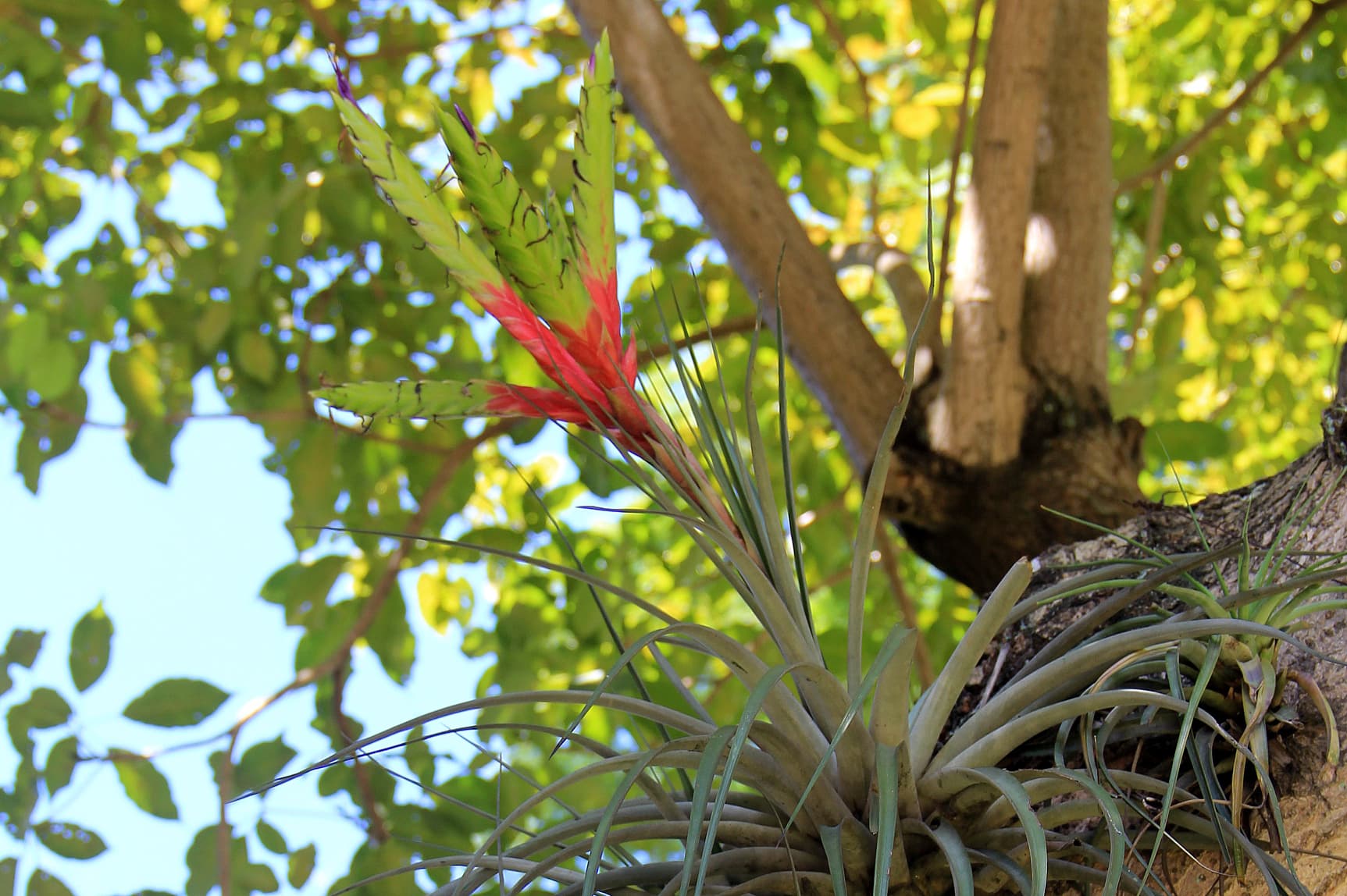
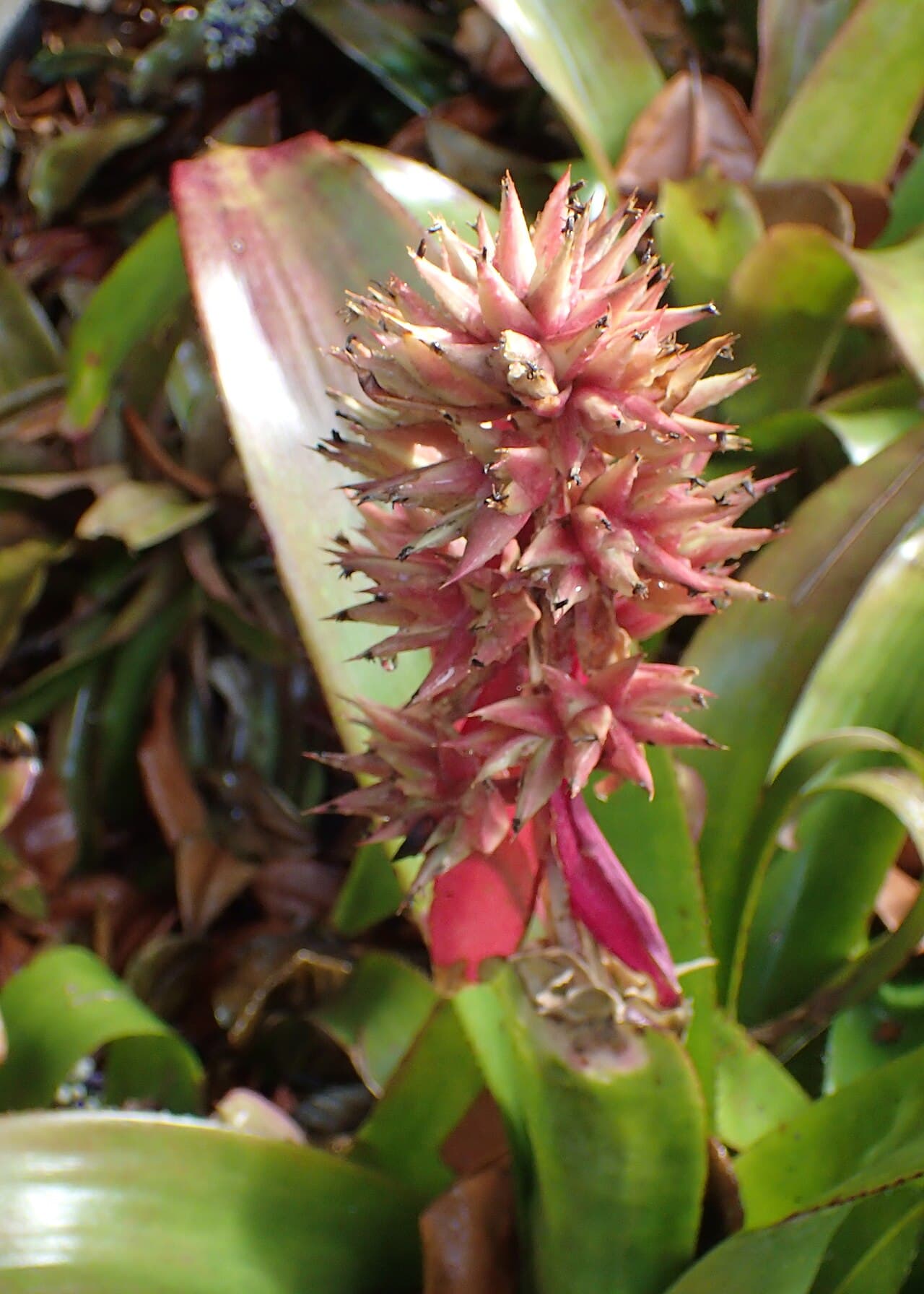
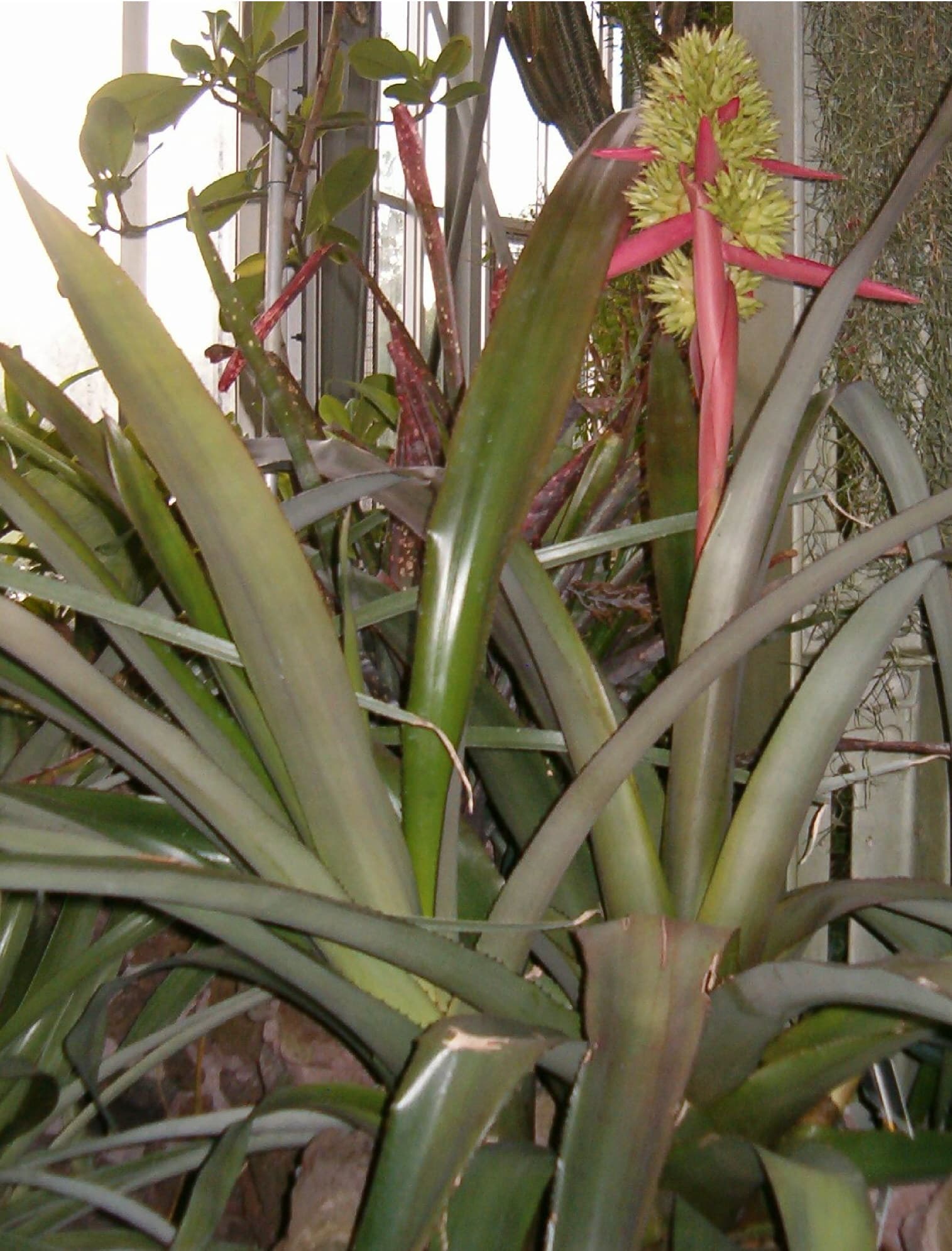
A medium to large epiphytic bromeliad, typically 40 to 80 cm tall when in flower. The leaves are stiff, strap-like, grey-green to green, with small, sharp teeth along the margins. They are arranged in a tight, overlapping rosette that is broader at the base, creating a central well that holds standing water. The inflorescence is a striking spike of pink to red bracts surrounding small purple-blue flowers, rising well above the leaf rosette. After flowering, the parent rosette produces offsets (pups) from the base, which will eventually become independent plants.
The Tank Ecosystem
The water held in the central tank of Aechmea aquilega supports a specialised community known as a phytotelm fauna. Mosquito and other insect larvae develop in the tank water; predatory insects feed on them; frogs such as the Treefrog and smaller species deposit eggs and raise tadpoles within the bromeliad water. Microorganisms, algae, and decaying leaf material caught in the tank create a nutrient-rich soup that feeds back into the bromeliad's root system. This entire food web exists within a volume of water that may be just a few hundred millilitres. In forested areas with high bromeliad density, these tanks collectively represent a significant freshwater resource for the forest invertebrate community.
Ecology and Range
Wild Pine grows as an epiphyte on trees throughout lowland and lower-montane forest on both islands, and also as a terrestrial plant on rocky outcrops and steep slopes where it can anchor in crevices. It tolerates a range of light conditions from partial shade to full sun. "Wild pine" is a general Caribbean term for tank bromeliads and is applied to several species; Aechmea aquilega is among the most common in T&T's forests. Collection for ornamental use is regulated under the Forests Act, which prohibits removal of plants from Forest Reserves without a permit.
Threats
- Wild collection for ornamental use
- Loss of host trees
- Forest humidity reduction