Bromeliads
Bromeliads
Quill Bromeliad
Tillandsia fasciculata
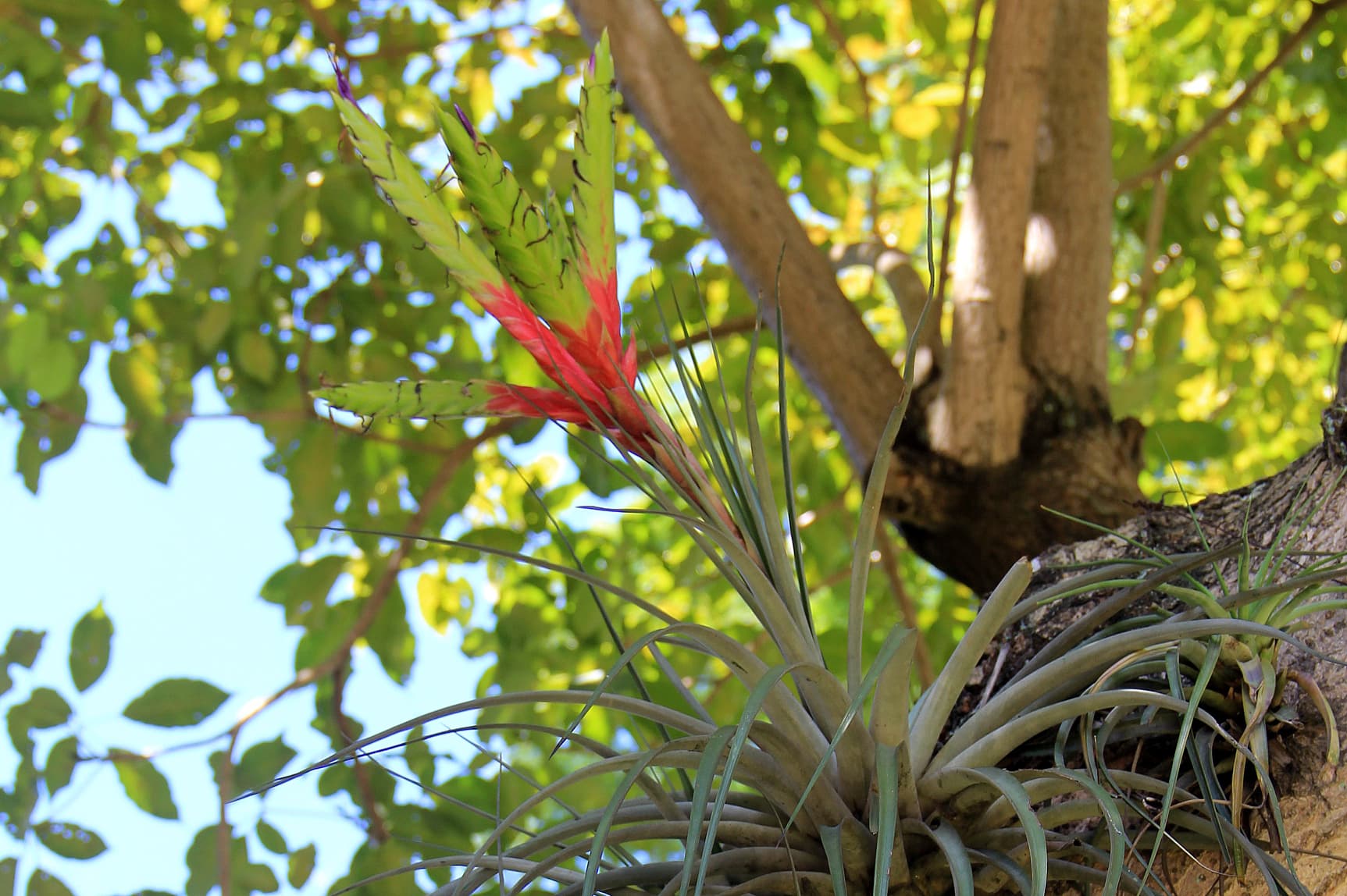
Photo: Wikimedia Commons contributor (CC BY-SA 2.0)
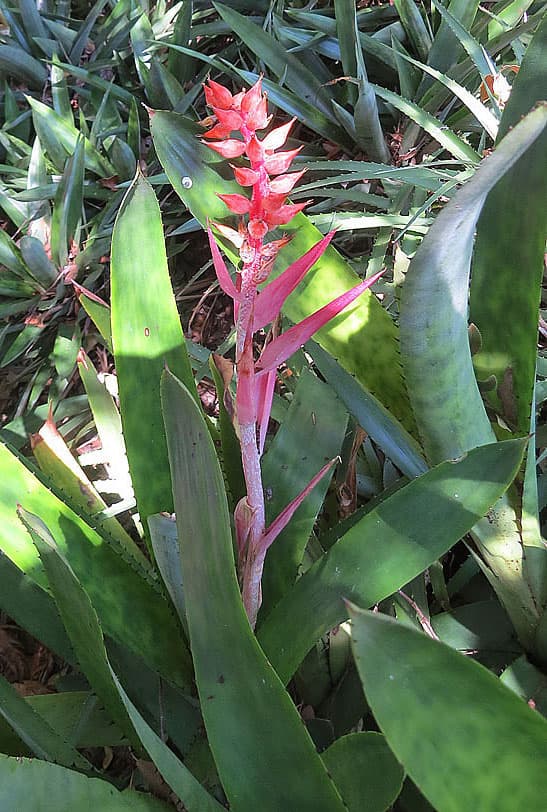
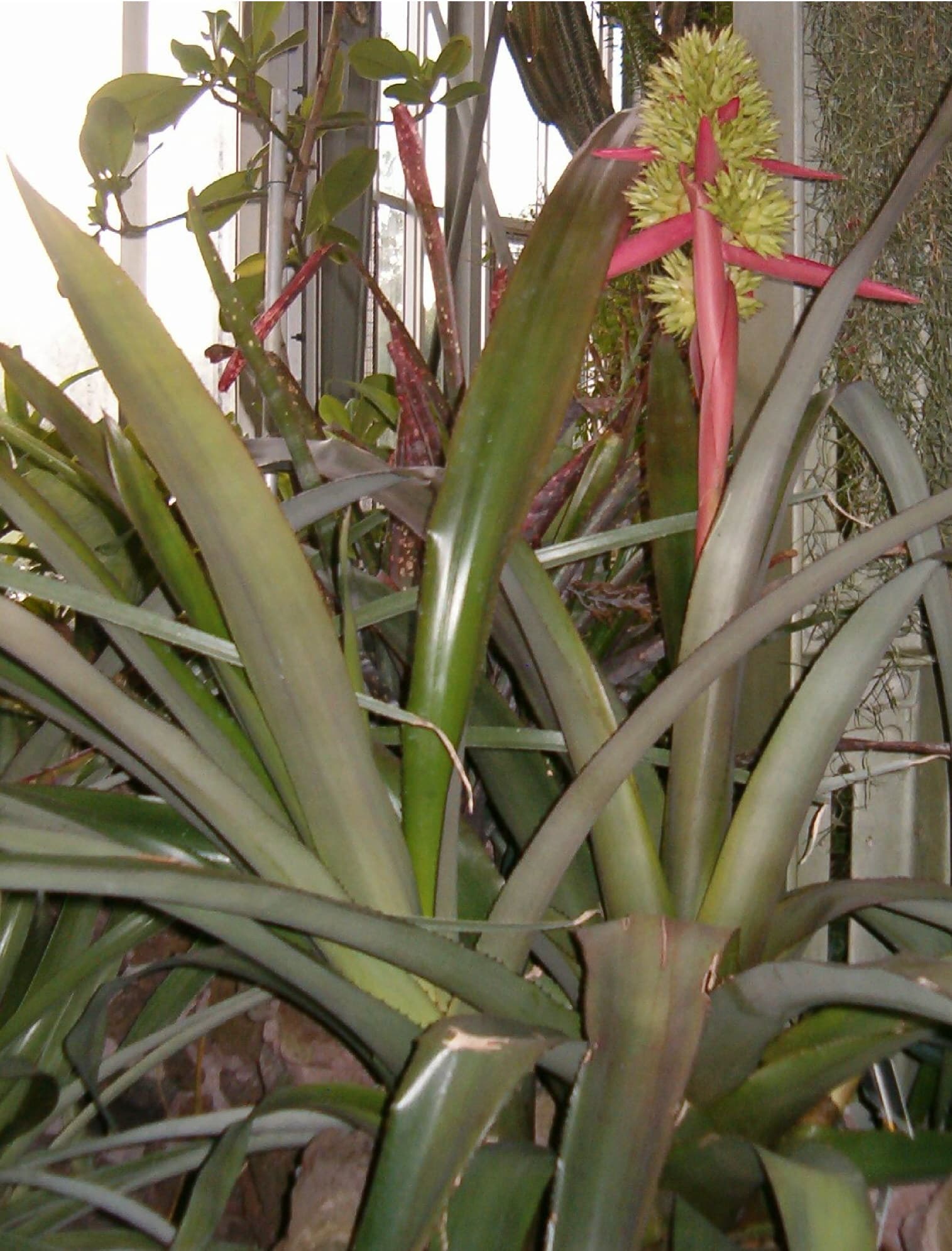
The Quill Bromeliad is one of the largest and most conspicuous epiphytic air plants in Trinidad and Tobago's forests, its stiff, silvery-grey leaves forming a tight rosette from which a showy, multi-branched flower spike emerges in vivid pink, red, and yellow.
The Quill Bromeliad is one of the largest and most conspicuous epiphytic air plants in Trinidad and Tobago's forests, its stiff, silvery-grey leaves forming a tight rosette from which a showy, multi-branched flower spike emerges in vivid pink, red, and yellow. Like all Tillandsia species it is a true air plant - absorbing water and minerals from the atmosphere through specialised leaf scales rather than from soil - and grows attached to tree branches, rock faces, and even telegraph wires in sufficient humidity. It is a cornerstone species of T&T's epiphytic plant community and a reliable indicator of forest health.
Description
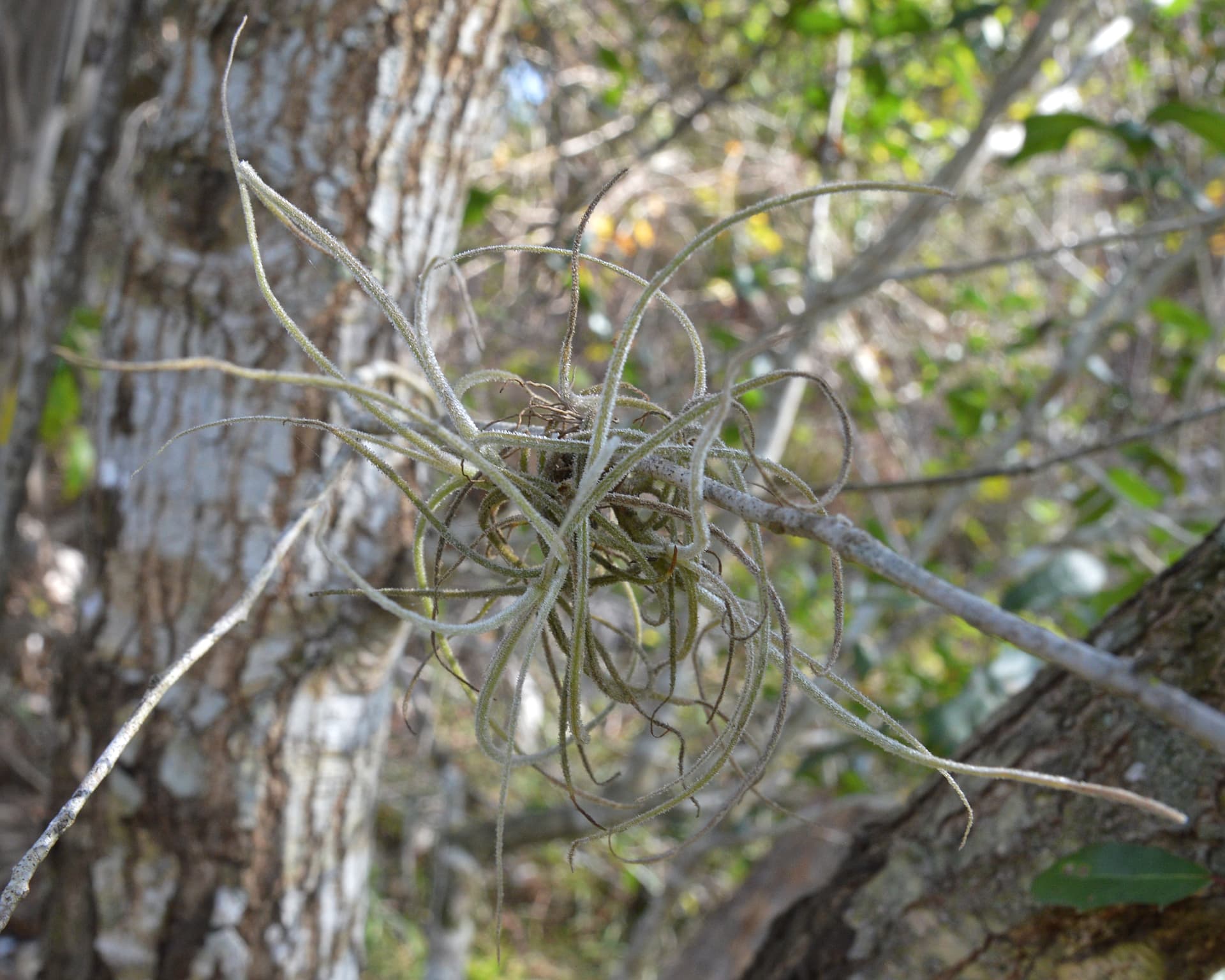
A large, rosette-forming epiphytic bromeliad with stiff, channelled, silver-grey leaves 25 to 50 cm long, tapering to a fine point, arranged in a spreading to erect rosette. The leaf surfaces are covered in dense, plate-like trichomes (scales) that absorb moisture and give the plant its silvery appearance. The inflorescence is the most spectacular feature: a branched spike up to 40 cm tall with flat, paddle-shaped bracts in brilliant pink to red, from which small tubular violet to blue flowers emerge. The flowers are pollinated by hummingbirds and hawk moths. The plant produces no significant central water tank compared to tank bromeliads.
The Tillandsia System
Tillandsia fasciculata belongs to the largest and most diverse bromeliad genus, adapted to a rootless, atmospheric lifestyle. The dense trichome scales on the leaves are sophisticated water-collection and absorption organs: they expand when wet to absorb water and minerals directly from rain, mist, and humidity, and flatten when dry to reduce water loss. This adaptation allows the plant to live in exposed positions on tree branches and rock faces where few other plants can survive. In humid, mist-bathed montane forest in T&T, the combination of frequent precipitation and good light makes ideal conditions.
Ecological Role
The Quill Bromeliad forms a key component of the epiphytic forest community, contributing to canopy biodiversity by providing nesting sites for hummingbirds and shelter for insects and spiders within the leaf bases. The showy flower spike is an important nectar source for hummingbirds during the flowering season. Dense populations of large Tillandsia on forest trees can add significant weight to branches and contribute to nutrient cycling as dead plants and accumulated organic matter fall to the forest floor. The plant is dispersed by tiny wind-blown seeds with cottony tails.
Threats
- Collection for ornamental air plant trade
- Loss of host trees
- Air pollution damaging trichome function