Bromeliads
Bromeliads
Urn Plant Bromeliad
Aechmea nudicaulis
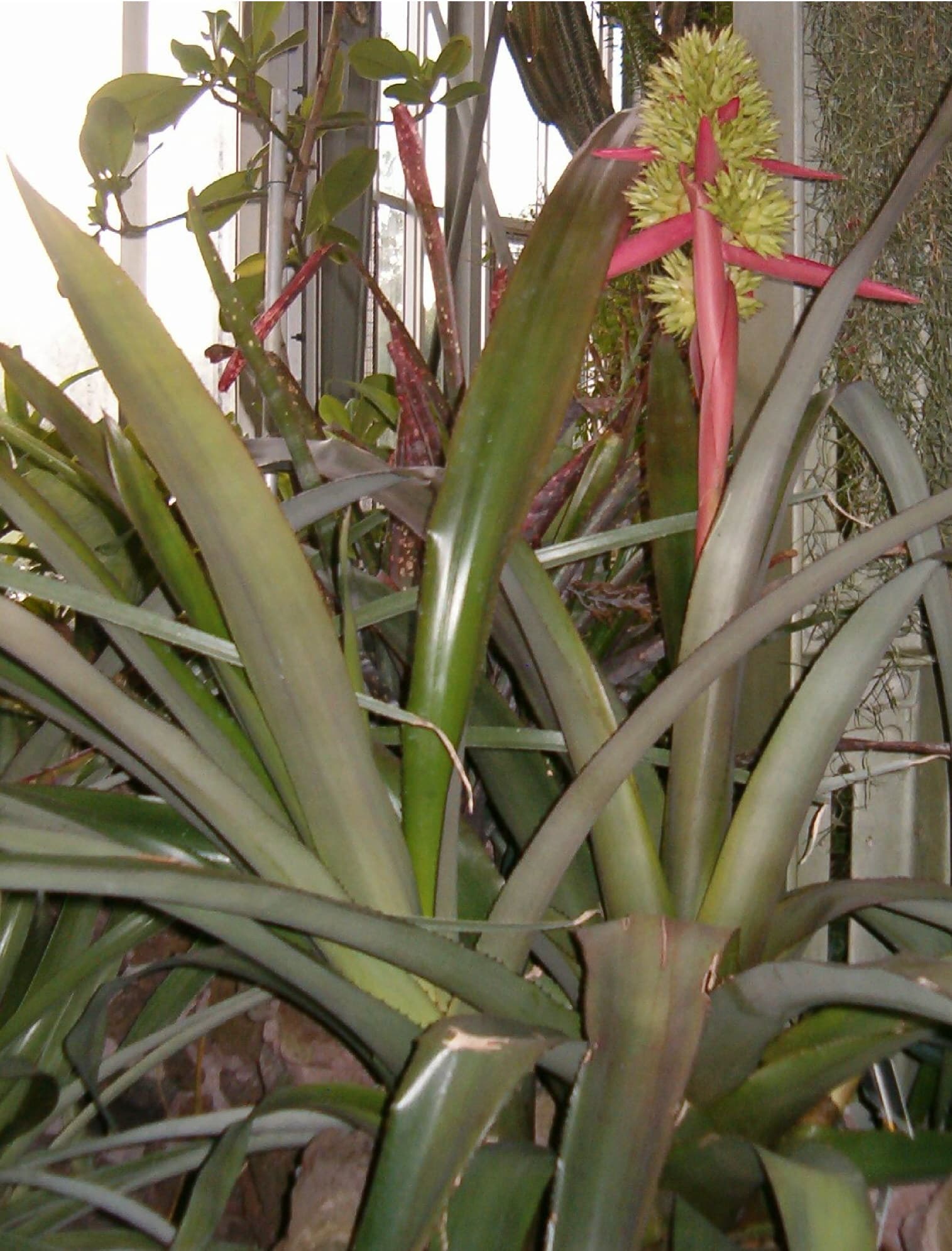
Photo: Wikimedia Commons contributor (CC BY 2.0)
The Urn Plant Bromeliad is one of the most striking tank bromeliads of Trinidad and Tobago's rainforest, its stiff, spine-tipped leaves arranged in a rosette that forms a central water-holding reservoir - the "urn" - that can contain several litres of rainwater.
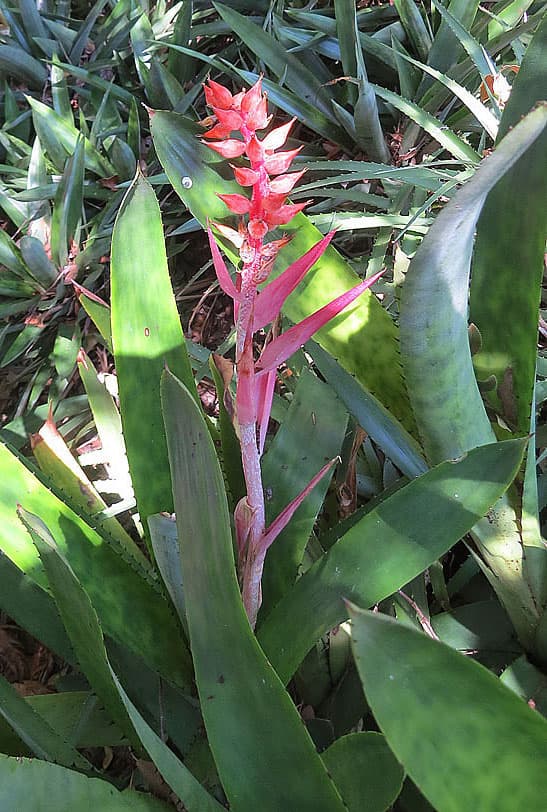
The Urn Plant Bromeliad is one of the most striking tank bromeliads of Trinidad and Tobago's rainforest, its stiff, spine-tipped leaves arranged in a rosette that forms a central water-holding reservoir - the "urn" - that can contain several litres of rainwater. This miniature freshwater pool is a complete ecosystem in miniature: home to mosquito larvae, damselfly nymphs, tiny crabs, tree frog tadpoles, and specialised microorganisms found nowhere else. The bright red flower spike emerging from the water-filled centre is a bold beacon for hummingbirds in the forest understorey.
Description
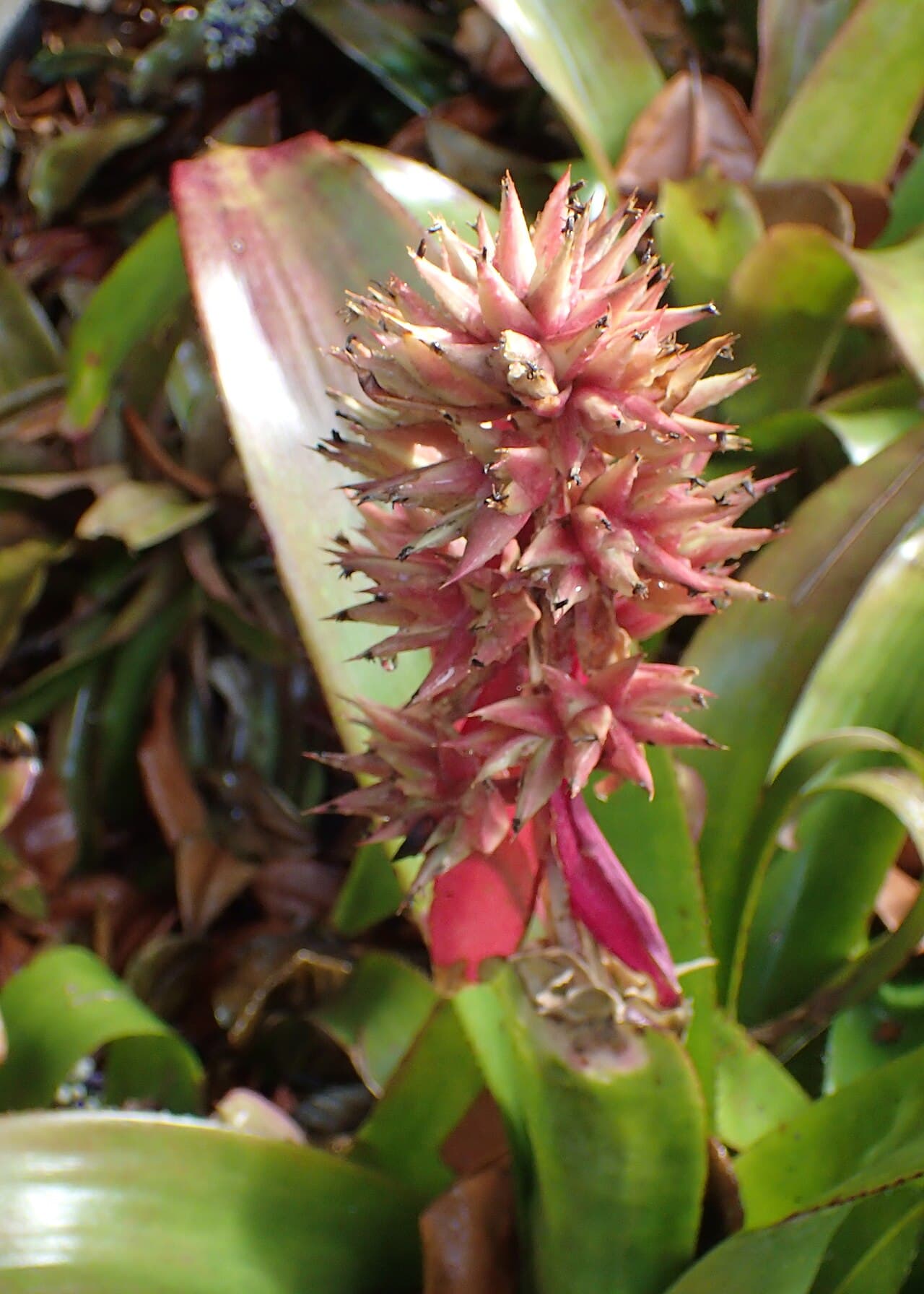
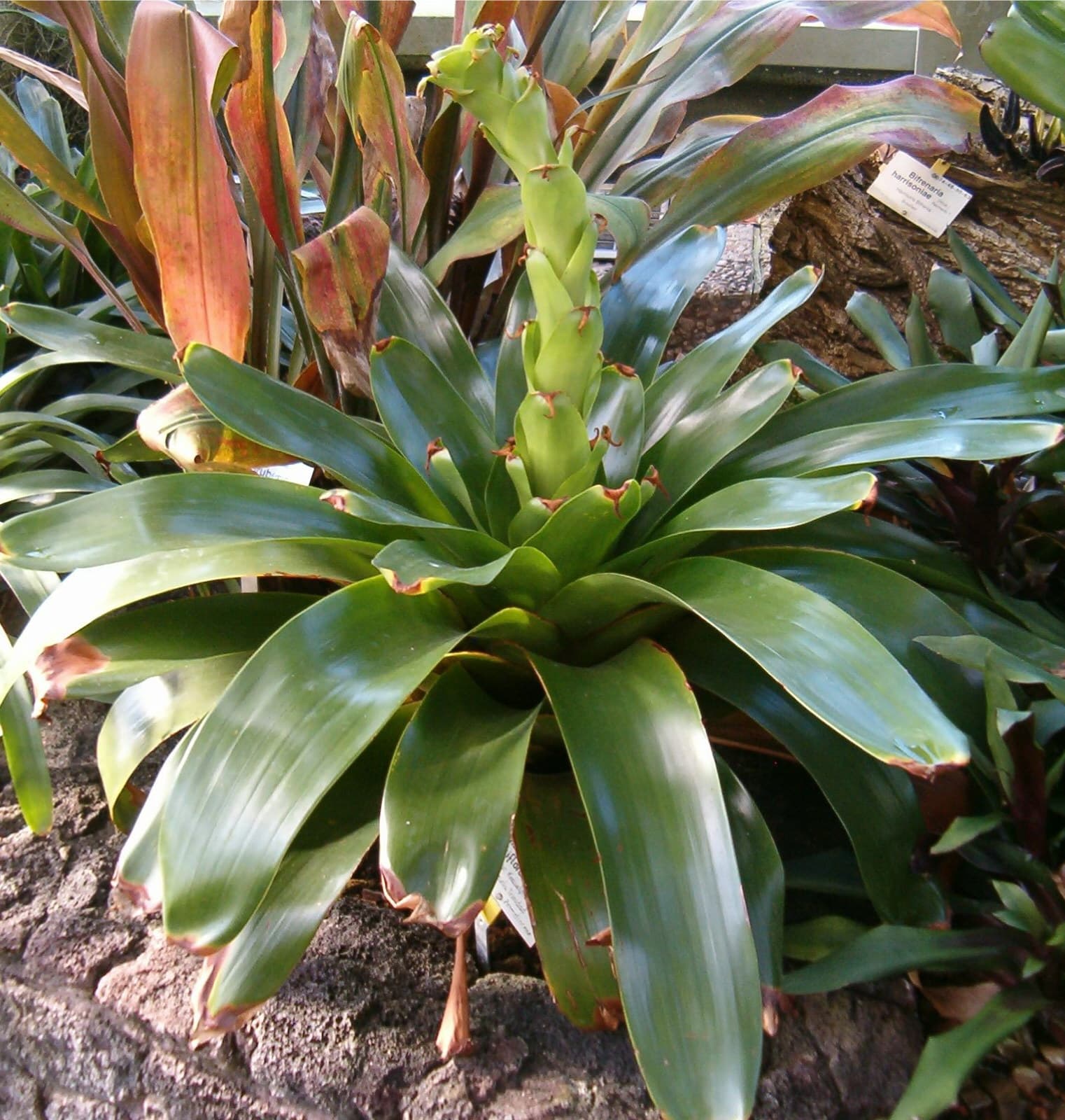
A medium to large epiphytic or terrestrial bromeliad forming a rosette of 10 to 20 stiff, strap-like, grey-green to green leaves 30 to 60 cm long, each tipped with a sharp spine and edged with coarse marginal spines. The leaf bases overlap tightly and form a central cup or urn capable of holding water throughout the year. The inflorescence emerges from the centre: a stout spike with bright red bracts and small yellow to white tubular flowers borne in clusters along its length. After flowering, the main rosette dies but produces offshoots (pups) from the base that grow to replace it. Fruits are small, fleshy berries.
Phytotelmata: The Aquatic Ecosystem
The water-filled centre of the Aechmea rosette is a phytotelm - a plant-held body of water - and supports a specialised community of aquatic organisms. In T&T, bromeliad tanks are inhabited by specialised mosquito species (including some that breed only in bromeliads), damselfly nymphs, small crabs, predatory midge larvae, and tree frog tadpoles of species such as the Trinidad Bromeliad Treefrog. This aquatic community is entirely dependent on the bromeliad for its existence and is lost when bromeliads are removed from the forest. The decaying organic matter in the tank provides nutrients to the plant through absorption by specialised leaf cells.
Ecology
Aechmea nudicaulis grows both as an epiphyte on tree branches and as a terrestrial plant on rocks and steep banks in Trinidad and Tobago's humid lowland and lower montane rainforest. The red flower spike is highly attractive to hummingbirds, particularly the White-necked Jacobin and Trinidad Hermit, which visit for nectar and incidentally pollinate the flowers. The fleshy fruits are eaten by birds, which disperse seeds to new host trees. The plant is sometimes collected from the forest for garden use; cultivated specimens are widely available.
Threats
- Wild collection for ornamental use
- Loss of forest epiphytic substrate
- Fragmentation reducing dependent tree frog communities