Seagrasses
Seagrasses
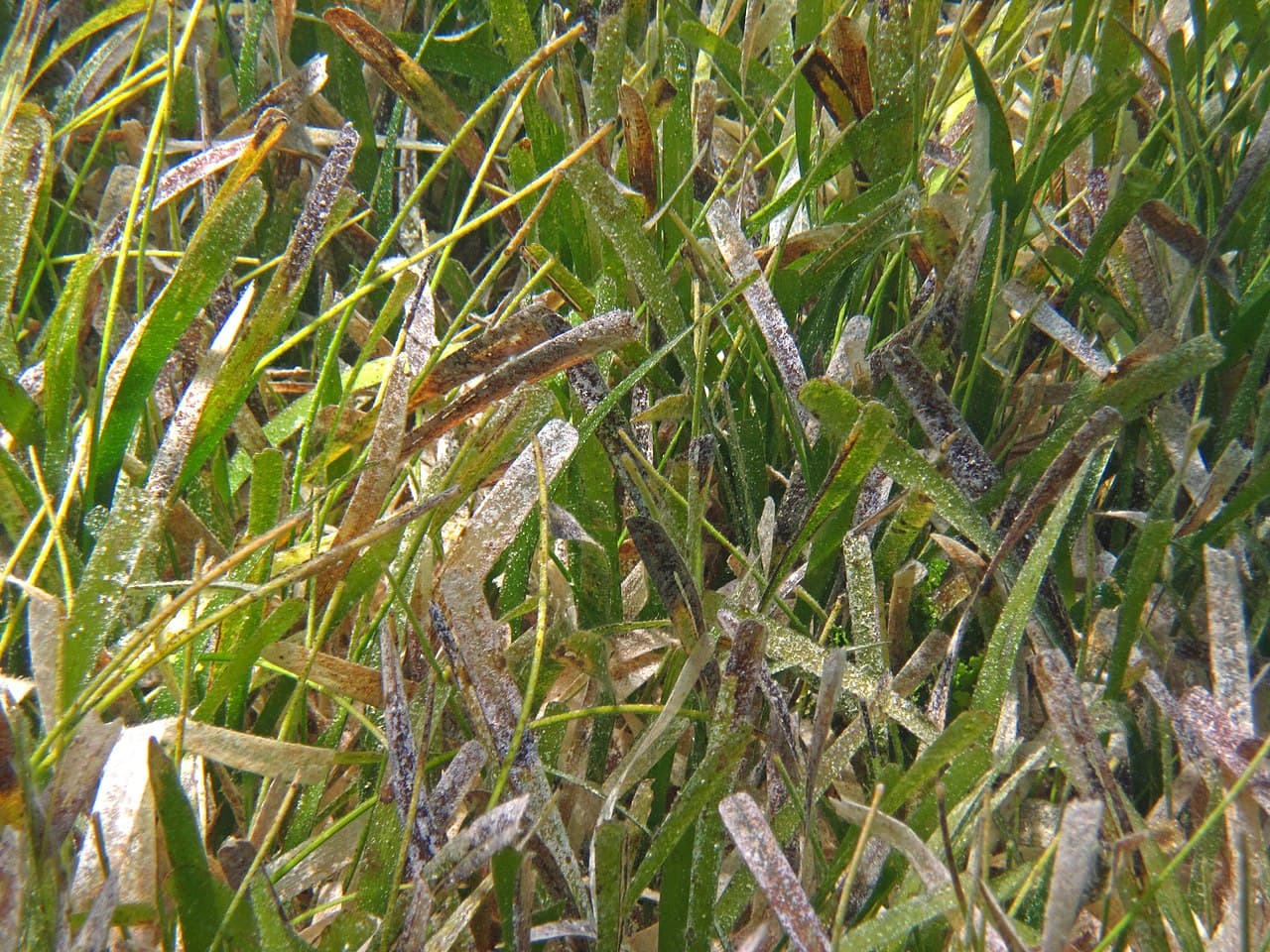
Turtle Grass
Thalassia testudinum
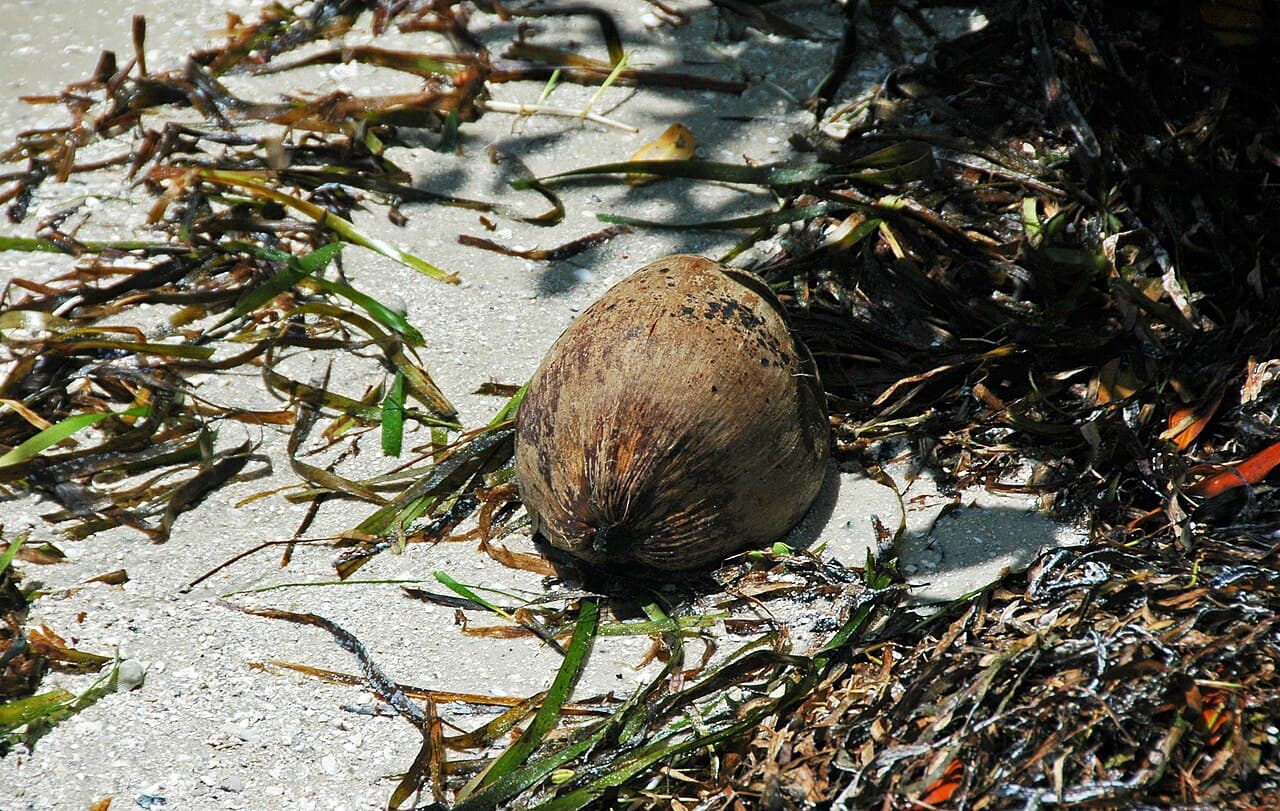
Photo: James St. John · Captiva Island, Florida (CC BY 2.0)
Turtle Grass is the dominant seagrass of Trinidad and Tobago's shallow coastal waters, forming dense underwater meadows that rank among the most productive marine ecosystems in the Caribbean.
Turtle Grass is the dominant seagrass of Trinidad and Tobago's shallow coastal waters, forming dense underwater meadows that rank among the most productive marine ecosystems in the Caribbean. Named for the Green Turtles that graze on it, it is also the primary food plant of the West Indian Manatee, a critical nursery habitat for juvenile fish and invertebrates, and one of the most effective carbon-sequestering ecosystems on the planet.
Description
A marine flowering plant (not an alga) with flat, strap-like, dark green leaves 10 to 35 cm long and 4 to 12 mm wide, growing from a network of thick, horizontal rhizomes buried in sandy or muddy seabed sediment. Leaves grow in clusters from upright shoots. The plant is fully submerged and produces small, inconspicuous flowers and round, fleshy fruits that release floating seeds. Turtle Grass meadows can form continuous beds covering several hectares in sheltered, clear, shallow water to a depth of about 10 metres.
Ecological Role
Turtle Grass meadows are foundation ecosystems of the Caribbean coast. The dense leaf canopy and root-rhizome mat stabilise sediment, preventing erosion and maintaining water clarity. The beds provide nursery habitat for juvenile snappers, groupers, grunts, lobsters, conch, and sea horses. Green Turtles graze the leaves directly, maintaining bed health by preventing overgrowth of older leaf material. West Indian Manatees consume large quantities of Turtle Grass and depend on these meadows for survival. The rhizome mat locks organic carbon into the sediment at rates comparable to terrestrial forests, making seagrass beds among the most important "blue carbon" sinks in the ocean.
Threats and Protection
Turtle Grass beds are threatened by coastal development that increases sediment runoff and reduces water clarity, boat propeller scarring, nutrient pollution from sewage and agriculture causing algal overgrowth, and dredging. In Trinidad and Tobago, marine areas including seagrass beds receive some protection under the EMA Act, and the species that depend on them - Green Turtles and Manatees - are protected under the Conservation of Wild Life Act. Dedicated seagrass mapping and protection programmes are less developed in T&T than in some other Caribbean territories.
Threats
- Coastal development increasing sediment runoff and reducing water clarity
- Boat propeller scarring of shallow beds
- Nutrient pollution from sewage and agriculture causing algal smothering
- Dredging and coastal infrastructure destroying bed habitat