Seagrasses
Seagrasses
Manatee Grass
Syringodium filiforme
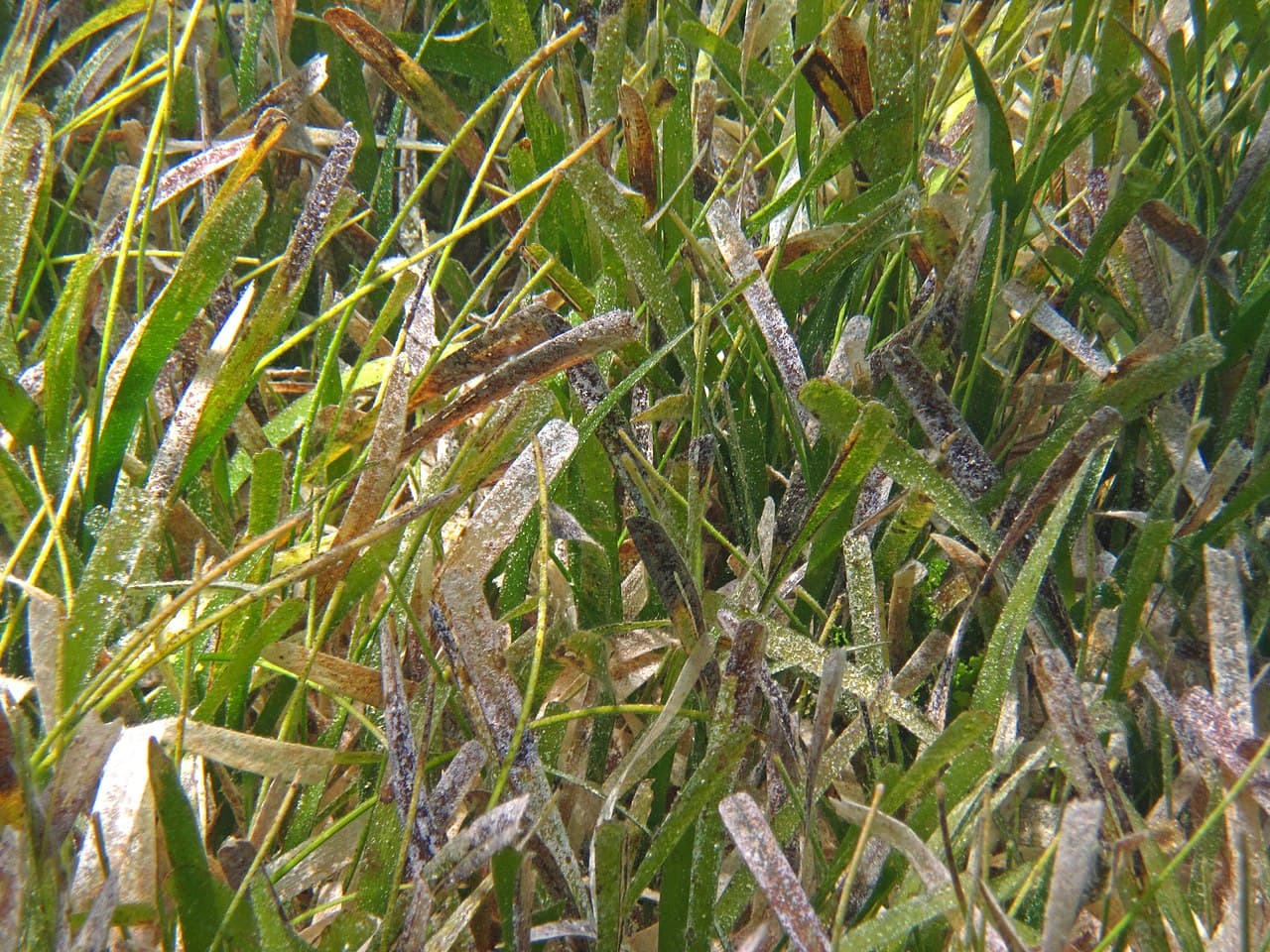
Photo: James St. John · Graham's Harbour, San Salvador, Bahamas (CC BY 2.0)
Manatee Grass is the second most common seagrass in Trinidad and Tobago's coastal waters, often growing intermixed with Turtle Grass in shallow bay and lagoon beds.
Manatee Grass is the second most common seagrass in Trinidad and Tobago's coastal waters, often growing intermixed with Turtle Grass in shallow bay and lagoon beds. Distinguished from Turtle Grass by its distinctive cylindrical, needle-like leaves, it is an important component of mixed seagrass meadows and, as its name suggests, a significant food source for the Critically Endangered West Indian Manatee in Caribbean waters.
Description
A marine flowering plant with cylindrical, hollow, needle-like leaves 10 to 30 cm long and about 1 to 2 mm in diameter, bright to mid-green, growing in clusters from buried rhizomes. The cylindrical leaves are immediately distinctive and separate this species from all other Caribbean seagrasses at a glance. Flowers are small and inconspicuous, pollinated underwater. Manatee Grass typically grows in slightly deeper or more exposed conditions than Turtle Grass and is frequently found in mixed beds with it, occupying slightly different micro-niches within the same shallow coastal environment.
Ecology
Manatee Grass meadows provide the same suite of ecosystem services as Turtle Grass: sediment stabilisation, nursery habitat for juvenile fish and invertebrates, and carbon sequestration. The cylindrical leaves harbour a different community of epiphytic algae and invertebrates than the flat Turtle Grass blades, adding biodiversity to mixed seagrass beds. West Indian Manatees consume Manatee Grass extensively; the species name filiforme (thread-like) refers to the leaf shape rather than any specific manatee association, but the common name reflects the plant's importance as manatee forage. Green Turtles and sea urchins also graze it.
Conservation Context
Like Turtle Grass, Manatee Grass in Trinidad and Tobago faces threats from coastal development, nutrient pollution, and physical disturbance. The two species are often assessed together as components of the same seagrass ecosystem. Protecting seagrass beds is directly linked to the recovery prospects of the West Indian Manatee in T&T waters, which numbers only a few dozen individuals. Any reduction in seagrass extent or quality directly reduces the carrying capacity for this Vulnerable species.
Threats
- Coastal development and sedimentation reducing water clarity
- Nutrient pollution from sewage and agriculture
- Propeller scarring and anchoring damage in shallow beds
- Decline linked directly to West Indian Manatee food security