Mangroves
Mangroves
Buttonwood
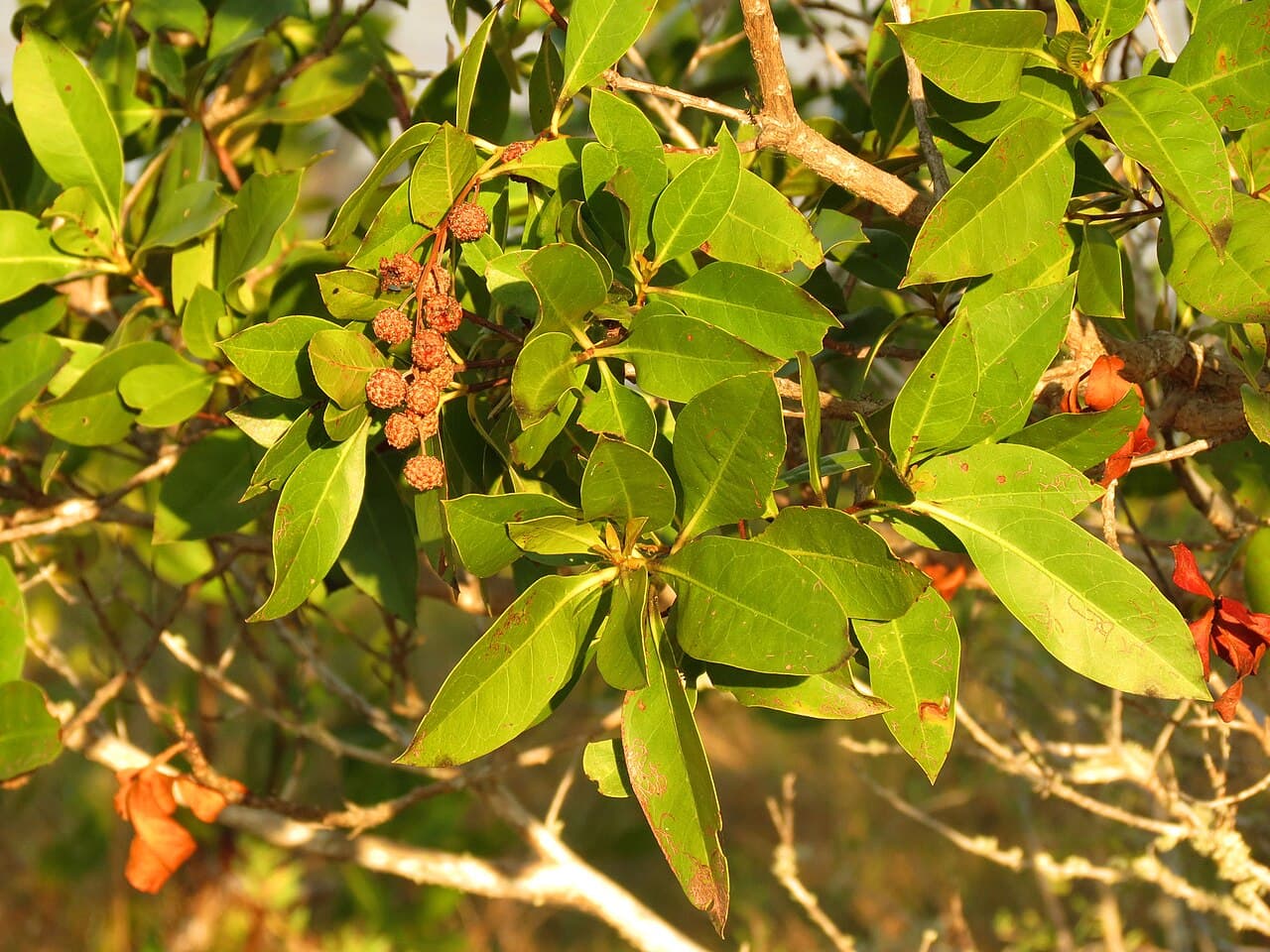
Conocarpus erectus
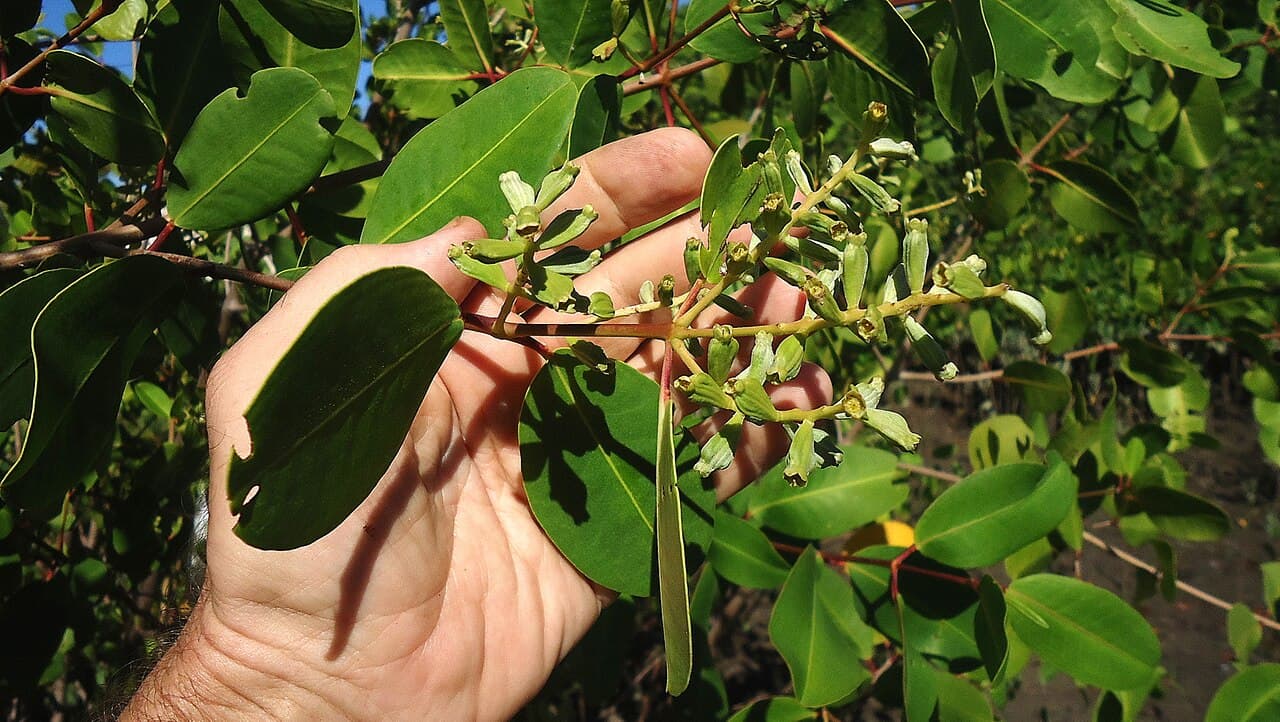
Photo: treegrow (CC BY 2.0)
Buttonwood is an associate mangrove species that grows at the landward and upland edges of mangrove systems, often where conditions are too dry or too salty for other mangroves to thrive.
Buttonwood is an associate mangrove species that grows at the landward and upland edges of mangrove systems, often where conditions are too dry or too salty for other mangroves to thrive. Though not a true mangrove in the strict sense, it is an obligate component of the mangrove-terrestrial transition zone across the Caribbean and is recognised in Trinidad and Tobago as part of the broader mangrove community that receives legal protection.
Description
A shrub to small tree, typically 3 to 10 metres tall, though it can reach 20 metres in sheltered conditions. The trunk is often twisted or gnarled, with grey-brown, scaly or furrowed bark. Leaves are alternate, narrowly elliptic, grey-green, and salt-tolerant, with two small glands near the base of the leaf blade. Flowers are tiny, greenish, borne in compact round heads (the "buttons" of the common name) on branched stalks. The fruiting heads are similarly button-like, dense clusters of small winged nutlets. A silver-leafed variety (var. sericeus) is sometimes encountered and is widely used as an ornamental.
Ecology
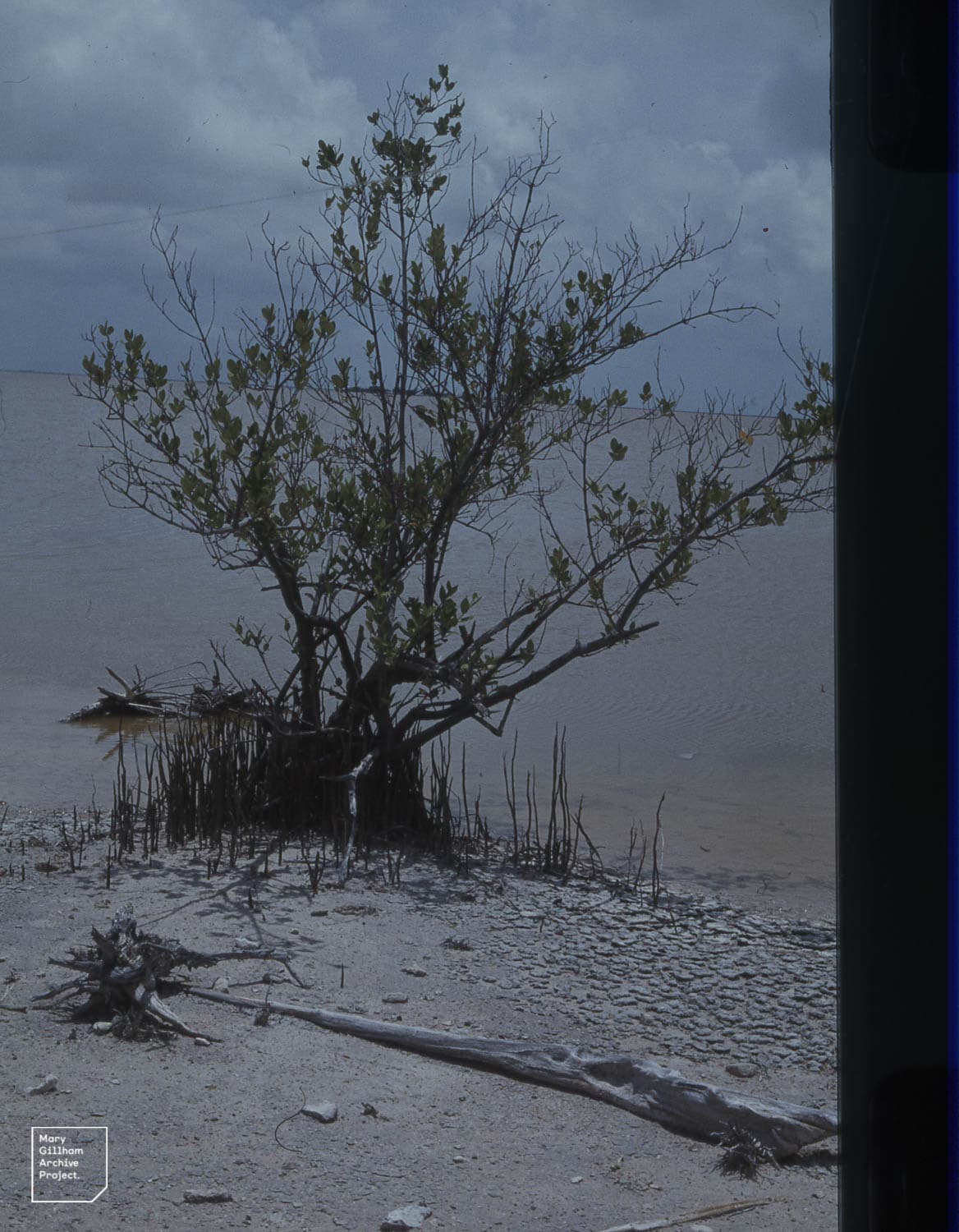
Buttonwood tolerates a wide range of conditions: hypersaline soils, brackish to fresh water, and well-drained upland edges of mangroves where standing water is infrequent. This tolerance makes it a key pioneer at disturbed mangrove margins and rocky coastal shores. It does not have the specialised aerial root systems of Red or Black Mangroves but is adapted to saline soils through salt-excreting leaf glands. The dense, button-like fruiting heads provide seeds that are wind- and water-dispersed. In Trinidad and Tobago, Buttonwood is found at the edges of mangrove systems, along tidal creeks, and on rocky or sandy coastlines on both islands.
Uses
Buttonwood charcoal has historically been considered among the best-quality charcoal in the Caribbean, burning hot and slow. The wood is also extremely hard and durable in contact with saltwater, making it useful for marine construction. These qualities led to heavy cutting in the colonial period, and today Buttonwood is less abundant than historically in some areas. The silver-leafed ornamental form is widely planted in coastal landscaping across the region.
Threats
- Historical over-cutting for charcoal
- Coastal development at mangrove-upland transition zones
- Replacement by ornamental planting that reduces genetic diversity of wild populations