Bromeliads
Bromeliads
Tank Bromeliad
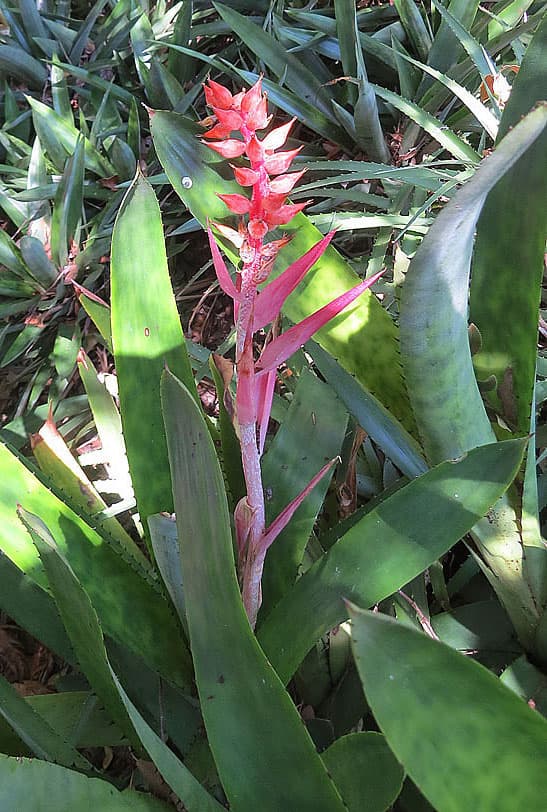
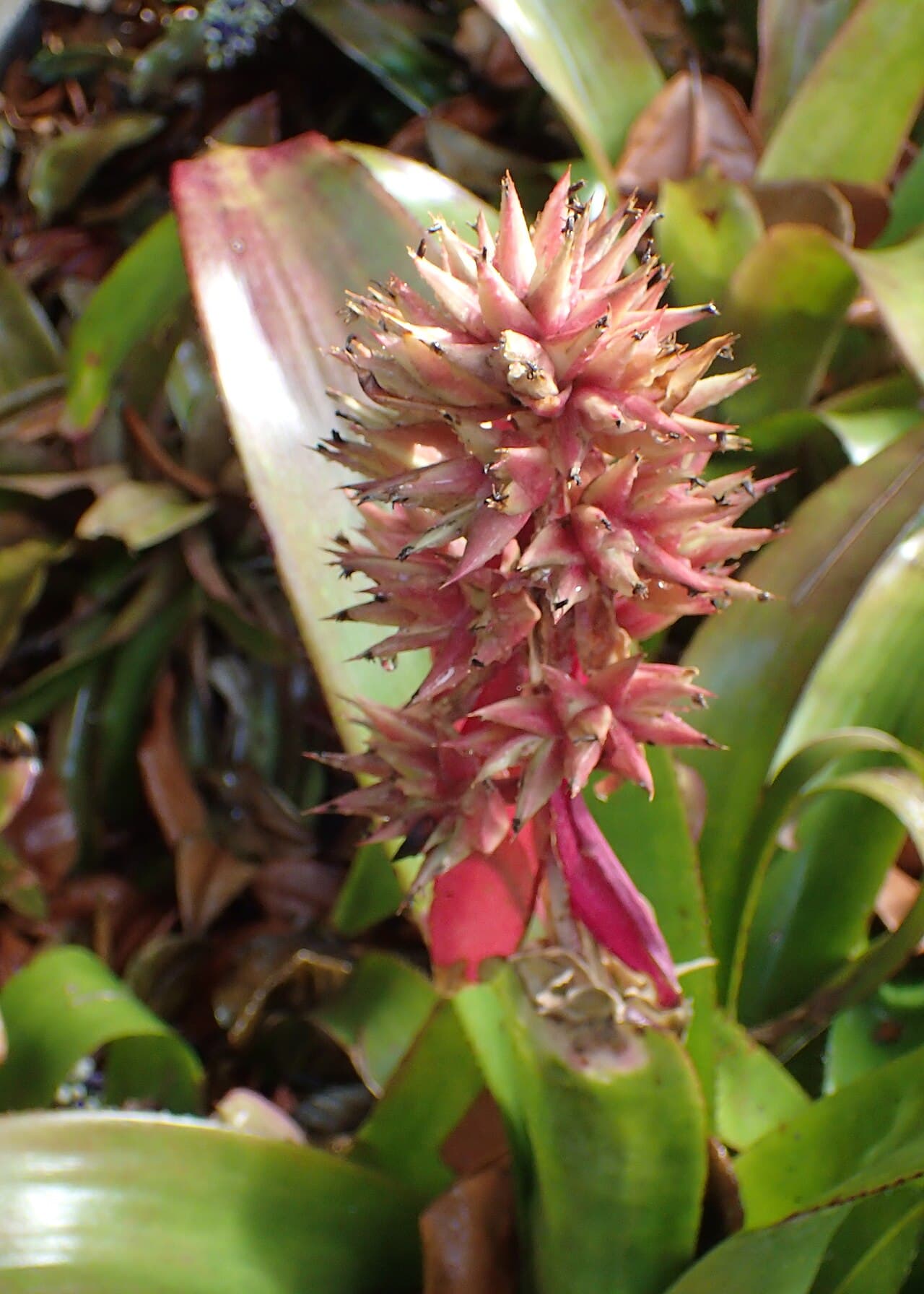
Aechmea aquilega
Photo: Krzysztof Ziarnek (Kenraiz) (CC BY-SA 4.0)
The Tank Bromeliad is one of Trinidad's most ecologically important plants.
The Tank Bromeliad is one of Trinidad's most ecologically important plants. Its rosette of stiff, spiny-edged leaves forms a central water-collecting reservoir, a phytotelma, that becomes a miniature aquatic world supporting tree frogs, damselfly larvae, microcrustaceans, and dozens of invertebrate species entirely dependent on this habitat. Native to T&T, Venezuela, the Guianas, and Brazil, it is both an ecological keystone and a flagship for the extraordinary biodiversity packed into the forests of the Northern Range and Nariva Swamp.
Description
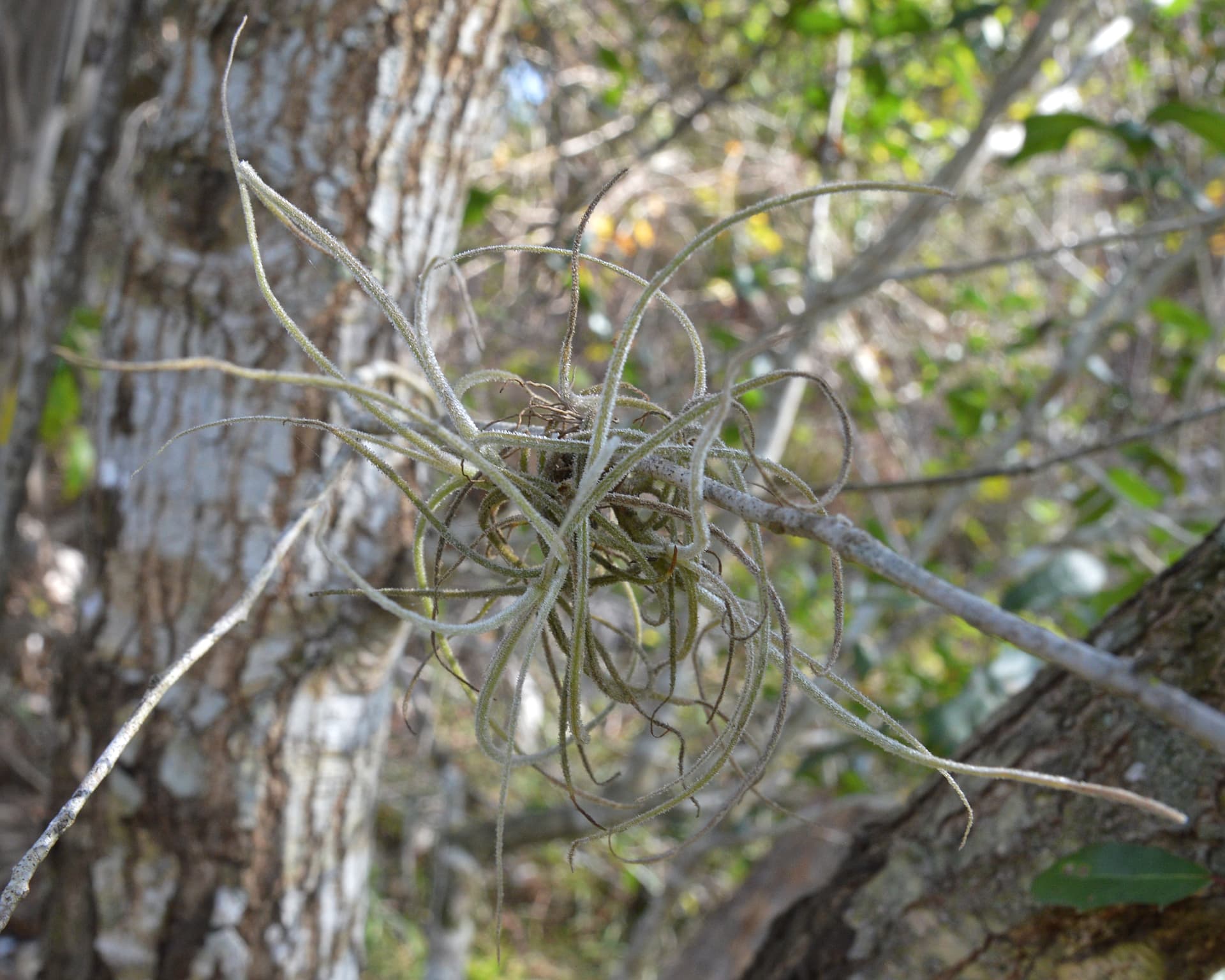
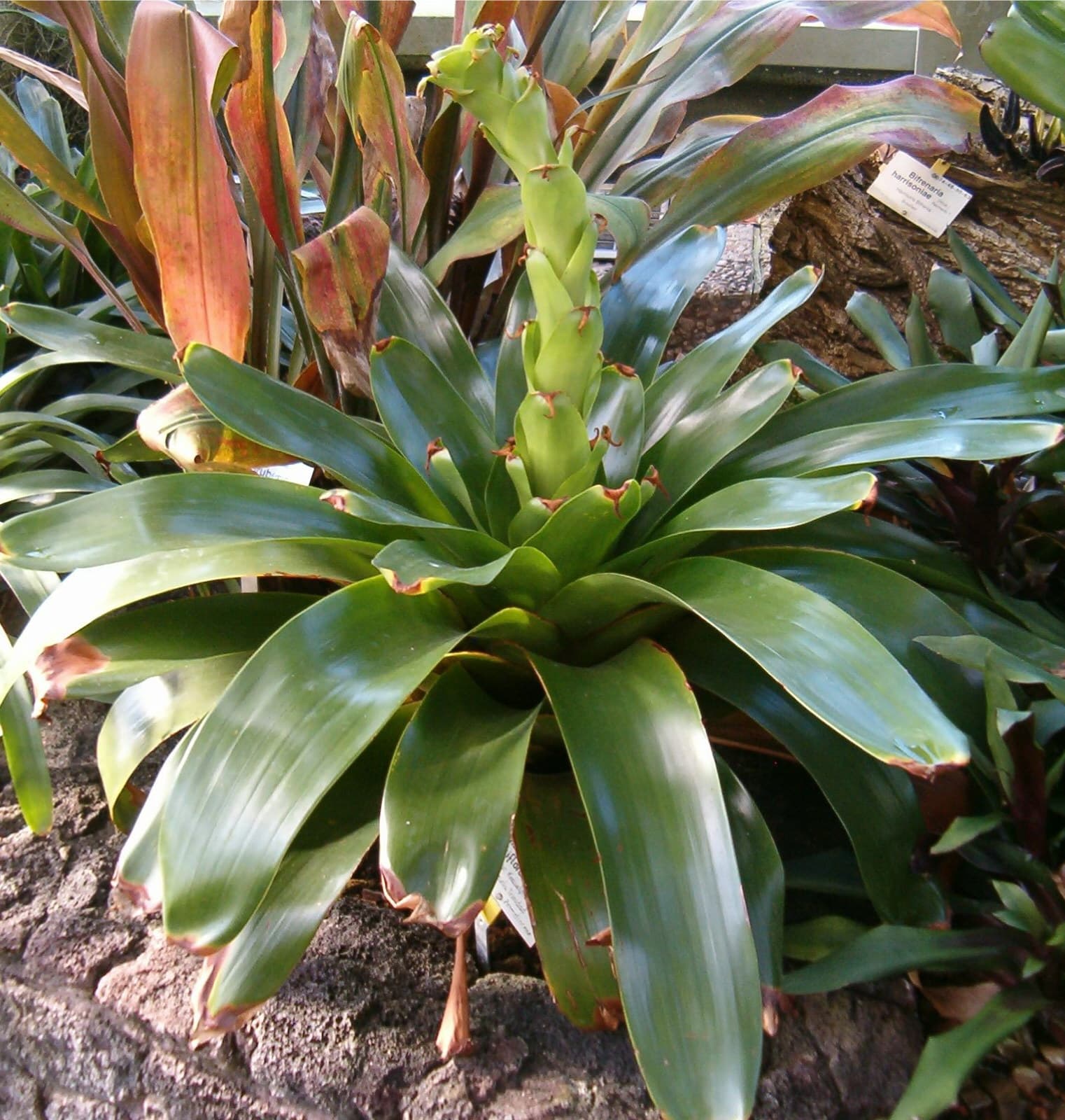
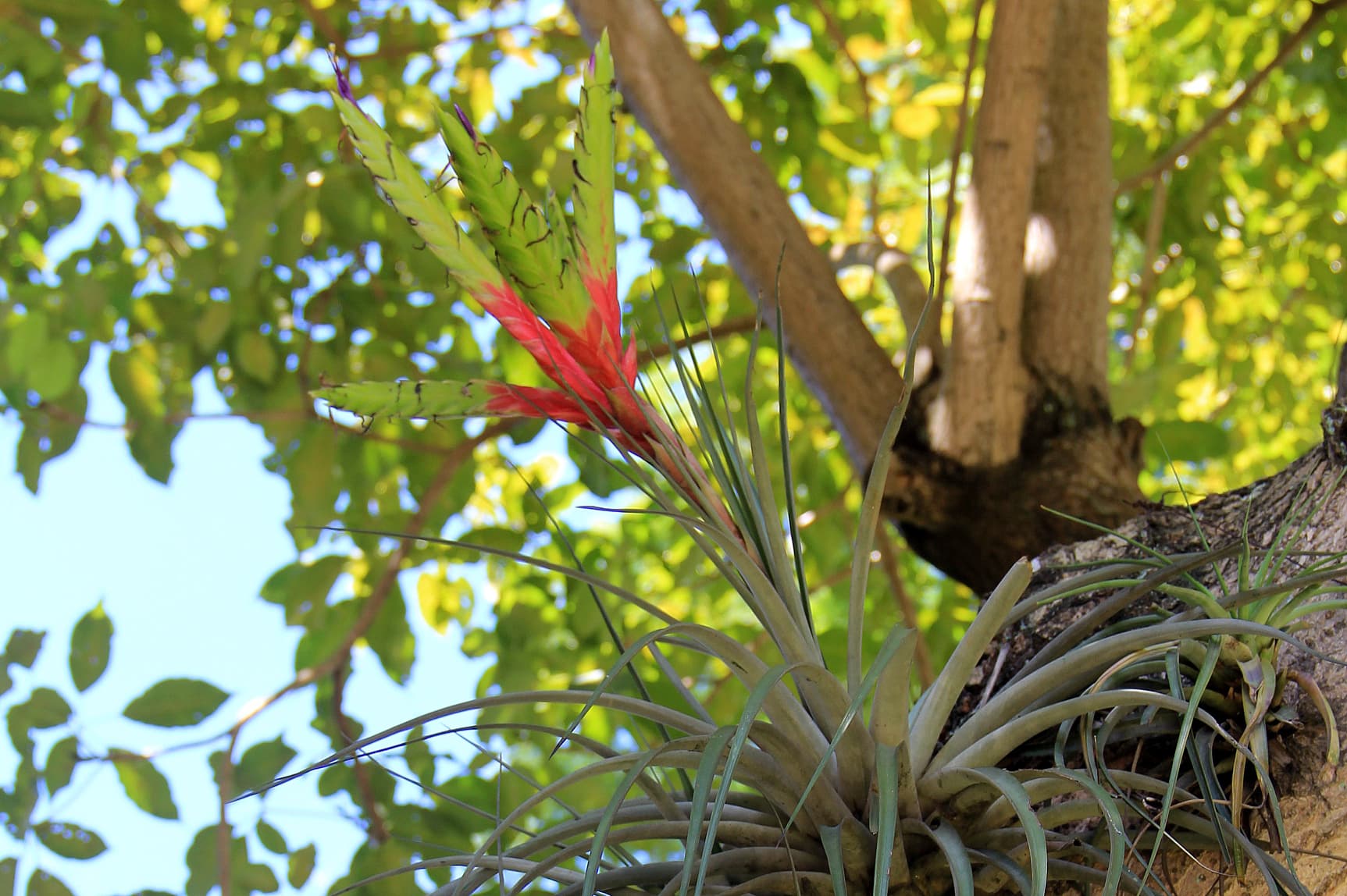
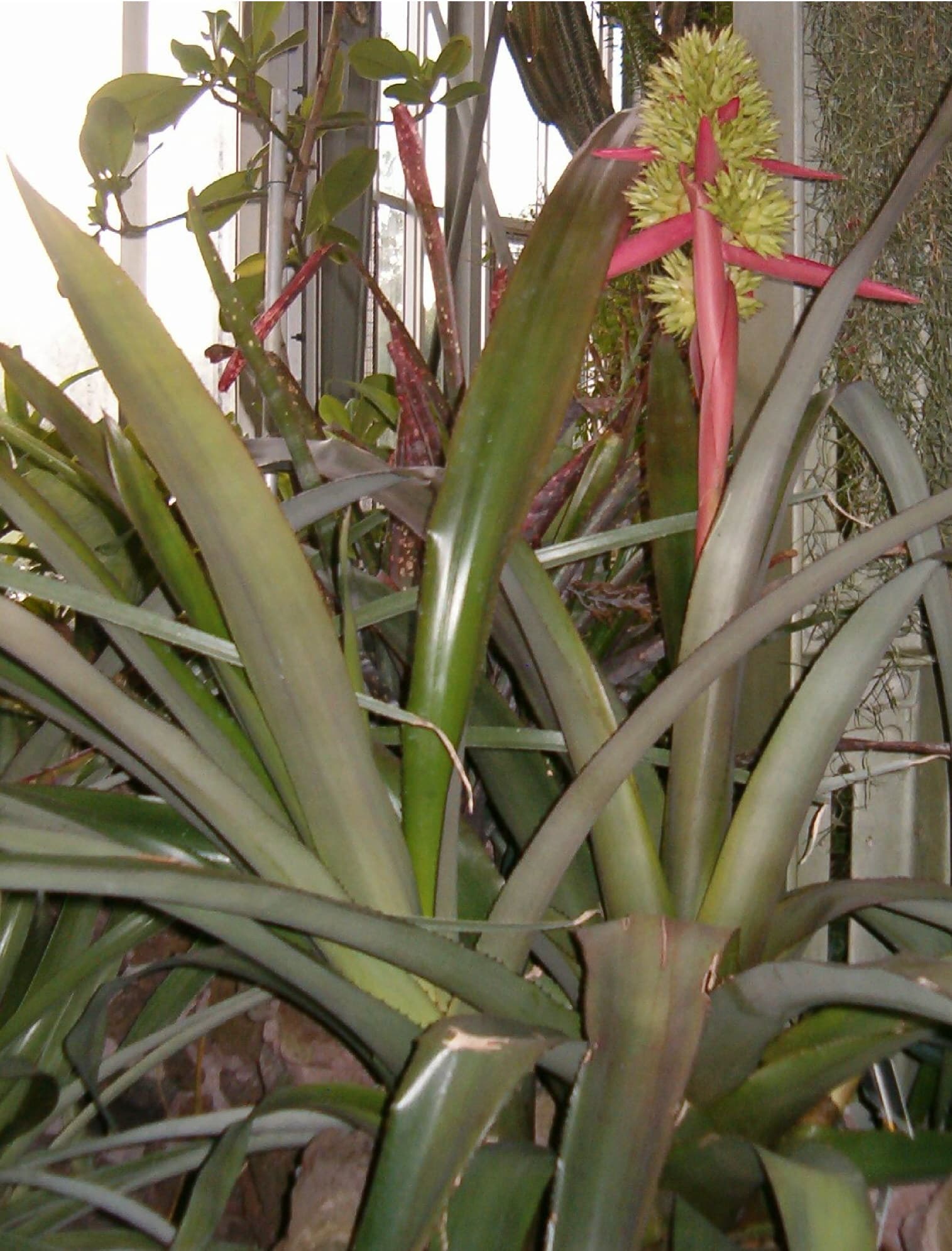
A robust, rosette-forming bromeliad with stiff, strap-like leaves bearing finely toothed or spiny margins. The overlapping leaf bases form a sealed central tank that collects and holds rainwater; the tank can hold hundreds of millilitres to several litres depending on plant size. The species grows both epiphytically on tree trunks and branches and terrestrially on the forest floor. The inflorescence is a showy spike with brightly coloured bracts, typically red to orange, with small flowers attractive to hummingbirds.
The Tank Ecosystem
The water-filled tank is a phytotelma: a plant-held body of water that functions as a self-contained aquatic habitat. Tree frogs use it as a breeding site, depositing eggs in the standing water. Damselfly and dragonfly larvae, mosquito larvae, aquatic beetles, water bugs, chironomid midges, microcrustaceans (copepods and ostracods), and a diverse community of mites and microorganisms complete the food web inside a single plant. Invertebrates decomposing leaf litter in the tank release nutrients that the bromeliad absorbs through specialised leaf cells, directly linking the aquatic community to the plant's own nutrition. Studies of neotropical tank bromeliads have found more than 350 invertebrate species using the phytotelma of a single bromeliad population.
Habitat and Range
In Trinidad and Tobago, Aechmea aquilega occurs in lowland humid forest and swamp forest, including the margins of Nariva Swamp. Beyond T&T, the species ranges across Venezuela, the Guianas, Brazil, Jamaica, and Costa Rica, occupying the humid lowland forests of the Caribbean and northern South America.
Legal Protection
Native bromeliads on State Lands in Trinidad and Tobago are protected under the Forests Act (Ch. 66:01), which prohibits the removal of protected plants from State forests without a Forestry Division permit. Removal of epiphytic bromeliads from the wild for the horticultural trade, or destruction through habitat clearance on Crown land, is a prosecutable offence.
Threats
- Swamp forest clearance
- Wild collection
- Canopy loss
- Habitat degradation