Bromeliads
Bromeliads
Giant Bromeliad
Glomeropitcairnia erectiflora
Photo: BotBln · Berlin Botanical Garden (CC BY-SA 3.0)
The Giant Bromeliad is a keystone plant of Trinidad's highest peaks.
The Giant Bromeliad is a keystone plant of Trinidad's highest peaks. Its massive rosette of stiff leaves collects rainwater in a central tank that can hold several litres, forming a complete freshwater ecosystem in the forest canopy. This microhabitat is the entire world of the Golden Tree Frog, one of Trinidad's most critically endangered endemic species.
Description
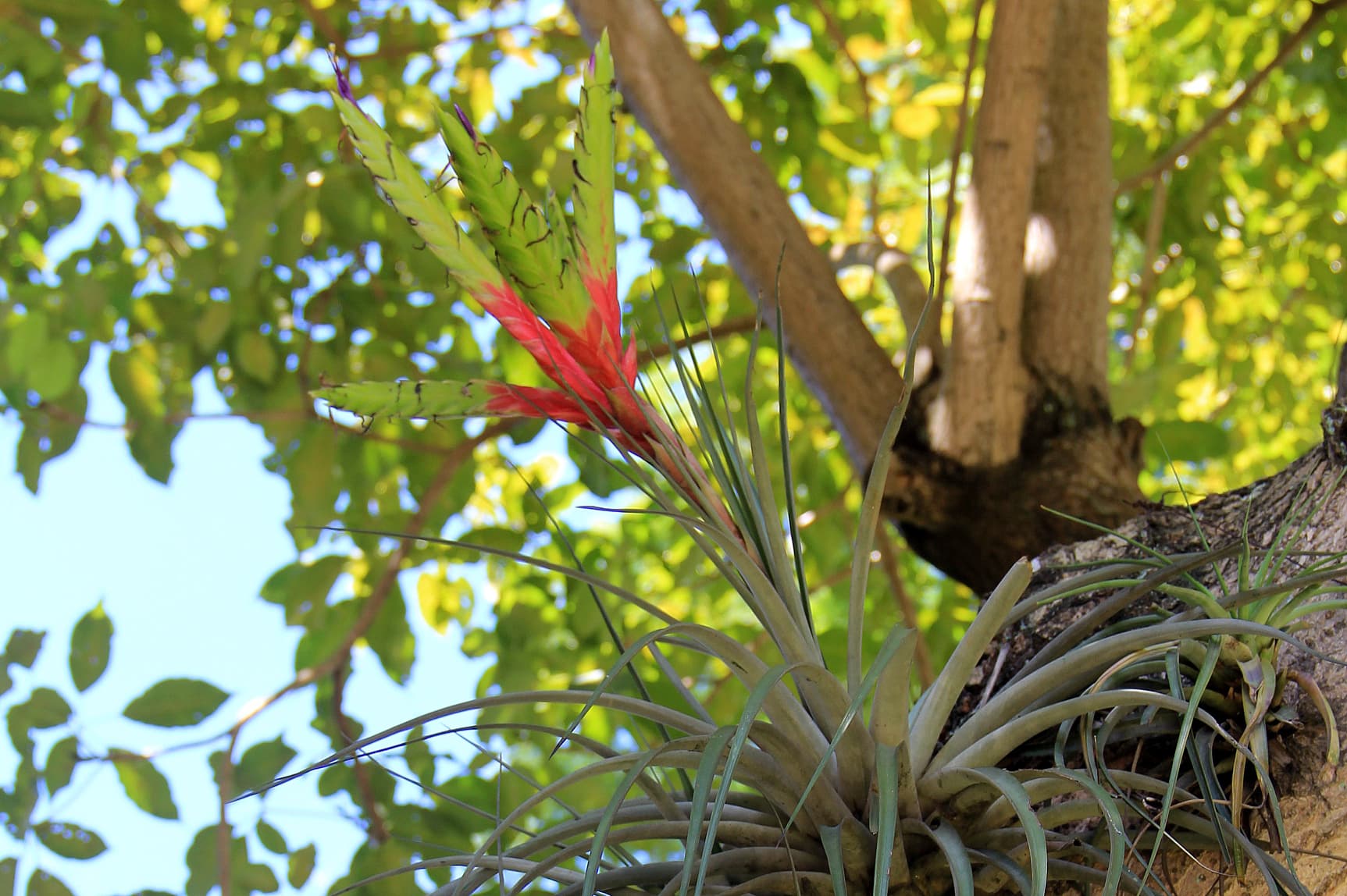
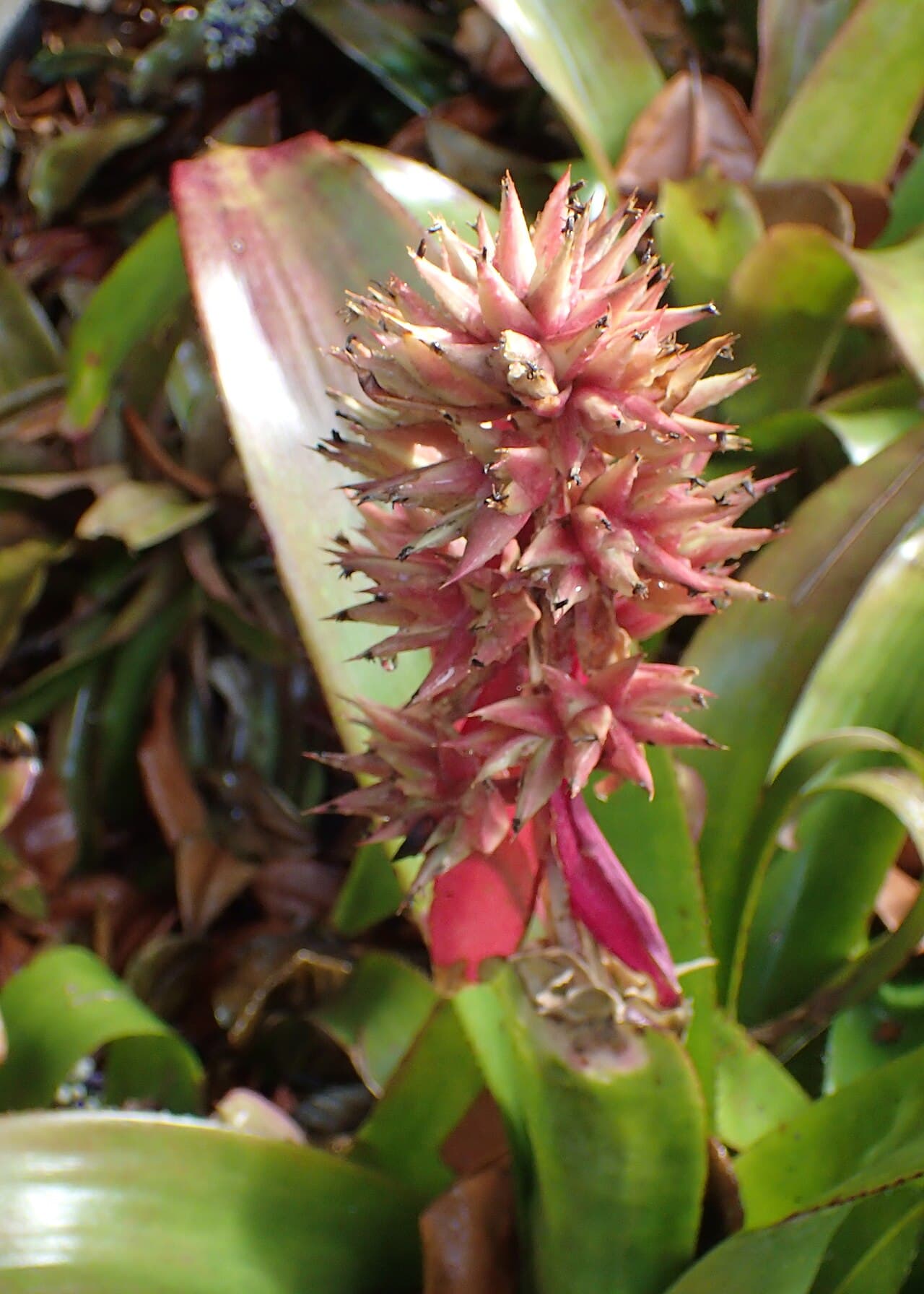
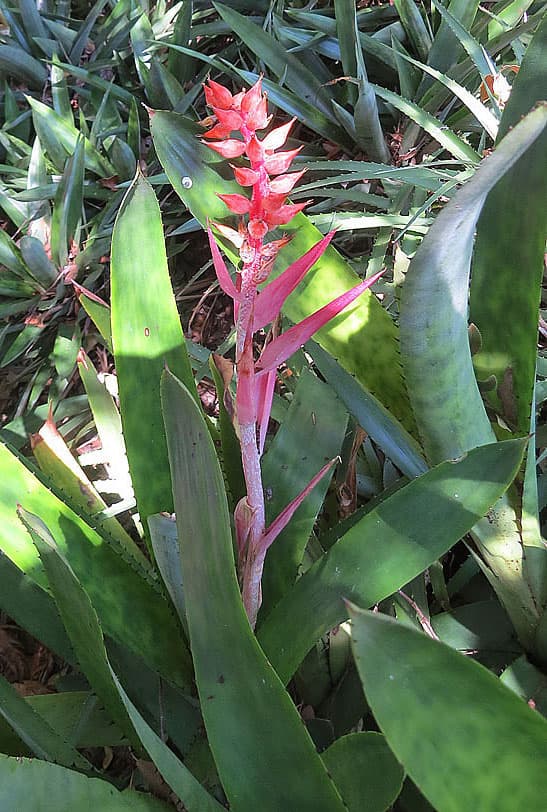
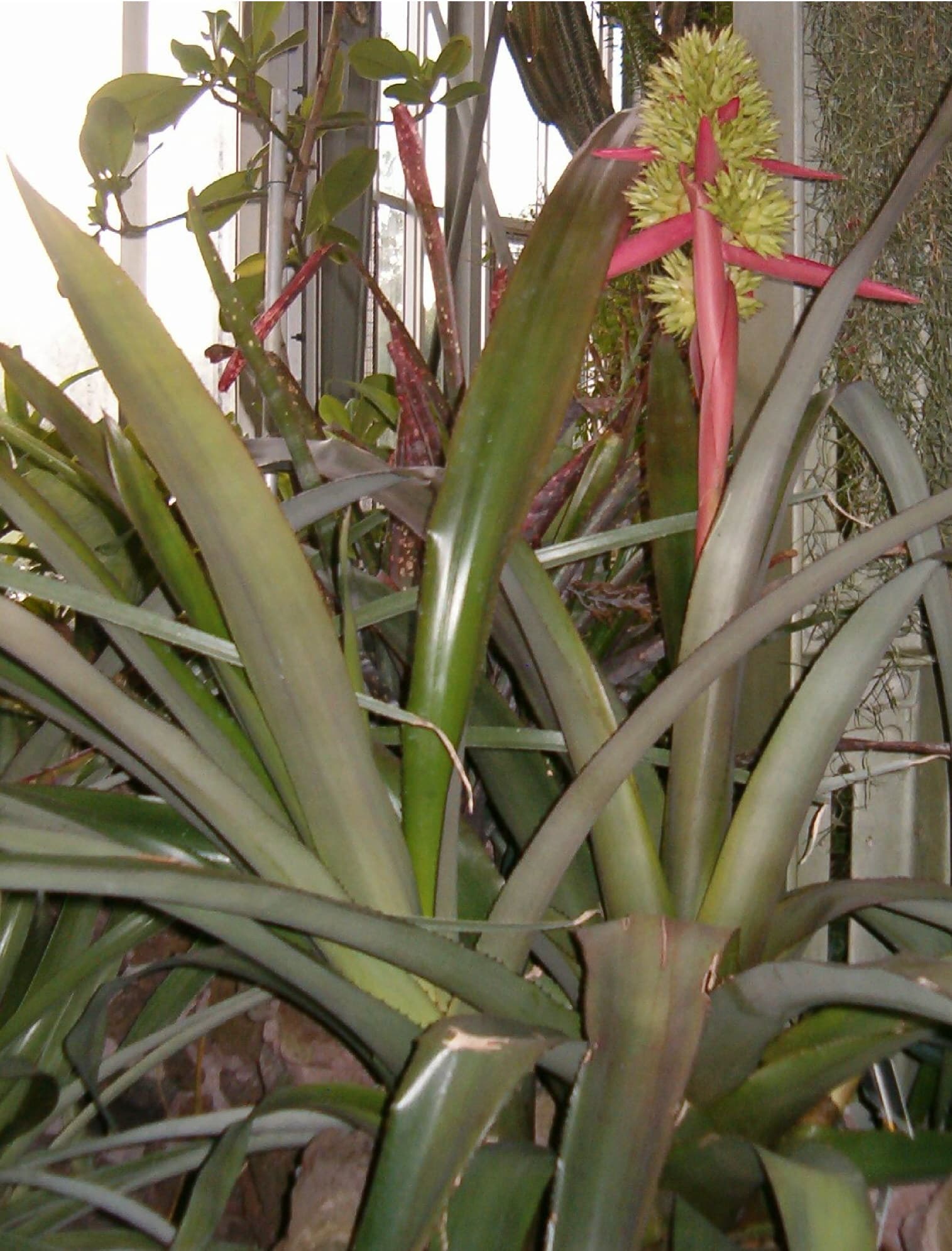
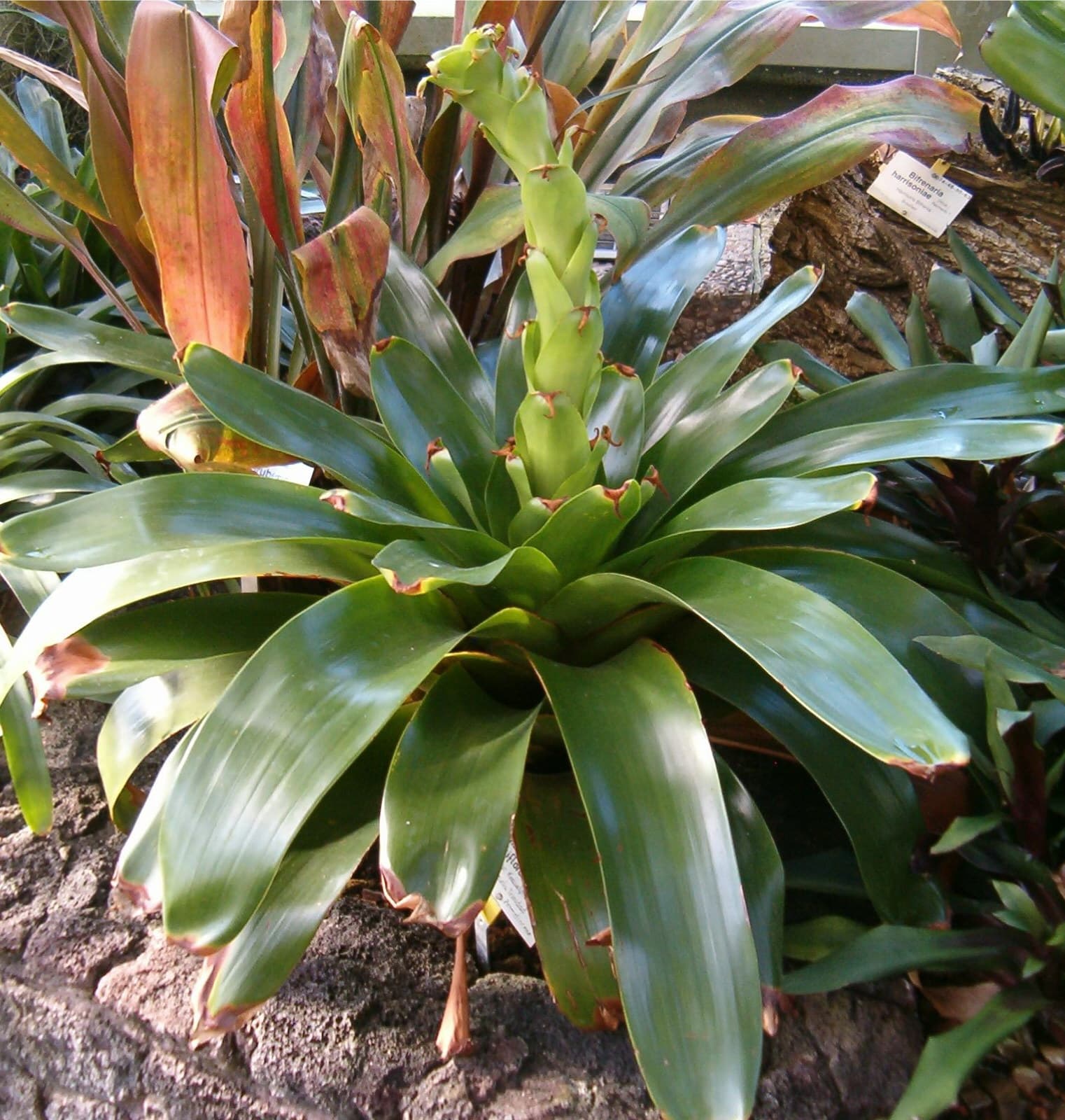
A large tank bromeliad with a rosette of tough, strap-like leaves radiating from a central point. The leaves are edged with fine teeth and can exceed a metre in length. The central tank formed by the overlapping leaf bases collects and retains rainwater, hosting a specialised community of organisms: mosquito larvae, aquatic invertebrates, and the tadpoles and adults of the Golden Tree Frog. The upright flower spike, which gives the species its Latin name, bears small, pale blooms.
Keystone Microhabitat
Glomeropitcairnia erectiflora is considered a keystone species in the summit ecosystem of El Tucuche and El Cerro del Aripo. The Golden Tree Frog (Phytotriades auratus) is wholly dependent on its water tanks for breeding: tadpoles develop in the accumulated rainwater, and adults shelter among the leaf bases. No other plant on these peaks provides equivalent habitat. If Giant Bromeliad populations decline, the frog declines with them.
Epiphytic Community
Beyond the Golden Tree Frog, the bromeliad's tanks support a miniature food web. Mosquito larvae and other aquatic invertebrates colonise the water; these are prey for the frogs. Bacteria break down fallen leaf litter, releasing nutrients that the bromeliad absorbs through its leaf surfaces. The plant itself is often colonised by mosses and liverworts on its outer leaf surfaces, adding further layers of biodiversity.
Distribution and Threat
This species is restricted to the montane cloud forest zone of Trinidad's Northern Range, with concentrations on El Tucuche and El Cerro del Aripo above approximately 700 m. It does not occur in Tobago. Climate change is the primary threat: as temperatures rise, the cloud base lifts, and the mist zone that sustains bromeliad-rich summit forest creeps upward. On these two mountains, there is a finite amount of mountain left.
Threats
- Climate change lifting the cloud zone toward and past the summit
- Disturbance of summit forest by hikers and collectors
- Loss of the Golden Tree Frog disrupting the mutualistic ecosystem