Endemic Flora
Endemic Flora
Moco Moco
Montrichardia arborescens
Photo: Wikimedia Commons contributor · French Guiana (CC BY-SA 4.0)
Moco Moco is one of the most characteristic plants of Trinidad's freshwater wetlands: a tall, spiny-stemmed aquatic shrub that forms dense stands at the edges of rivers, drainage canals, and freshwater swamps across the island.
Moco Moco is one of the most characteristic plants of Trinidad's freshwater wetlands: a tall, spiny-stemmed aquatic shrub that forms dense stands at the edges of rivers, drainage canals, and freshwater swamps across the island. Ecologically linked to the West Indian Manatee, which feeds heavily on its leaves, and to Nariva Swamp, where it is a dominant component of the freshwater marsh, it is a plant whose fortunes are closely bound to the health of T&T's most important wetland ecosystems.
Description
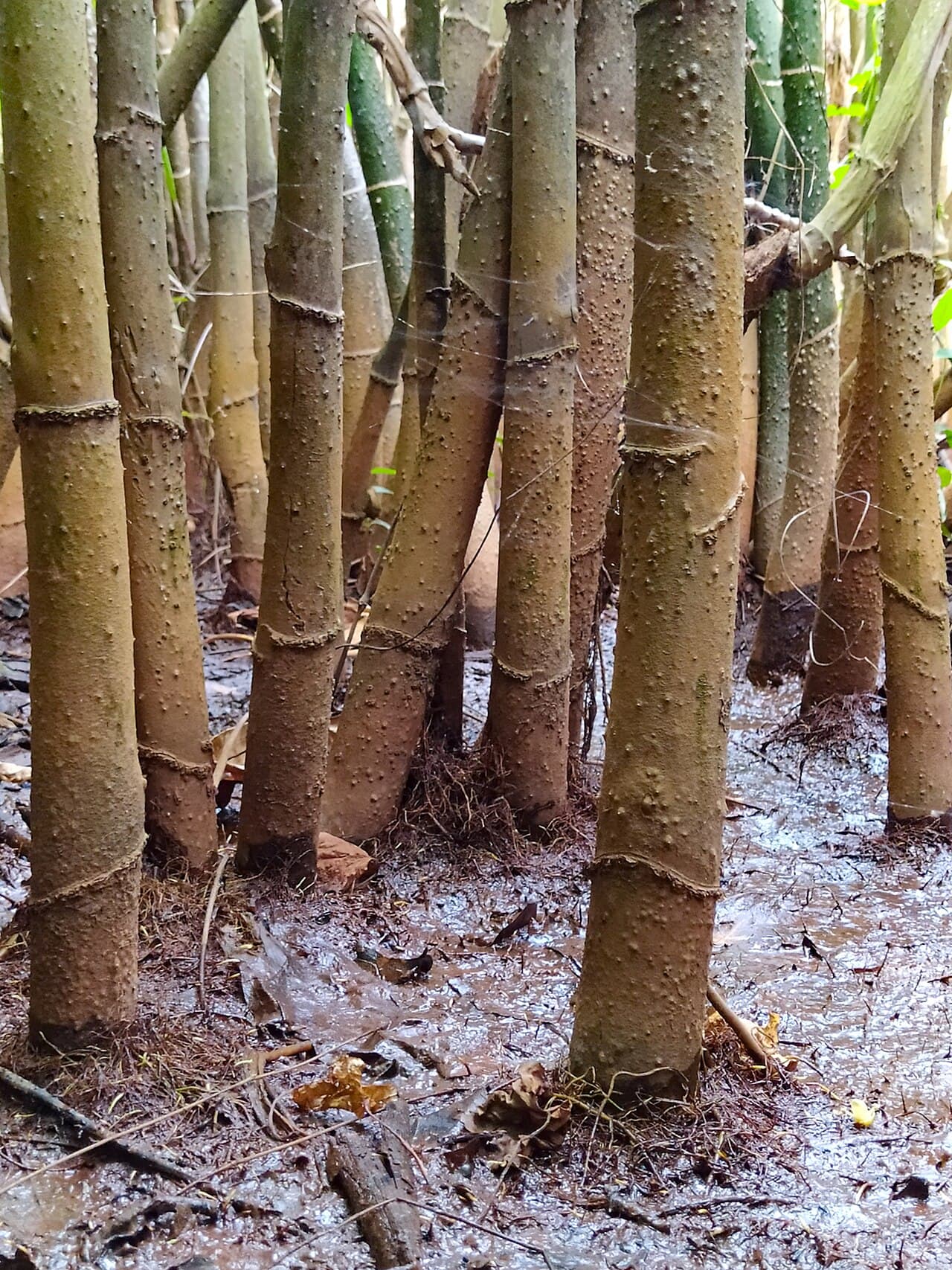
A large, robust aquatic to semi-aquatic shrub reaching 2 to 4 metres tall, with a stout, erect stem armoured with sharp, conical spines. The stem is thick, spongy, and filled with aerenchyma (air-filled tissue) that allows gas exchange in waterlogged conditions. Leaves are large, arrow-shaped (sagittate), bright green, held on long stalks. The plant belongs to the arum family and produces a typical arum inflorescence: a large, pale greenish-white spathe enclosing a club-shaped spadix. Fruits are packed into a green to orange cylindrical head, each fruit a small, many-seeded berry.
Ecological Role
Moco Moco is a keystone species of Trinidad's freshwater wetland margins. It forms dense stands along watercourses, swamp edges, and drainage channels throughout lowland Trinidad, providing structural habitat and food for a range of wildlife. The West Indian Manatee feeds extensively on Moco Moco leaves wherever both occur; protecting Manatee habitat in Trinidad is inseparable from protecting Moco Moco stands. The large leaves shelter young caimans and water birds. The dense stems provide nesting sites for waterbirds including herons, anhingas, and Jacanas. The plant reproduces rapidly after cutting and is resilient to water level changes.
Local Name and Culture
The name "Moco Moco" is used throughout Trinidad and is one of the most recognisable local plant names on the island. The plant is familiar to anyone who has travelled along drainage canals or riverbanks in the lowlands; its spiny stems and arrow leaves line waterways from the Caroni basin to the Nariva floodplain. In some areas the fleshy stem pith has been used as emergency tinder and the large leaves for wrapping food. The plant is not generally used as food by humans due to its calcium oxalate content, which causes intense irritation to the mouth and throat if consumed raw.
Threats
- Drainage and channelisation of freshwater wetlands removing habitat
- Herbicide treatment of drainage canals eliminating stands
- Decline of West Indian Manatee reduces the ecological relationship that helps maintain the species' role in the ecosystem