Endemic Flora
Endemic Flora
Chaconia
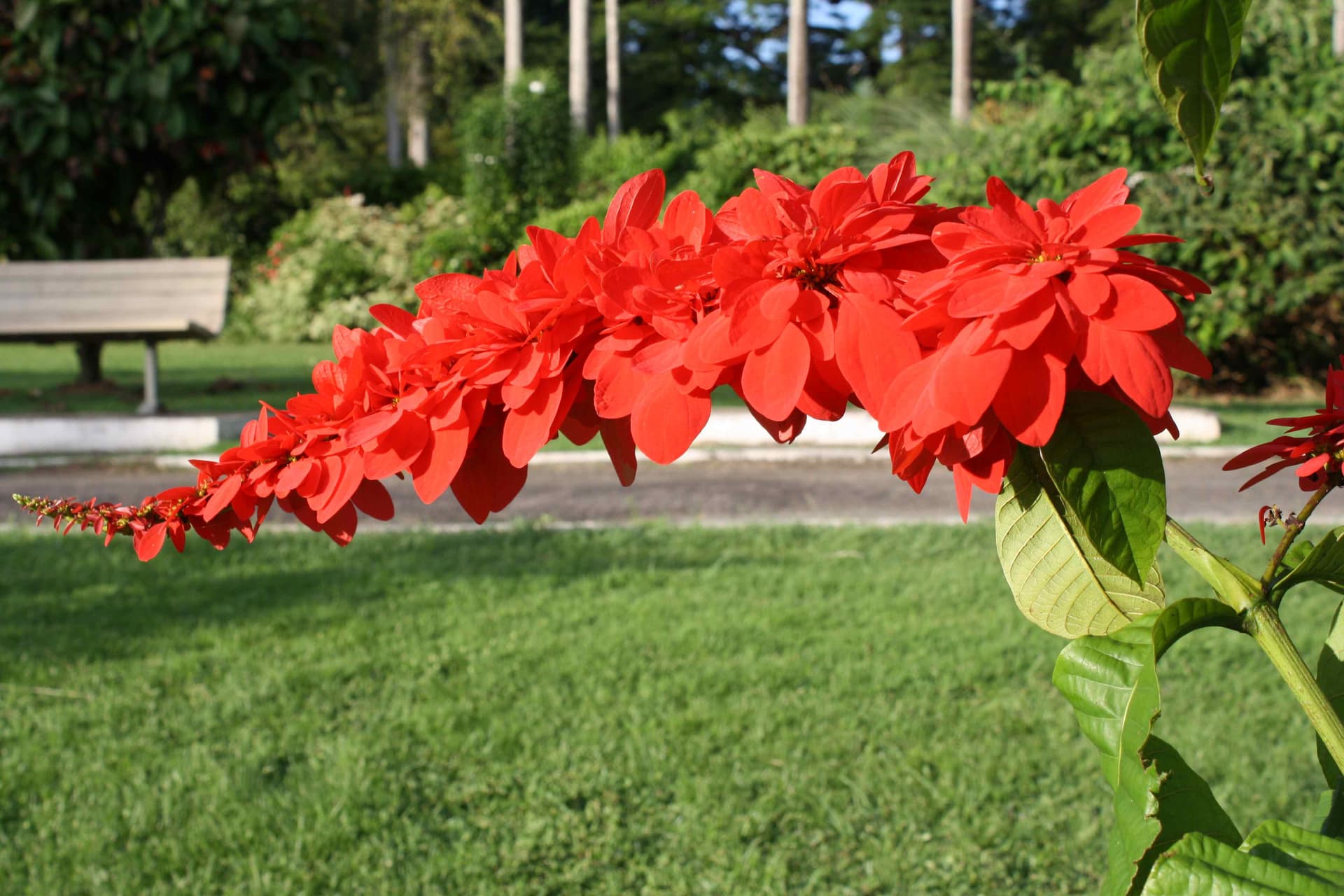
Warszewiczia coccinea
Photo: Albert Sydney · Royal Botanic Gardens, Port of Spain, Trinidad (CC BY-SA 3.0)
The Chaconia is the National Flower of Trinidad and Tobago.
The Chaconia is the National Flower of Trinidad and Tobago. Known locally as "Wild Poinsettia" or "Pride of Trinidad and Tobago," it is a forest shrub or small tree whose vivid scarlet flower clusters typically peak around Independence Day on 31 August, making it a powerful national symbol that blooms on cue with the country's celebration of independence.
Description
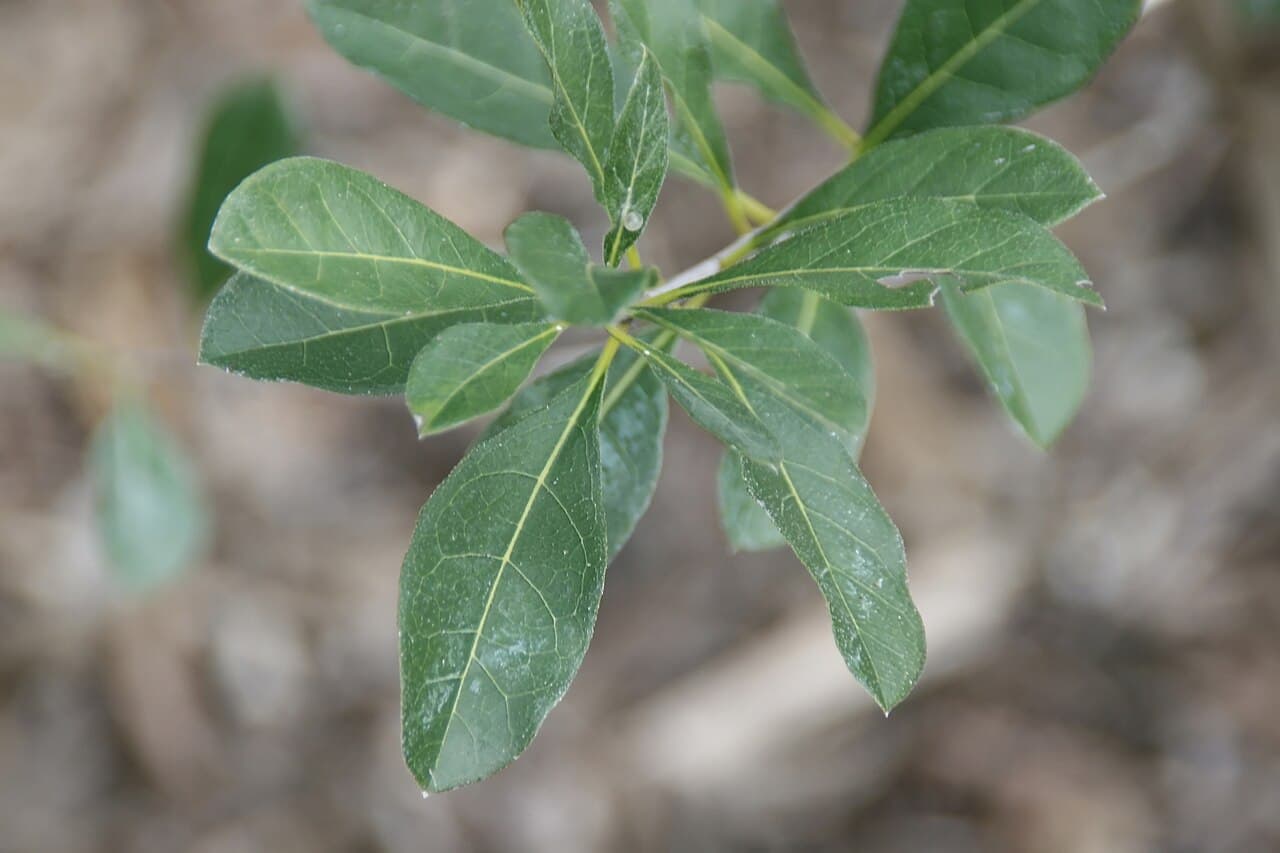
A large shrub or small tree reaching 3 to 6 m in height, with broad, glossy, elliptical leaves. What appear to be the "petals" of the flower are in fact enlarged, brilliantly scarlet sepals (modified leaves) called bracts. The true flowers are small and yellow-orange, clustered along the branching inflorescence between the showy bracts. The plant is named after José María Chacón, the last Spanish governor of Trinidad.
Habitat and Distribution
Chaconia grows along forest margins, stream banks, and disturbed clearings in lowland and lower-montane forest throughout Trinidad. It is also present in Tobago. It thrives at forest edges where sufficient light penetrates the canopy. The species is widespread across northern South America and the Caribbean, so while it is the national flower of T&T, it is not endemic in the strict sense to these islands alone, though it is deeply associated with them culturally.
Cultural Significance
The Chaconia's national status dates to the declaration of T&T's independence in 1962. The timing of its flowering to coincide with August-September has long been observed and celebrated. The plant is widely grown in gardens and public spaces across the country, and its image appears on national symbols, decorations, and official materials. In the wild, it provides nectar for hummingbirds, which are attracted by the red colour and accessible flower structure.
Ecology
Chaconia is a hummingbird-pollinated plant: the scarlet bracts act as visual signals visible to hummingbirds at long range. Bananaquits and other nectar-feeding birds also visit. The plant produces small berries that are dispersed by birds. Along stream banks, the root systems help stabilise soil and reduce erosion. Despite its status as the national flower, the wild plant receives no specific legal protection beyond general conservation law.
Threats
- Habitat clearance removing forest-edge and stream-bank habitat
- Over-collection from wild populations for garden use