Palms
Palms
Manicole Palm
Euterpe oleracea
Photo: Wikimedia Commons contributor (CC BY-SA 4.0)
The Manicole is Trinidad's swamp palm: a slender, clumping species that forms dense stands in permanently or seasonally waterlogged forest, most notably in and around Nariva Swamp.
The Manicole is Trinidad's swamp palm: a slender, clumping species that forms dense stands in permanently or seasonally waterlogged forest, most notably in and around Nariva Swamp. Globally known as the source of acai berries and hearts of palm, in Trinidad it plays a quieter but equally important role as a structural species of freshwater swamp forest and a significant food source for wildlife.
Description
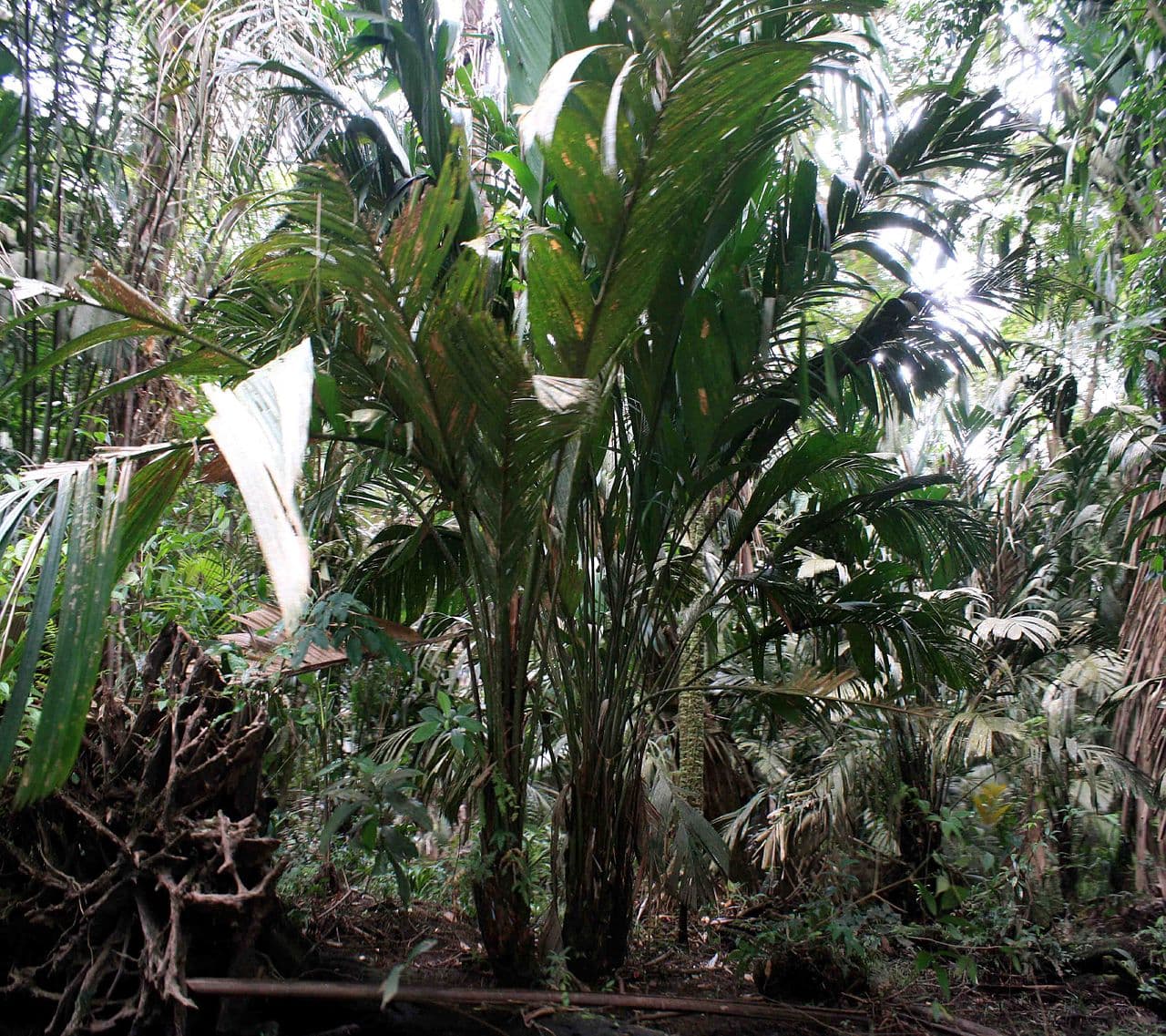
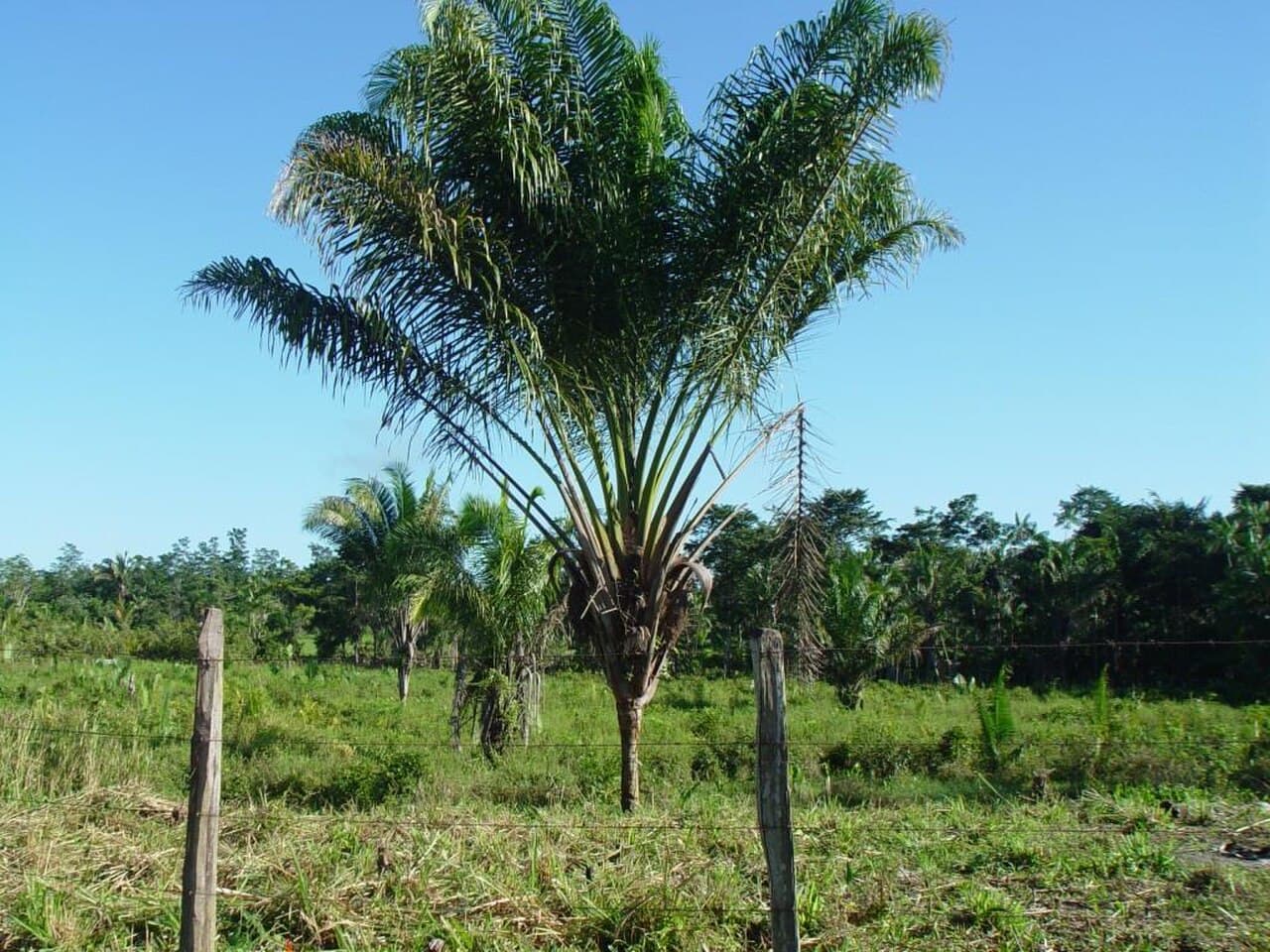
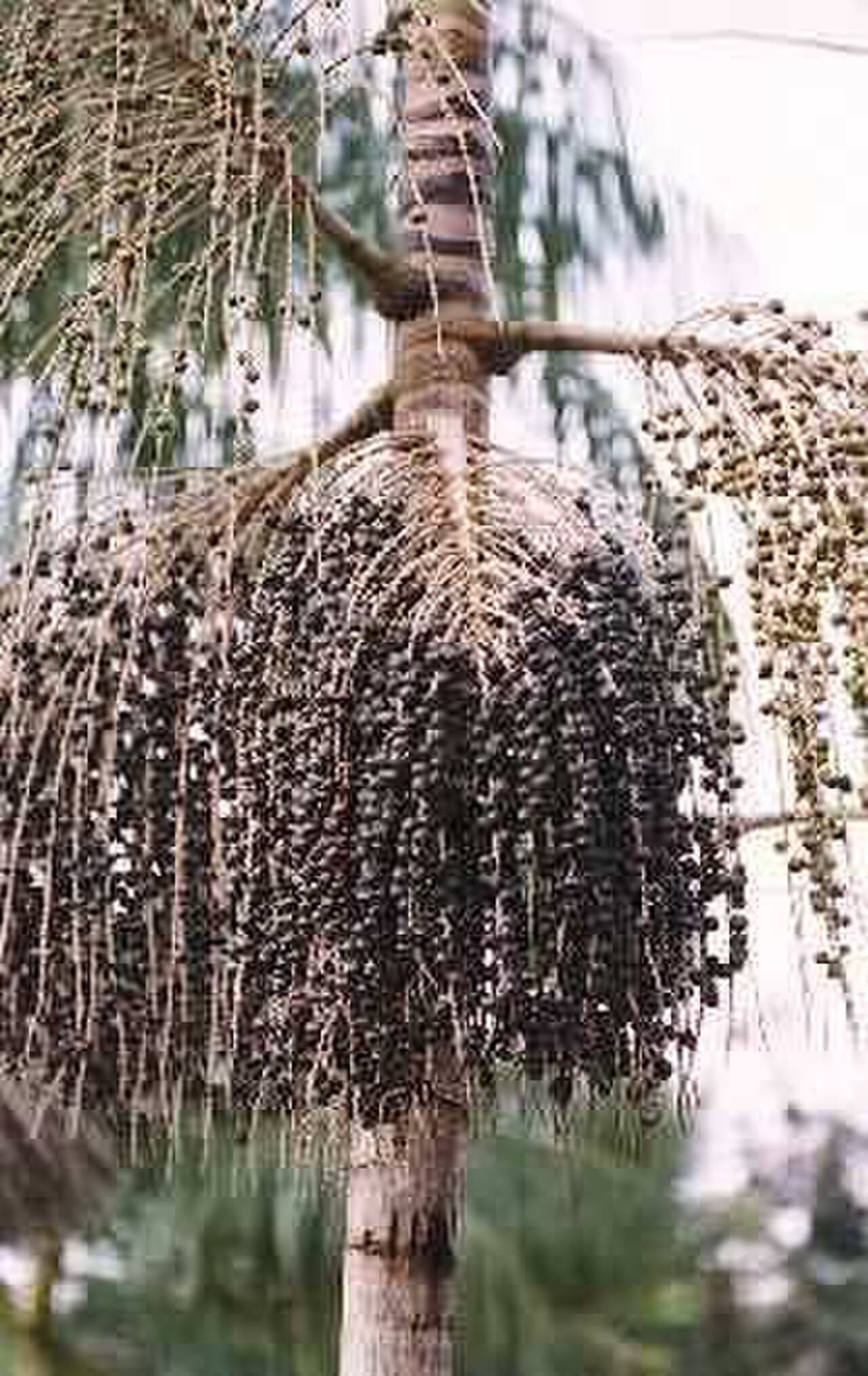
A slender palm reaching 15 to 20 metres, distinctive for its clumping, multi-stemmed growth habit: multiple trunks arise from a shared root mass, forming dense groves. Each stem is straight and ringed with frond scars. The crown carries 8 to 14 pinnate fronds, each 2 to 3 metres long, drooping gracefully at the tips. Fruits are small, round, dark purple to black when ripe, produced in large hanging clusters of hundreds of berries. The fruits have a thin, oily, dark-purple skin over a small amount of flesh surrounding a large seed.
Ecology
Manicole is a specialist of permanently or seasonally flooded freshwater habitats: freshwater swamp forest, swamp edges, and seasonally inundated lowland forest. In Trinidad it is most associated with Nariva Swamp, where it forms part of the palm swamp community alongside Timite. The dark fruits are eaten by a range of frugivores including toucans, parrots, and the Red Howler Monkey. The dense clumping stems provide structural complexity and nesting sites within swamp forest. The multi-stemmed habit means the plant can recover from individual stem loss without dying, making it resilient to selective cutting.
Uses
Hearts of palm, harvested from the growing tip of individual stems, is the best-known product of this species internationally. Harvesting kills the individual stem but does not kill the clump, so selective harvesting is sustainable if managed properly. The dark berries yield acai oil and juice, now internationally marketed as a superfood; in T&T the fruits are eaten locally but large-scale acai production has not developed. The fronds are used for thatch. The slender stems have been used in traditional construction for walls and fencing.
Threats
- Drainage and conversion of freshwater swamp habitat
- Over-harvesting of hearts of palm in unmanaged areas
- Invasive water hyacinth and other aquatic weeds degrading swamp forest margins