Palms
Palms
Mountain Cabbage Palm
Prestoea montana
Photo: pei-ott · Saint Patrick Parish, Dominica (CC BY 4.0)
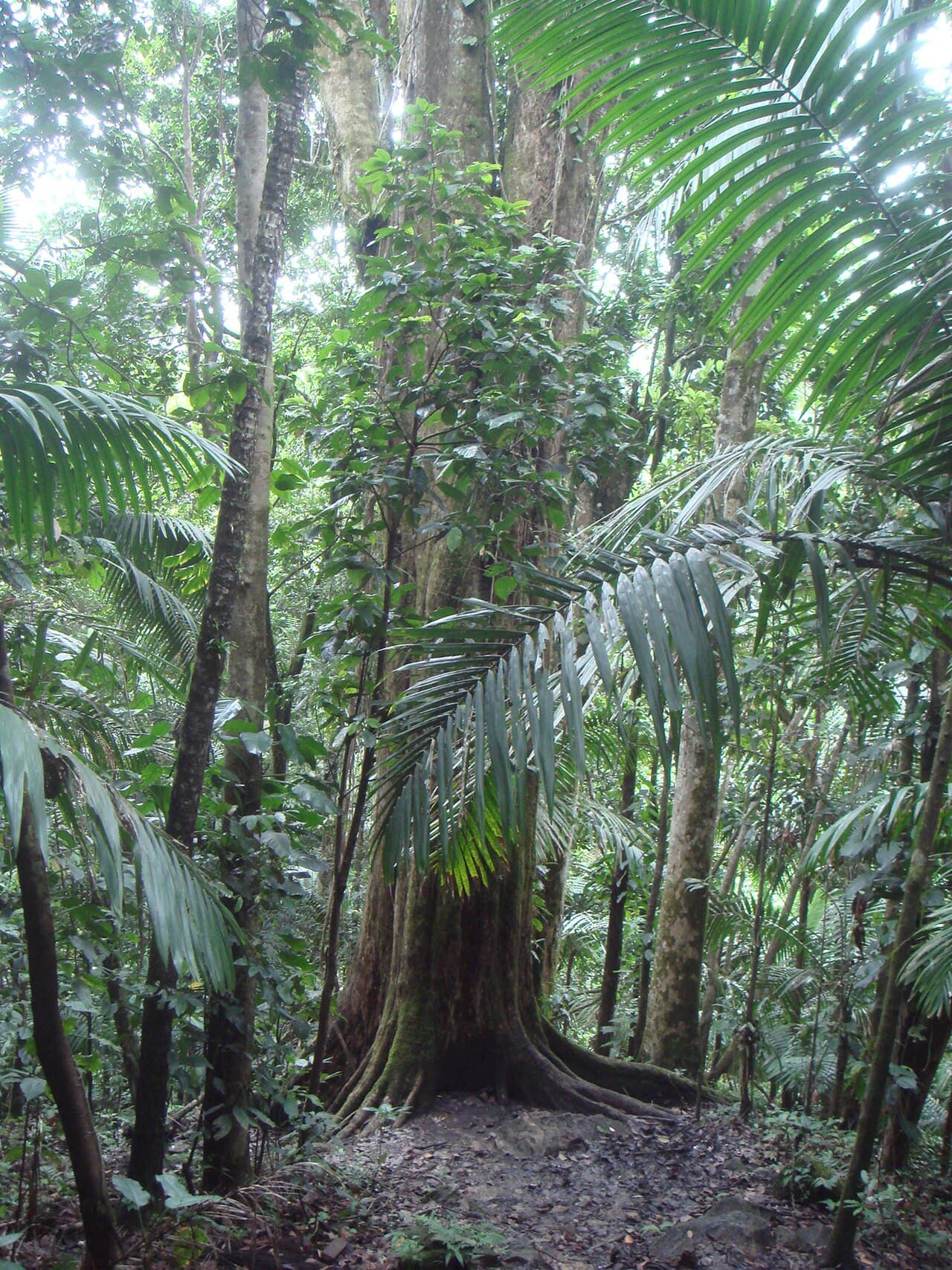
The Mountain Cabbage Palm is the dominant palm of Trinidad's Northern Range cloud forest, forming dense stands on steep, mist-drenched slopes between 300 and 900 metres.
The Mountain Cabbage Palm is the dominant palm of Trinidad's Northern Range cloud forest, forming dense stands on steep, mist-drenched slopes between 300 and 900 metres. Its slender, clustering trunks and feathery crown are a defining feature of the montane forest skyline, and the species plays a critical structural role in the ecosystem.
Description
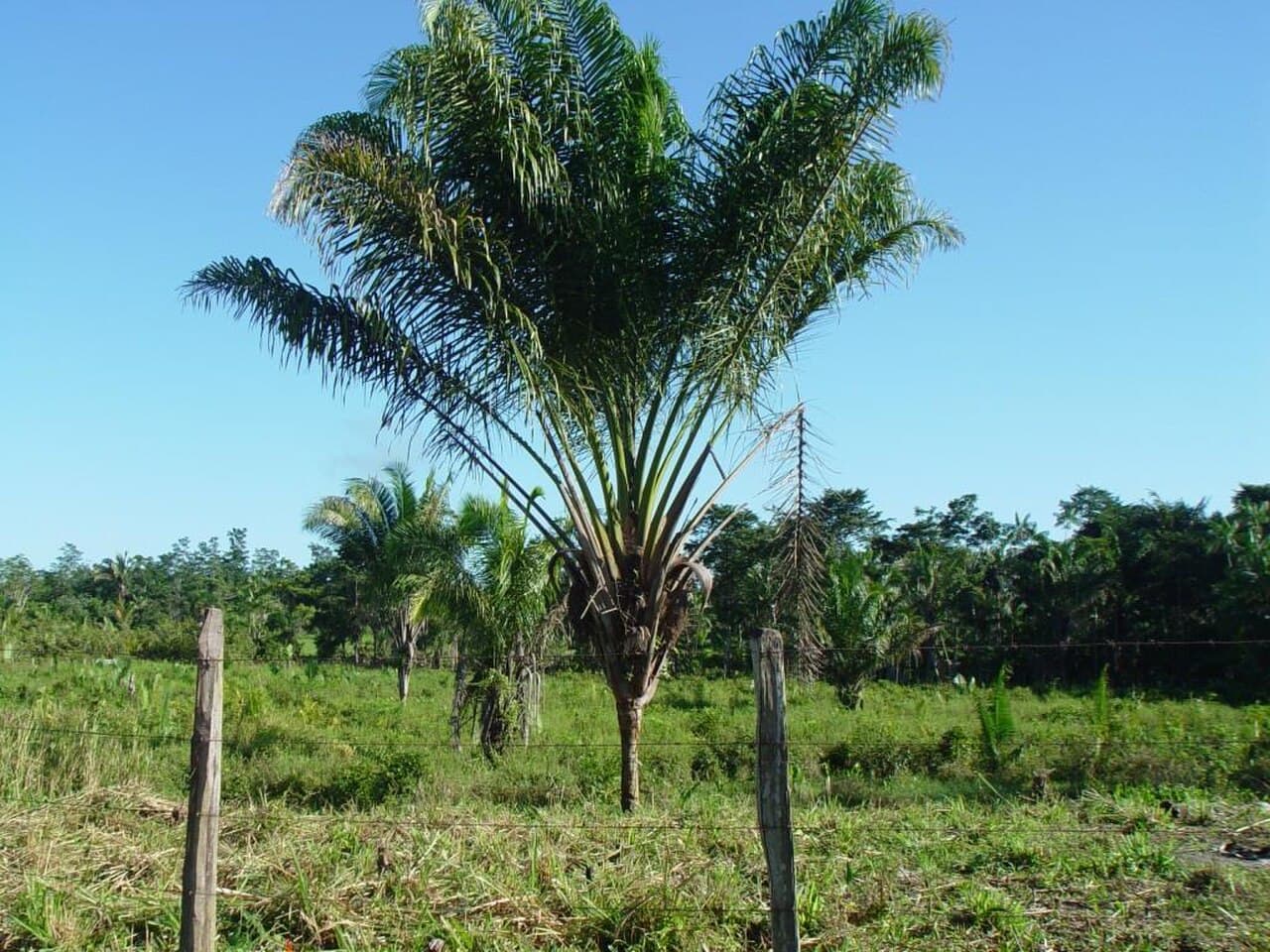
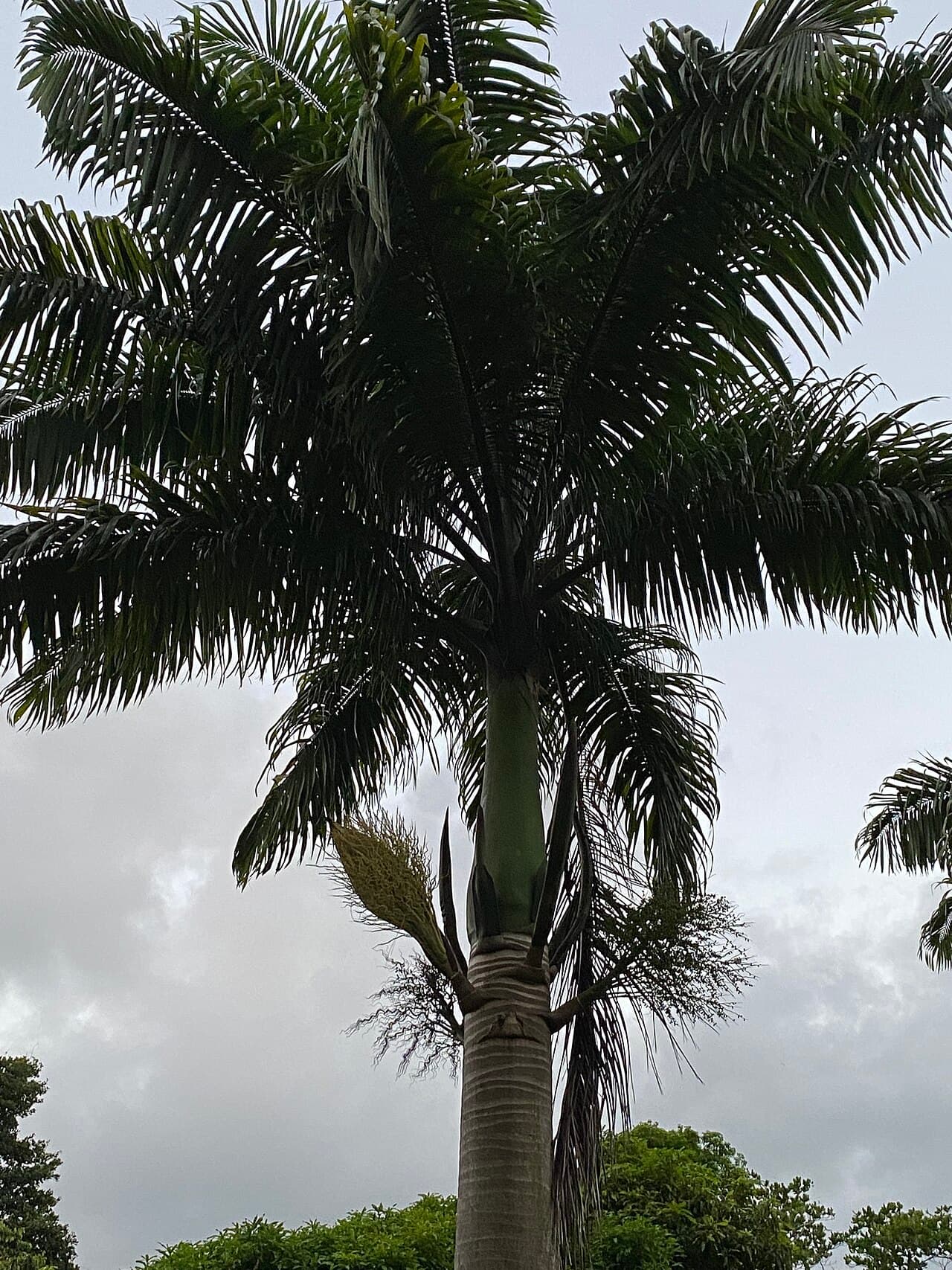
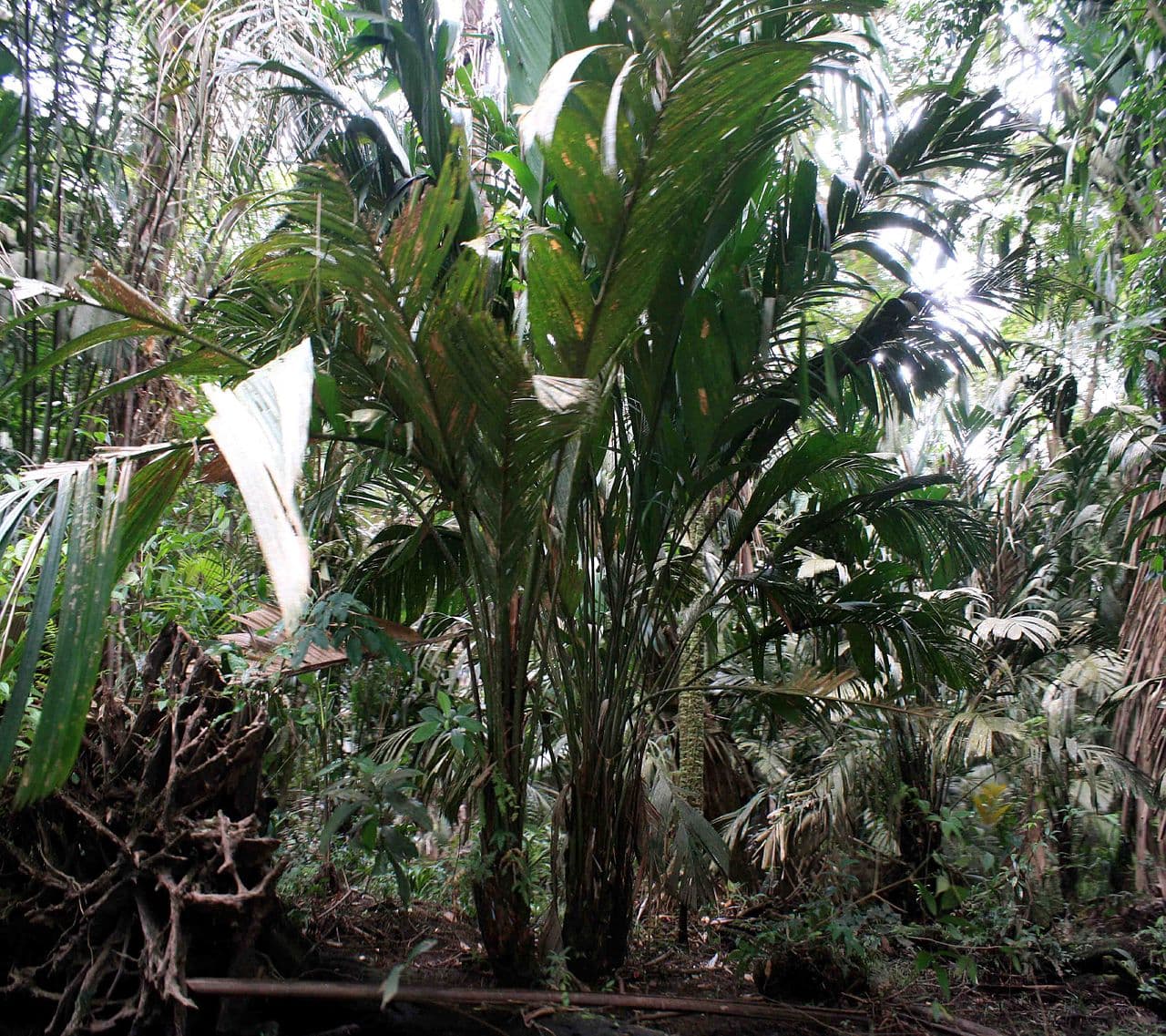
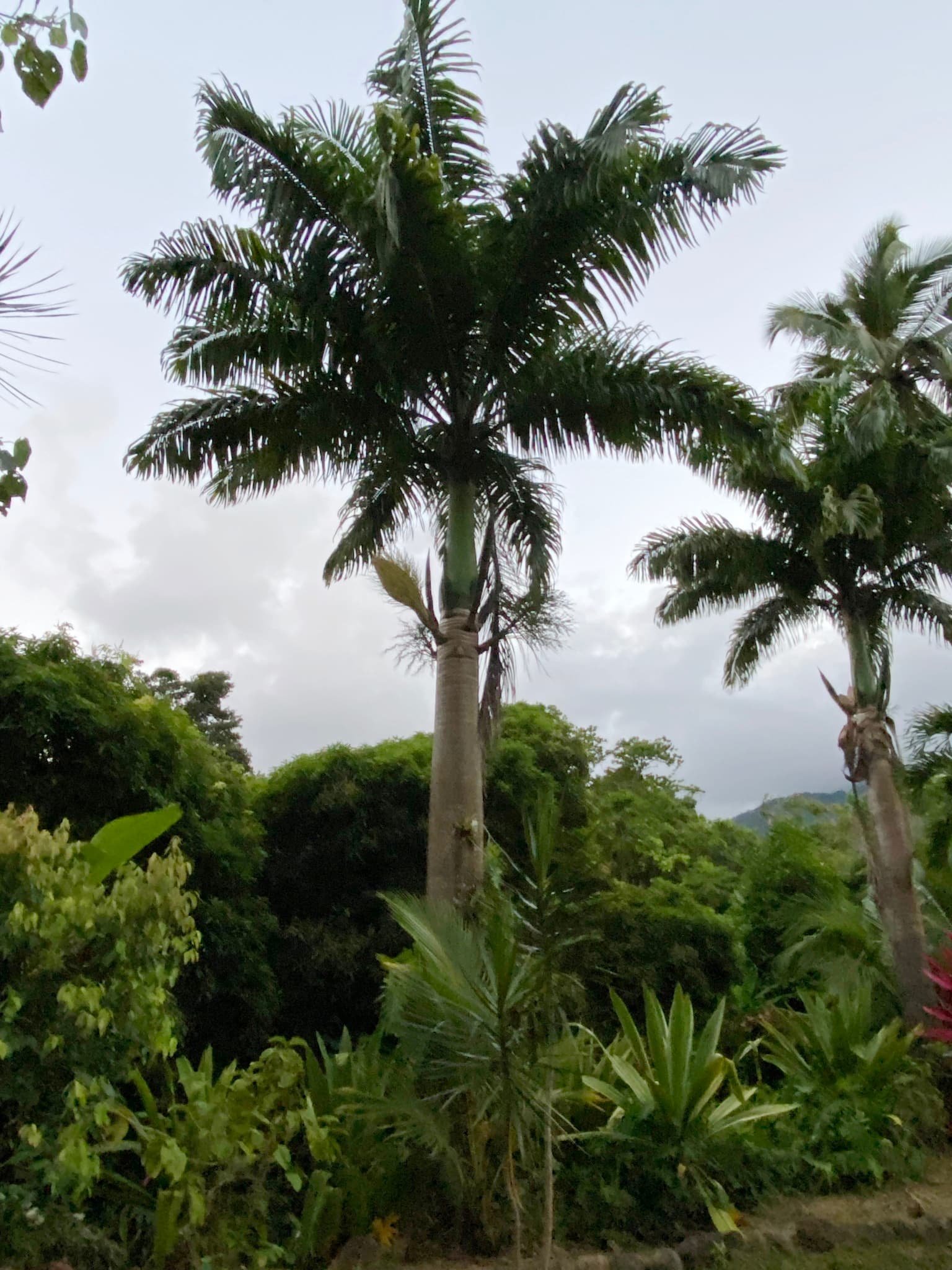
A clustering palm producing multiple slender stems from a shared base, each stem typically 4 to 10 m tall and 5 to 8 cm in diameter. The stems are ringed with leaf-scar nodes. The crown bears 5 to 10 arching pinnate fronds, each up to 2 m long, with many narrow leaflets. The species produces a single large inflorescence below the crownshaft, bearing small white flowers followed by small dark fruits eaten by birds and mammals.
Ecological Role
Mountain Cabbage Palms are foundation species in Northern Range montane forest. Their stems and fronds provide perching and nesting sites for numerous bird species, including the rare Trinidad Piping-Guan (Pawi). The fruits are a critical food source for fruit-eating birds and mammals. The clustering growth habit creates complex micro-shelter for small vertebrates and invertebrates at the forest floor.
Historical Exploitation
The inner growing tip of the palm, the "heart of palm" or "palm heart," is edible and was historically harvested across the Caribbean. Removing the heart kills the stem. Exploitation of wild palm heart drove population declines across much of the Caribbean in the 20th century. In Trinidad, the species' stronghold within Forest Reserves has provided significant protection, and commercial harvesting from wild trees is regulated by the Forestry Division.
Where to See
Abundant on the slopes of the Northern Range along the Arima-Blanchisseuse Road, above the Asa Wright Nature Centre, and throughout the El Tucuche and El Cerro del Aripo Environmentally Sensitive Areas. Tall, pure stands can be impressive at mid-elevation gullies and along stream margins.
Threats
- Clearance of montane forest for agriculture and informal settlement at lower elevations
- Illegal palm heart harvesting
- Bushfire damage at forest margins
- Climate change altering rainfall and humidity in the cloud forest zone