Palms
Palms
Royal Palm (Palmiste)
Roystonea oleracea
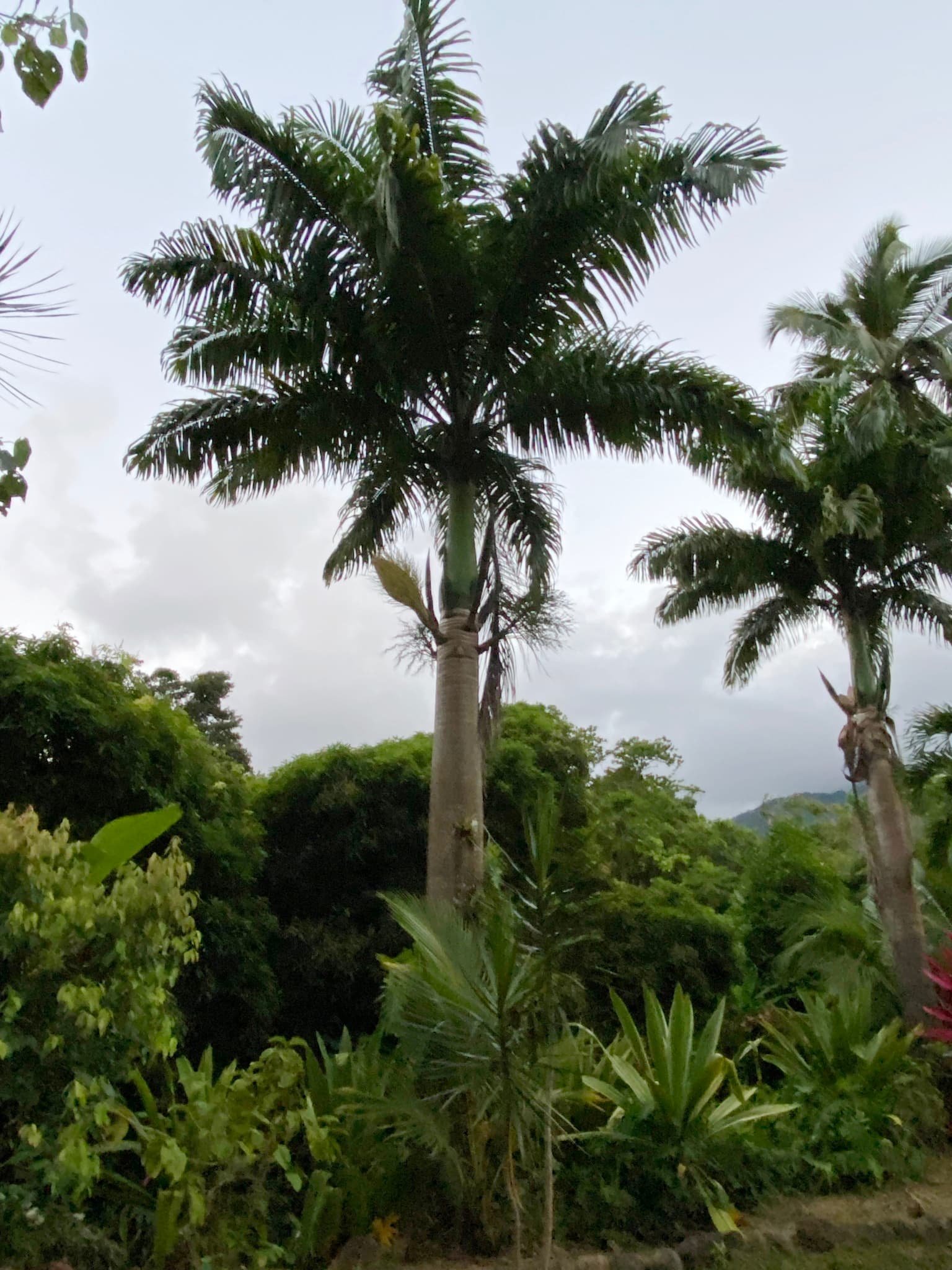
Photo: pei-ott · Saint Patrick Parish, Dominica (CC BY 4.0)
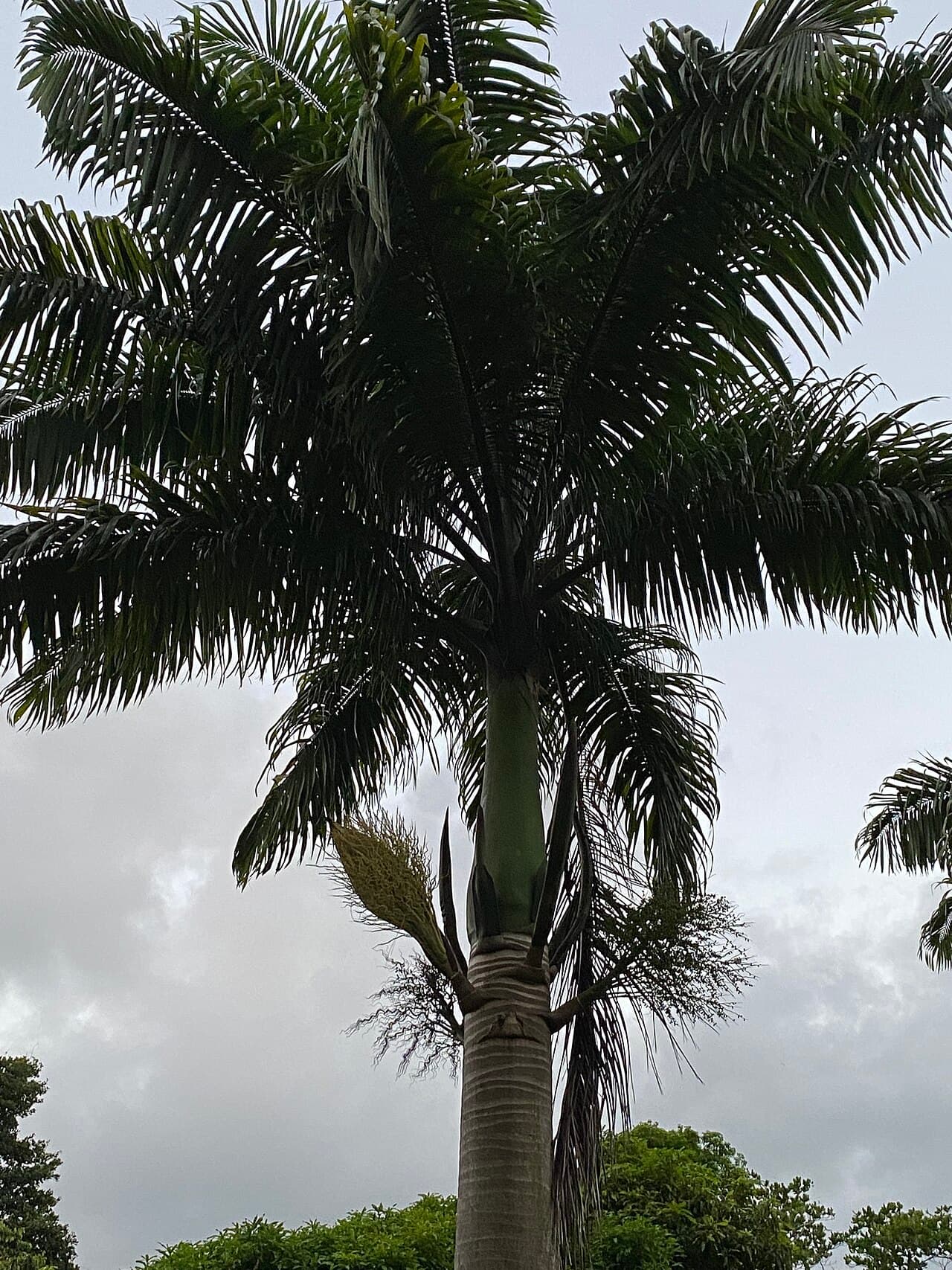
The Royal Palm, known locally in Trinidad and Tobago as Palmiste, is one of the most architecturally striking trees in the Caribbean landscape: a tall, smooth-trunked giant reaching up to 40 metres, topped by a vivid green crownshaft and a dense head of feathery fronds.
The Royal Palm, known locally in Trinidad and Tobago as Palmiste, is one of the most architecturally striking trees in the Caribbean landscape: a tall, smooth-trunked giant reaching up to 40 metres, topped by a vivid green crownshaft and a dense head of feathery fronds. It is native to T&T and the broader Caribbean, growing naturally in lowland forests and gallery woodlands, and its fruit is an important food source for parrots and bats in wetlands like the Nariva Swamp.
Description
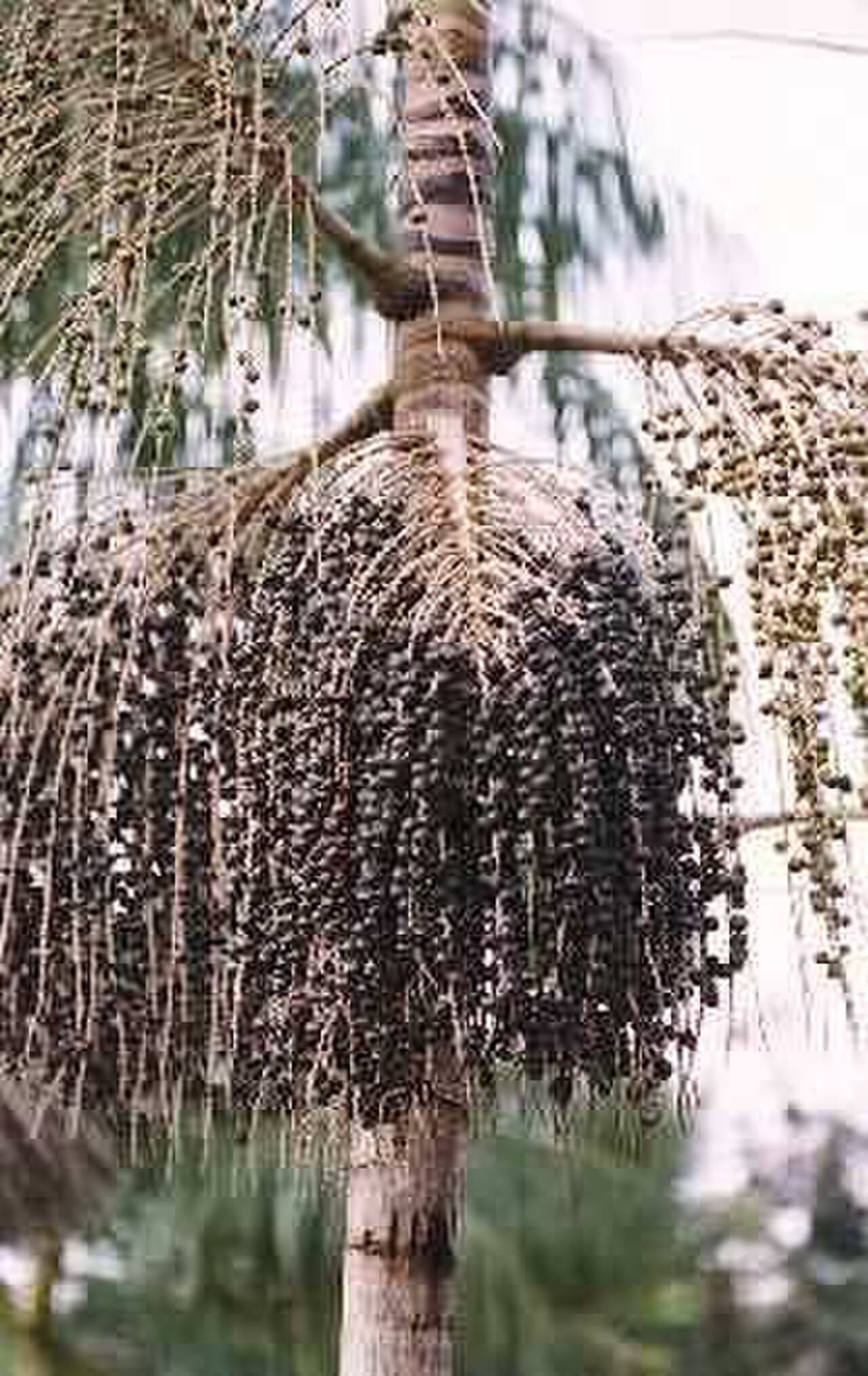
A tall, single-stemmed evergreen palm reaching 18 to 40 metres. The trunk is smooth and grey to whitish-grey, 46 to 66 centimetres in diameter. The most distinctive feature is the bright green crownshaft, approximately 2 metres long, formed by the tightly sheathing bases of the fronds. From this emerge 16 to 22 large, once-pinnate (feathery) fronds in a dense, bottlebrush-like arrangement. Fruits are small (12 to 18 mm), oval, and ripen from green to deep purplish-black.
Ecology and Range
Roystonea oleracea is native to the Lesser Antilles (Guadeloupe, Dominica, Martinique), Trinidad and Tobago, Venezuela, and Colombia. In T&T it occurs naturally in lowland areas subject to seasonal flooding, gallery forests, and coastal zones, and is also widely planted along roadsides and on estates across both islands. The ripe fruit is an important food source for Orange-winged Amazons (Amazona amazonica) and Red-bellied Macaws (Orthopsittaca manilatus) documented at Nariva Swamp from July to November. Bats also feed on the fruit, assisting seed dispersal. Dead trunks serve as nesting and roost sites for cavity-nesting birds including woodpeckers and parrots.
Cultural Significance and Uses
The palmiste has deep cultural roots in Trinidad and Tobago and across the wider Caribbean. The apical bud, harvested as hearts of palm, is considered a delicacy; however, removing it kills the palm, since palms cannot regrow from lateral shoots. Historically, immature inflorescences were pickled as vegetables and the starchy stem pith was consumed. The sap can be fermented into palm wine. Today the species is prized primarily as an ornamental, forming dramatic avenues on historic estates and framing the skylines of towns and villages across T&T.
Threats
- Unsustainable palm-heart harvesting
- Lowland habitat loss
- Coastal flooding