Palms
Palms
Timite Palm
Manicaria saccifera
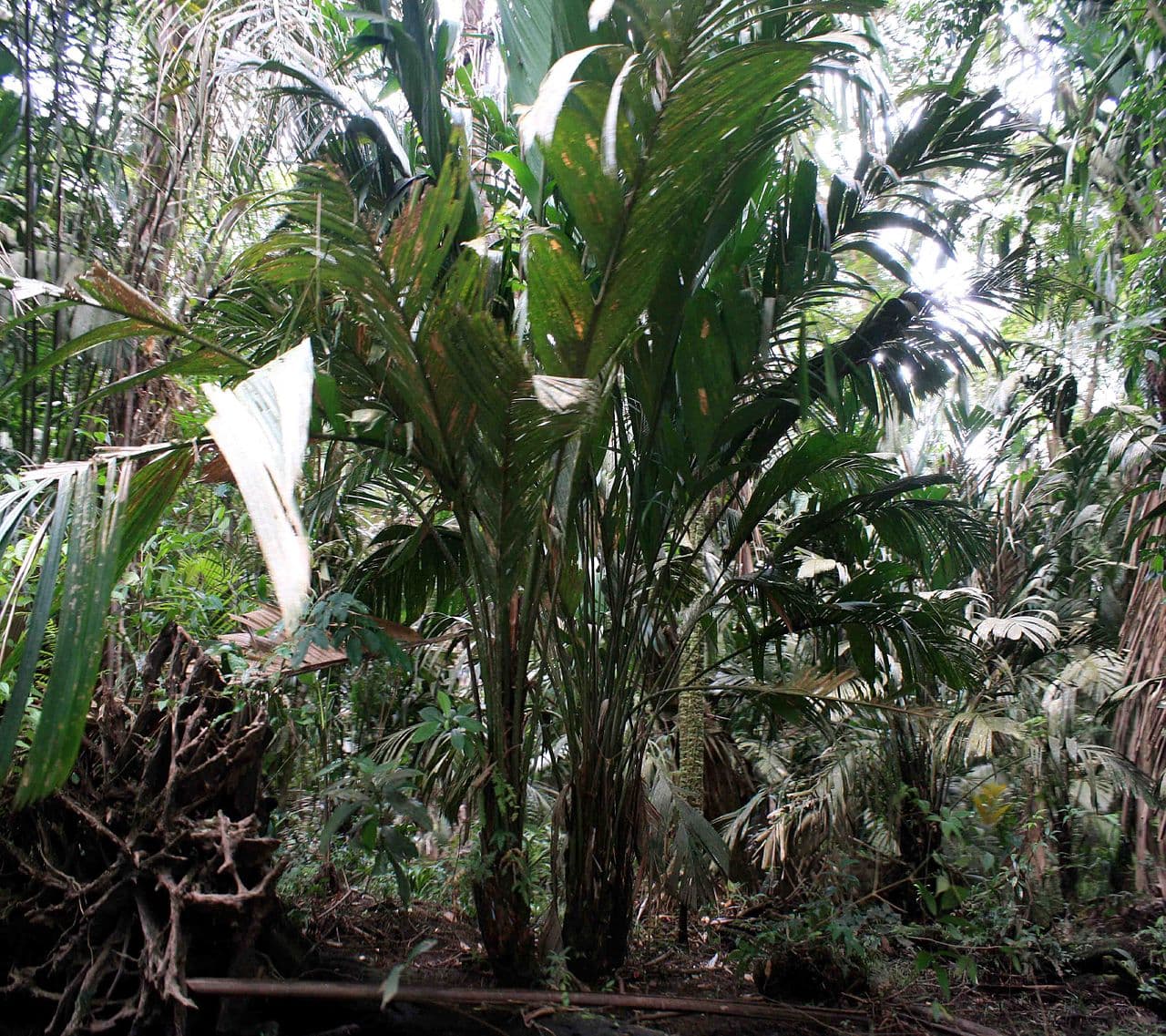
Photo: Wikimedia Commons contributor (CC BY-SA 3.0)
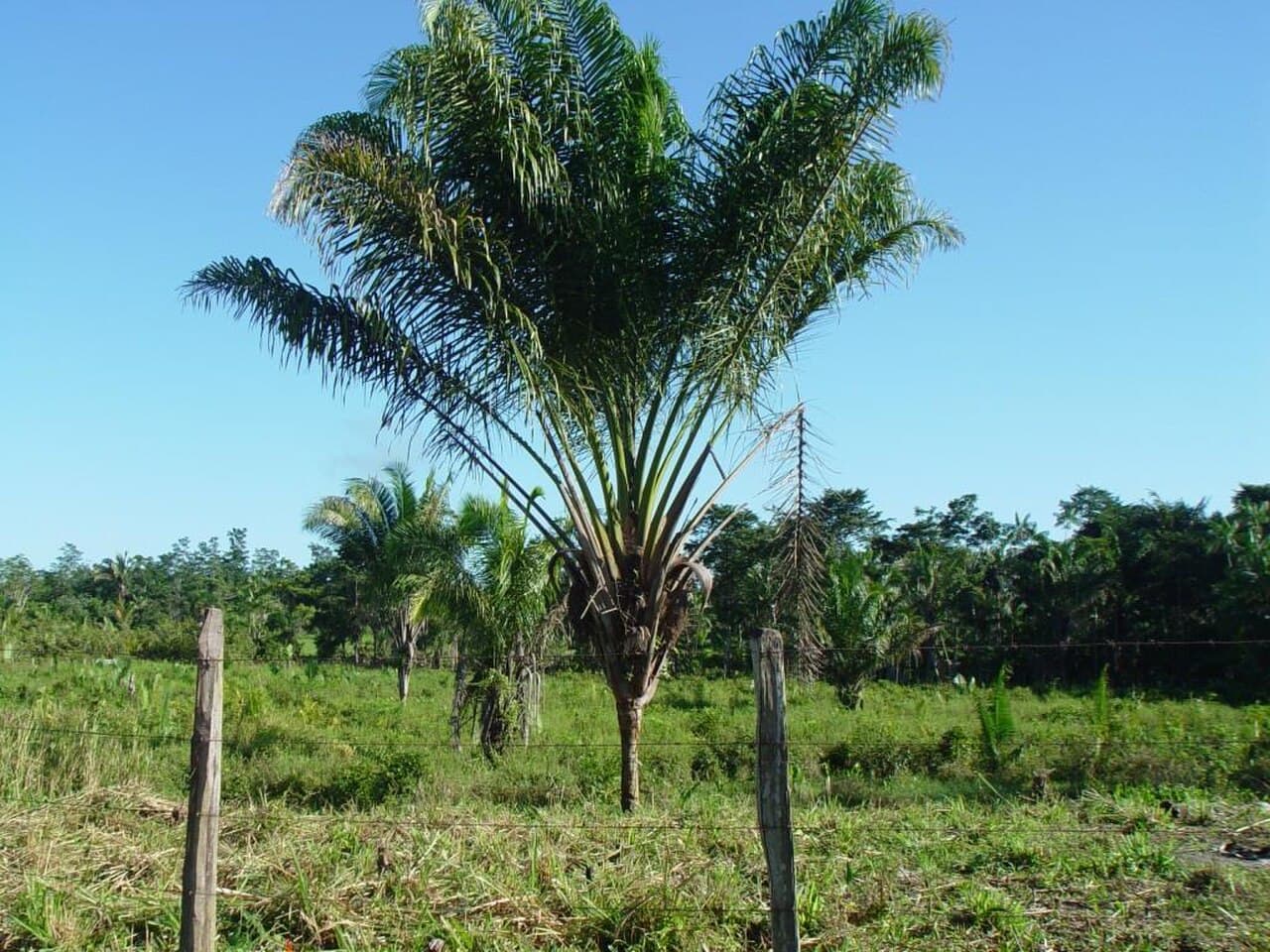
The Timite is one of the most visually arresting plants in Trinidad's wetlands: a swamp palm with some of the largest undivided leaves of any plant on earth, reaching up to 10 metres long and forming a dramatic, canoe-like silhouette in the freshwater swamp forests where it grows.
The Timite is one of the most visually arresting plants in Trinidad's wetlands: a swamp palm with some of the largest undivided leaves of any plant on earth, reaching up to 10 metres long and forming a dramatic, canoe-like silhouette in the freshwater swamp forests where it grows. Its association with Nariva Swamp and the craft tradition of timite-cloth weaving from its fibrous spathe makes it both an ecological and cultural landmark of lowland Trinidad.
Description
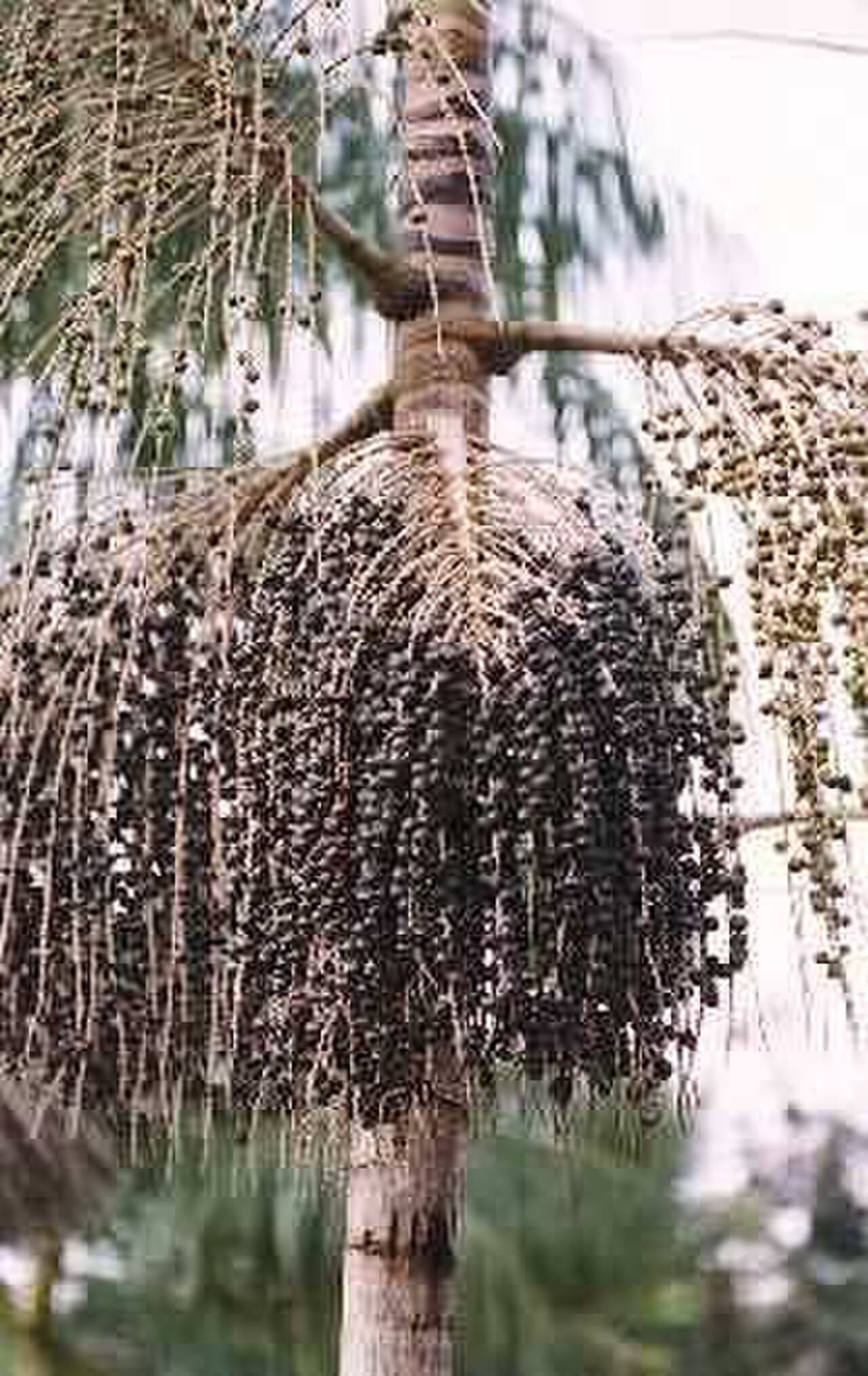
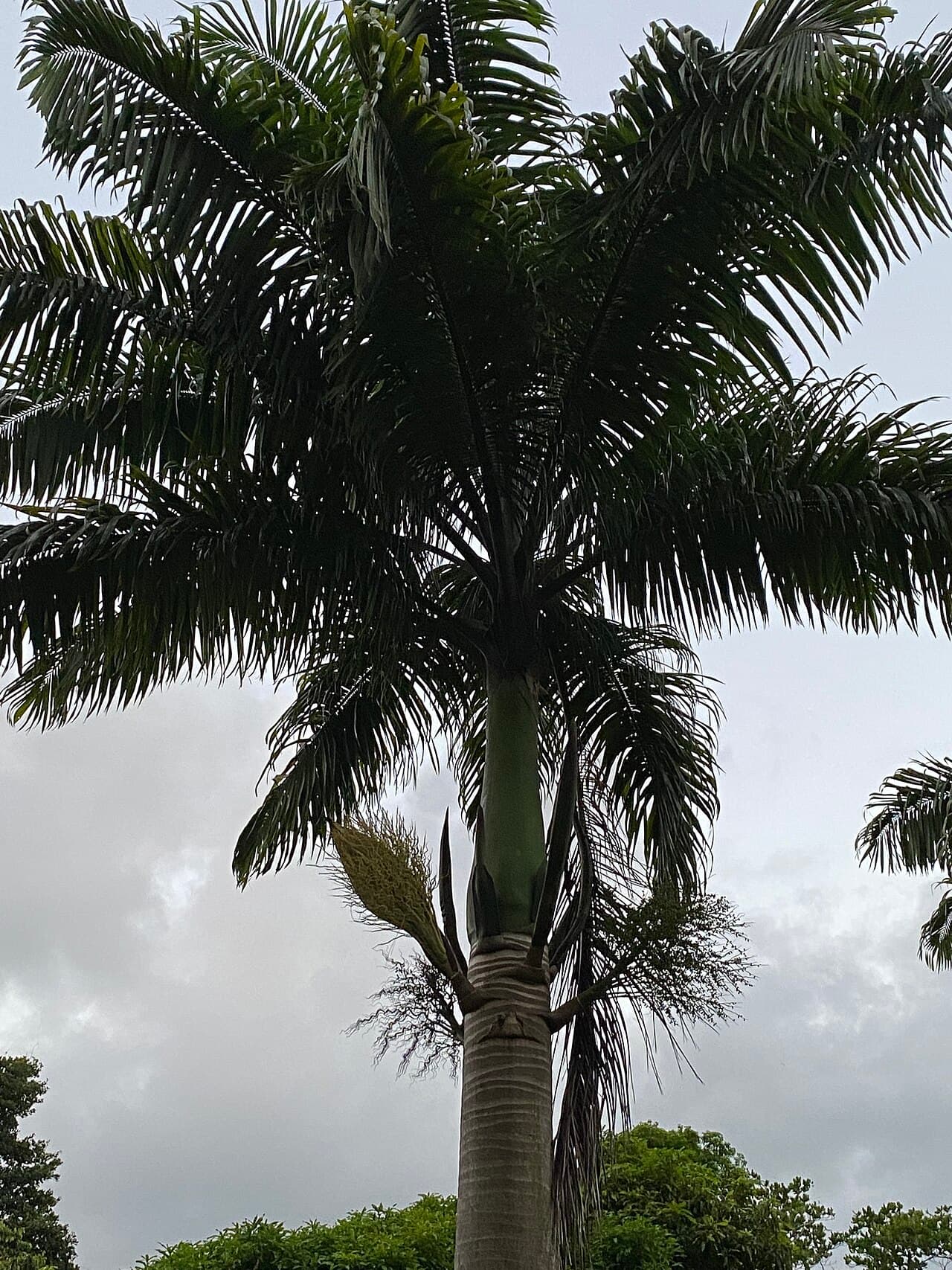
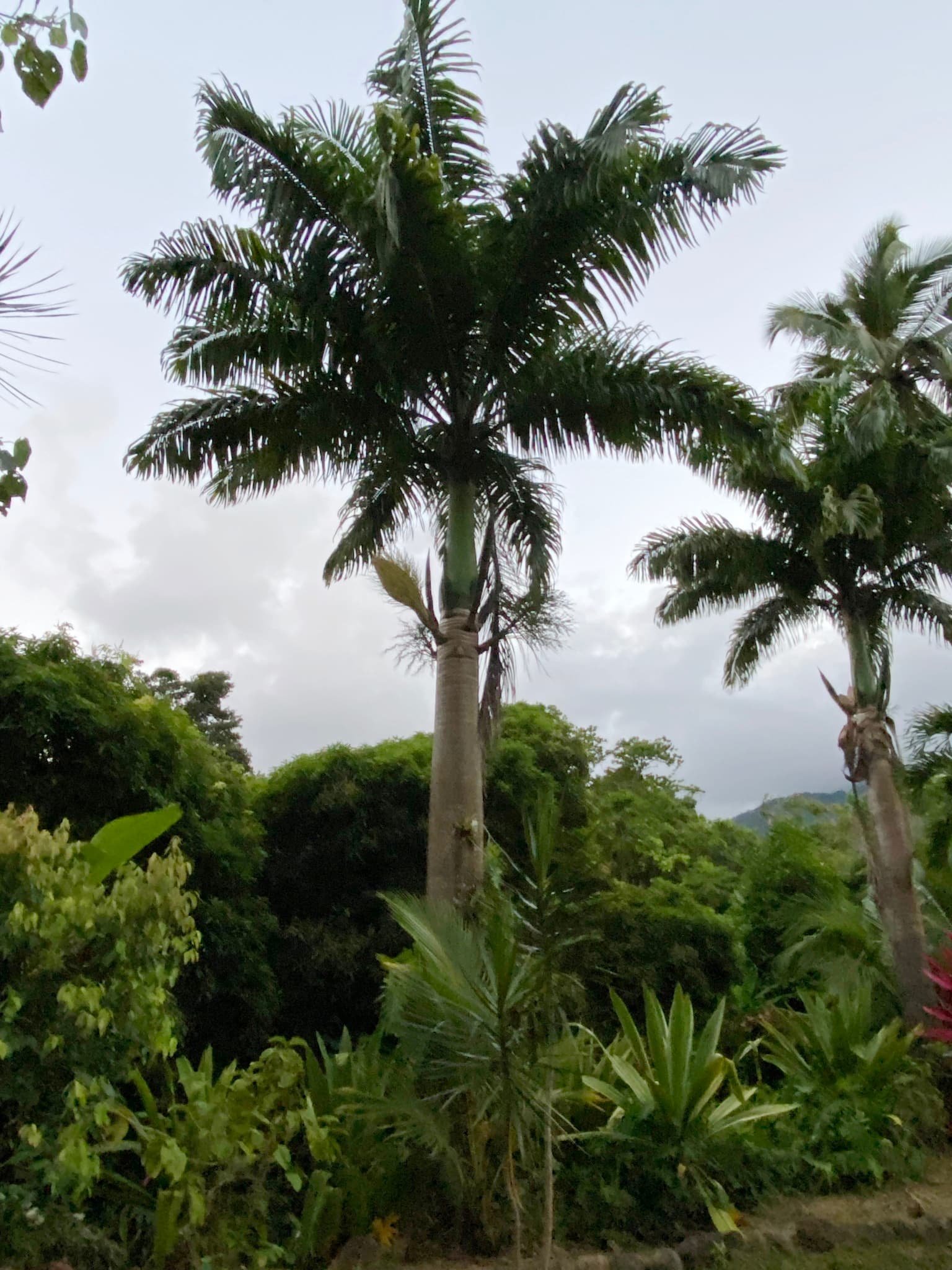
A stout, solitary, or loosely clustering palm typically 5 to 10 metres tall, occasionally taller. The most remarkable feature is the leaves: unlike most palms, which have feathery or fan-shaped divided fronds, young Timite fronds are entirely undivided, forming enormous strap-like blades up to 10 metres long and 2 metres wide that stand or arch over the surrounding vegetation. Older leaves may develop splits along the margins but remain among the largest palm fronds in the world. The flower spathe is large, hard, and boat-shaped, enclosing the inflorescence; this spathe is covered in stiff, bristly fibres. The fruits are large, round to three-lobed, corky-surfaced, and buoyant, adapted for water dispersal.
Ecology
Timite is restricted to permanently or seasonally waterlogged freshwater swamp forest. In Trinidad it is most strongly associated with Nariva Swamp, where it co-occurs with Manicole Palm and forms part of the palm swamp community. The enormous leaves create dense shade and contribute large quantities of organic matter to the swamp system as they fall and decompose. The corky, buoyant fruits are dispersed by floodwaters within the swamp and along drainage channels. The plant is slow-growing but very long-lived; large individuals may represent decades of swamp-forest stability.
Craft and Cultural Use
The fibrous spathe of the Timite Palm is the source of timite cloth, a coarse, naturally water-resistant fabric woven from the stripped fibres. Timite cloth was historically used for hats, bags, and mats, and small-scale production continues as a traditional craft in communities near Nariva. The giant leaves are used for thatching, providing excellent waterproofing due to their size and thickness. The corky fruits have been used as fishing floats. The palm is closely associated with the communities of Nariva and the broader cultural identity of freshwater swamp use in Trinidad.
Threats
- Drainage of freshwater swamp for agriculture (historically, rice farming at Nariva)
- Illegal logging and clearing within swamp forest margins
- Slow regeneration rate makes recovery from disturbance difficult