Bird
Bird
Yellow-hooded Blackbird
Chrysomus icterocephalus
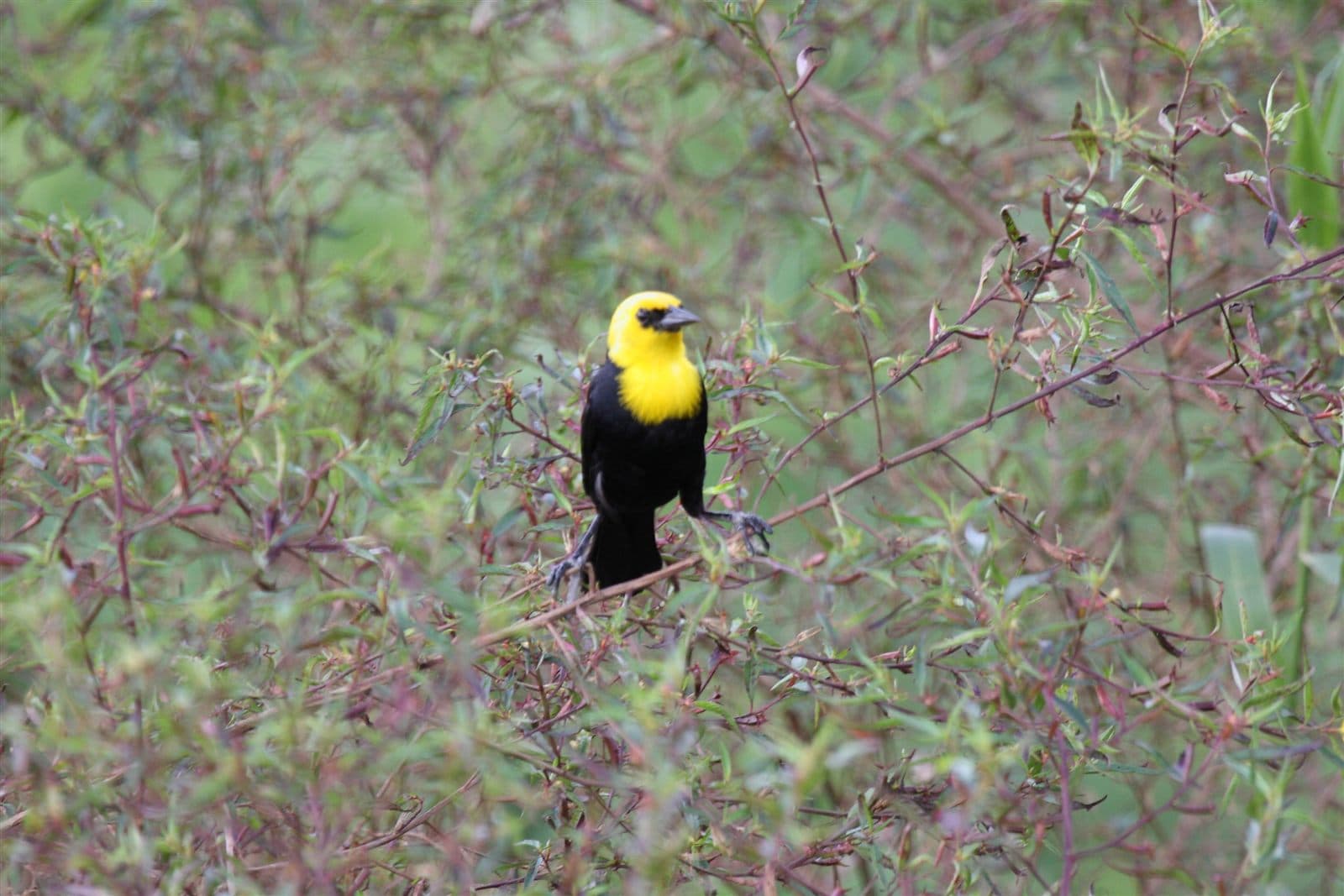
The Yellow-hooded Blackbird is a striking marsh bird of Trinidad's freshwater wetlands, the male's vivid yellow head and throat contrasting boldly against an otherwise all-black body, typically seen perched on emergent marsh vegetation.
The Yellow-hooded Blackbird is a striking marsh bird of Trinidad's freshwater wetlands, the male's vivid yellow head and throat contrasting boldly against an otherwise all-black body, typically seen perched on emergent marsh vegetation.
Identification
A medium-sized blackbird around 18 to 20 cm long. The male is glossy black overall with a bright, contrasting yellow head, throat, and upper breast forming a distinctive "hood". The female is far less conspicuous, streaked brown above and buffy below with a duller yellowish tinge on the face and throat, providing effective camouflage while attending the nest in dense marsh vegetation.
Ecology
The Yellow-hooded Blackbird feeds on seeds and insects, foraging low in marsh vegetation and on adjacent damp ground, and builds a woven cup nest attached to standing marsh grasses or reeds over shallow water, providing some protection from ground predators. Males perch prominently on tall marsh vegetation while singing to advertise territory, their bright yellow head making them conspicuous against the green backdrop of the marsh.
Status in T&T
Found in freshwater marshes and wet grassland on Trinidad, notably in wetland systems such as Caroni and Nariva. It is not threatened. It is protected under the Conservation of Wildlife Act and is not a game species.
Threats
- Freshwater marsh drainage and habitat loss