Bird
Bird
Yellow-crowned Parrot
Amazona ochrocephala
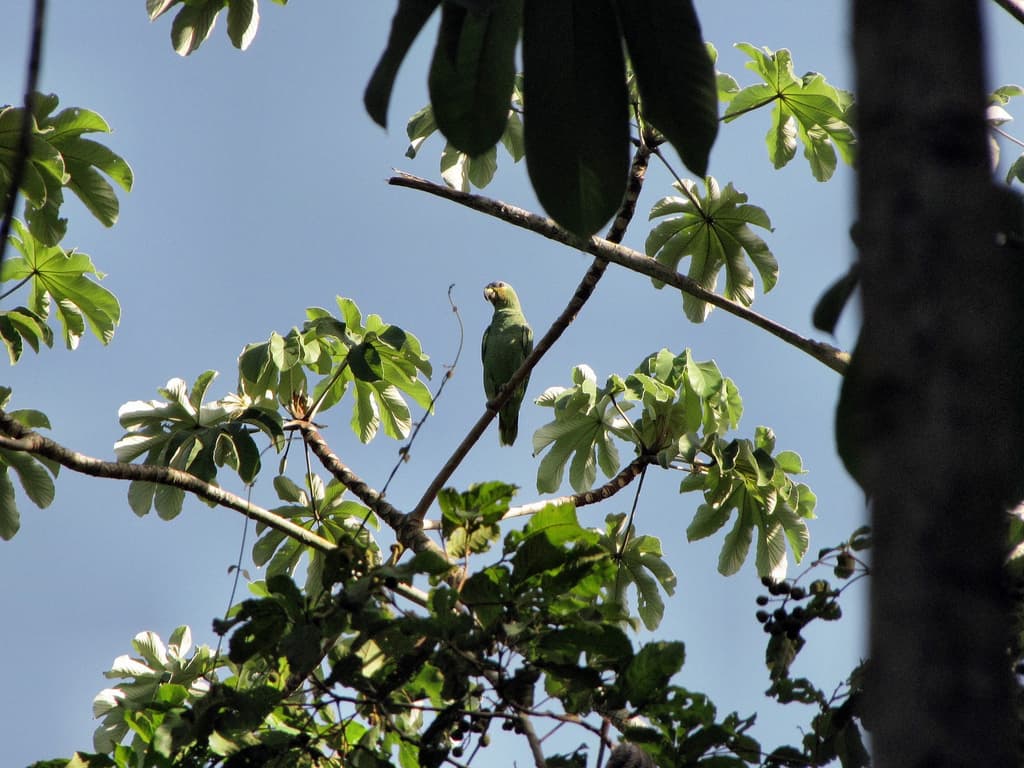
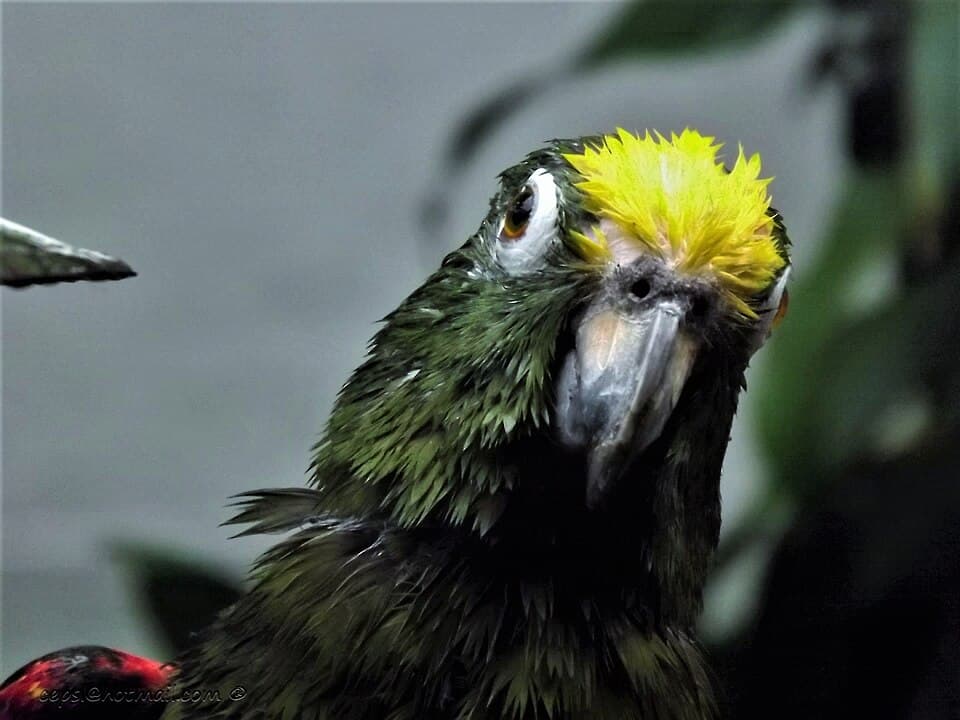
The Yellow-crowned Parrot is a large, mostly green Amazon parrot found on Trinidad, distinguished by a variable patch of yellow feathering on the crown that expands with age, and, like other Amazon parrots, prized in the illegal pet trade for its intelligence and capacity for mimicry.
The Yellow-crowned Parrot is a large, mostly green Amazon parrot found on Trinidad, distinguished by a variable patch of yellow feathering on the crown that expands with age, and, like other Amazon parrots, prized in the illegal pet trade for its intelligence and capacity for mimicry.
Identification
A large parrot around 35 to 38 cm long, predominantly green with a patch of yellow on the crown that is small or absent in young birds and expands with age, sometimes covering much of the crown in older adults. The wings show a red patch at the bend visible in flight, and the bill is pale horn-coloured. Flight is direct with shallow, rapid wingbeats typical of Amazon parrots, usually in pairs or small flocks.
Ecology
The Yellow-crowned Parrot feeds on fruit, seeds, nuts, and blossoms gathered in the forest canopy, moving in pairs or small flocks between fruiting trees, and roosting communally at established sites, often flying to and from roosts at dawn and dusk with loud, raucous calls. It nests in a natural tree cavity, typically in a large mature tree, and pairs mate for life, with both parents involved in raising the brood.
Status in T&T
Found in forest and forest edge on Trinidad, though populations have been reduced historically by capture for the pet trade and by loss of large nesting trees. It is not currently considered globally threatened, but is listed under CITES Appendix II, which regulates international trade, and illegal capture for the domestic and export pet trade remains an ongoing local pressure. It is fully protected under the Conservation of Wildlife Act, and capture, trade, and keeping without permit are offences.
Threats
- Illegal capture for the pet trade
- Loss of large mature trees suitable for nest cavities
- Forest fragmentation