Bird
Bird
Blue-headed Parrot
Pionus menstruus
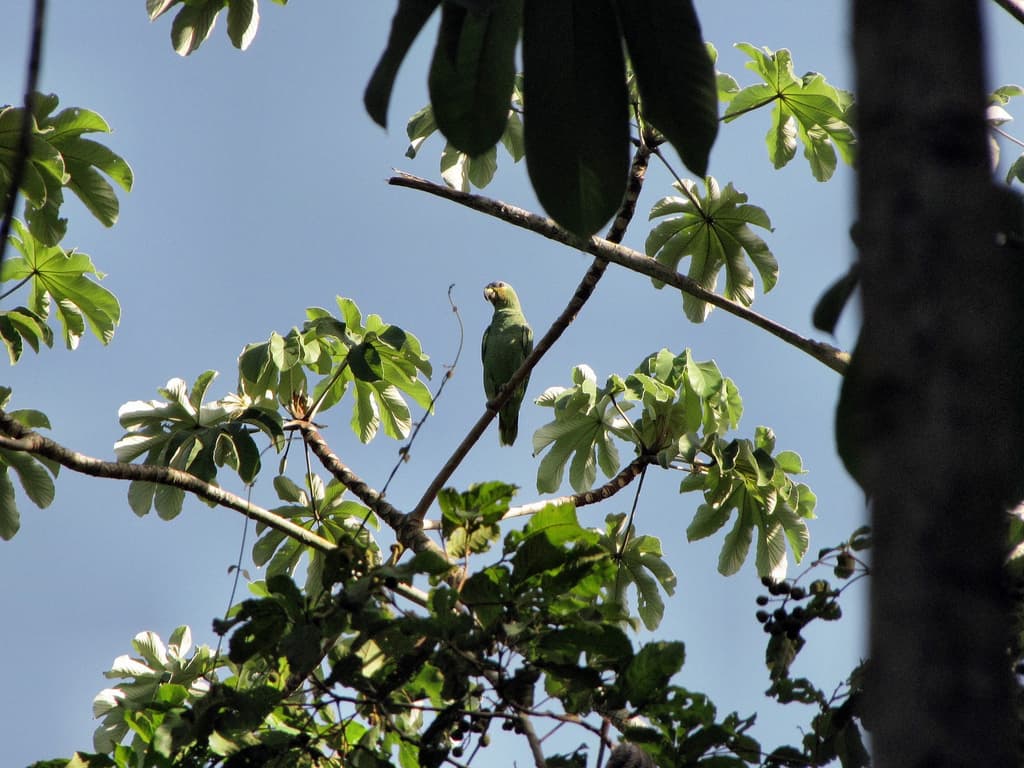
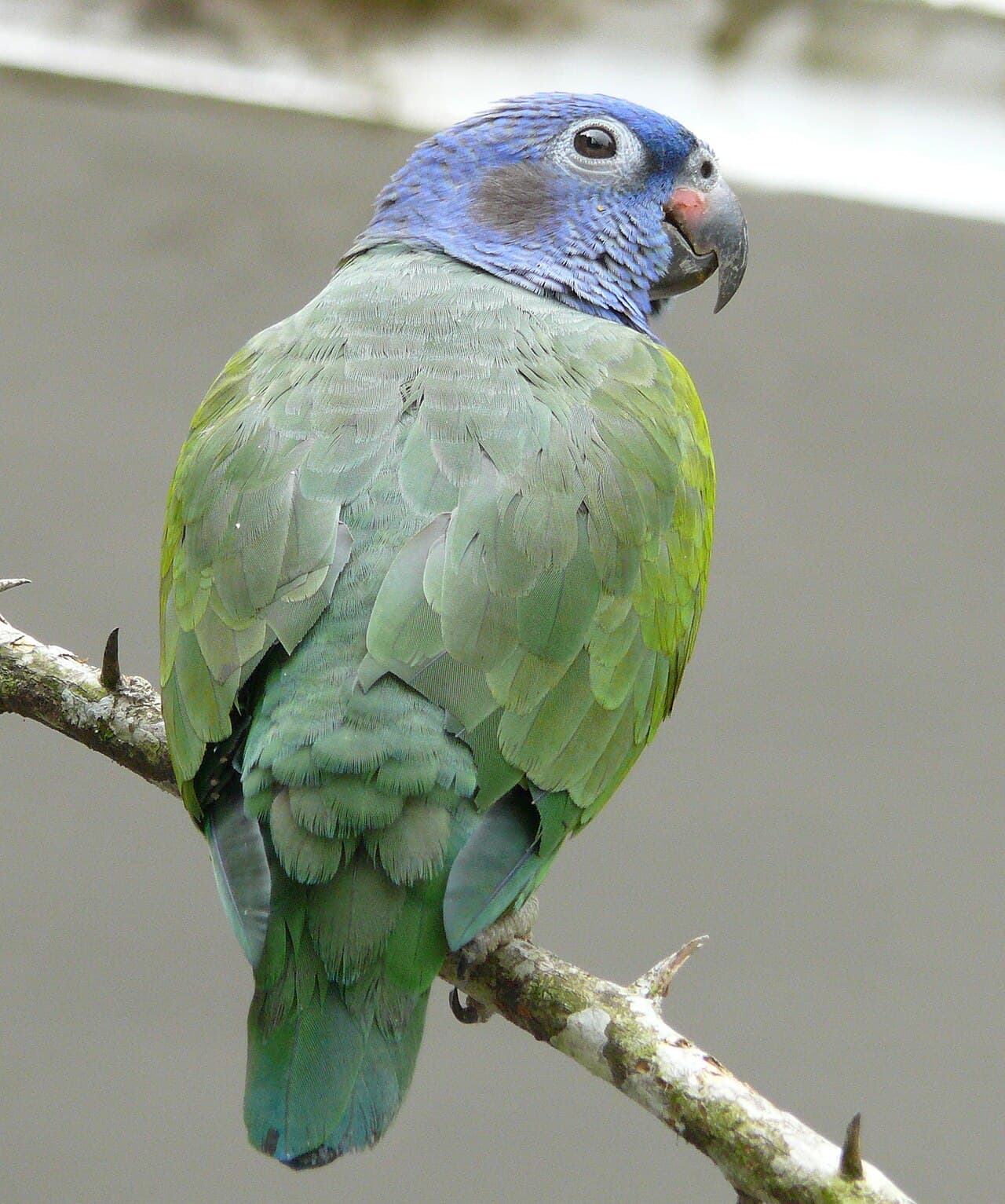
The Blue-headed Parrot is a compact, stocky parrot of Trinidad's forests, easily distinguished from the island's Amazon parrots by its deep cobalt-blue head and short, square tail, typically seen flying in fast, direct flocks between forest feeding sites.
The Blue-headed Parrot is a compact, stocky parrot of Trinidad's forests, easily distinguished from the island's Amazon parrots by its deep cobalt-blue head and short, square tail, typically seen flying in fast, direct flocks between forest feeding sites.
Identification
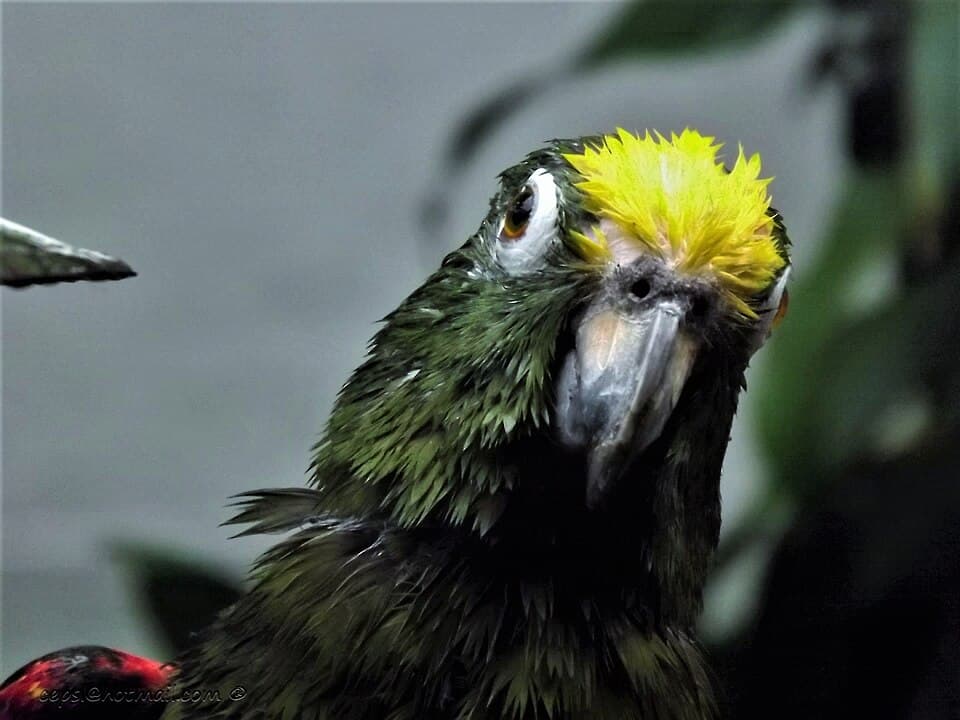
A medium-sized parrot around 27 to 28 cm long, with a rich, deep blue head and upper breast contrasting with a green body, a distinctive patch of bare red-and-black skin at the base of the bill, and a red undertail visible from below in flight. It is more compact and shorter-tailed than the island's Amazon parrots, with faster, more direct wingbeats.
Ecology
The Blue-headed Parrot feeds on fruit, seeds, blossoms, and occasionally clay from exposed banks, thought to help neutralise toxins in some dietary plant material, foraging in flocks that move quickly and directly between forest feeding sites. It nests in a natural tree cavity, and is highly social, often forming large, mixed flocks with other parrot species outside the breeding season, particularly at communal roost sites.
Status in T&T
Found in forest and forest edge across Trinidad. It is not threatened. It is protected under the Conservation of Wildlife Act, and, like other parrots, is subject to CITES Appendix II trade restrictions; illegal capture for the pet trade remains a localised pressure.
Threats
- Illegal capture for the pet trade
- Loss of large trees suitable for nest cavities