Bird
Bird
Amazon Kingfisher
Chloroceryle amazona
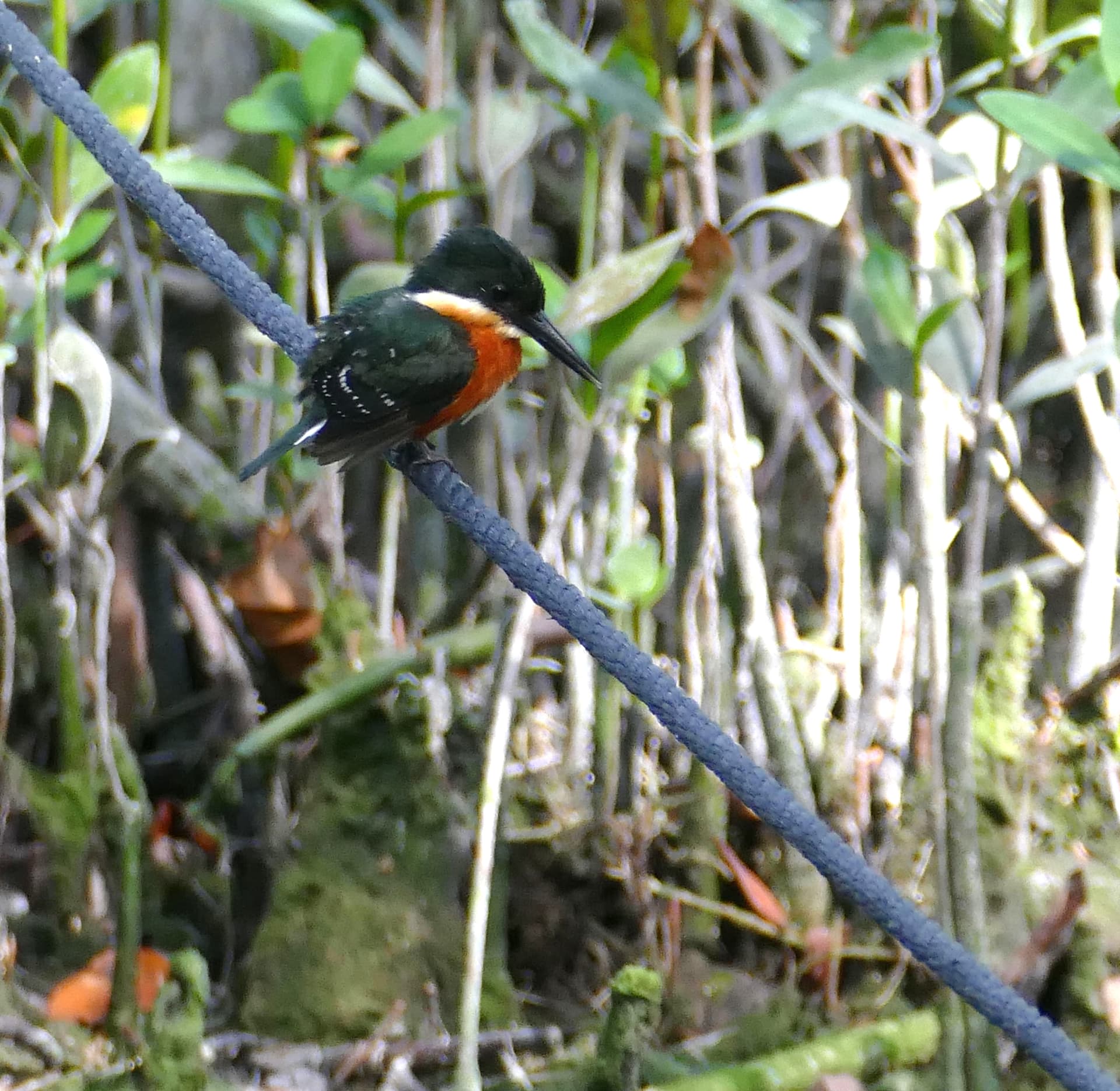
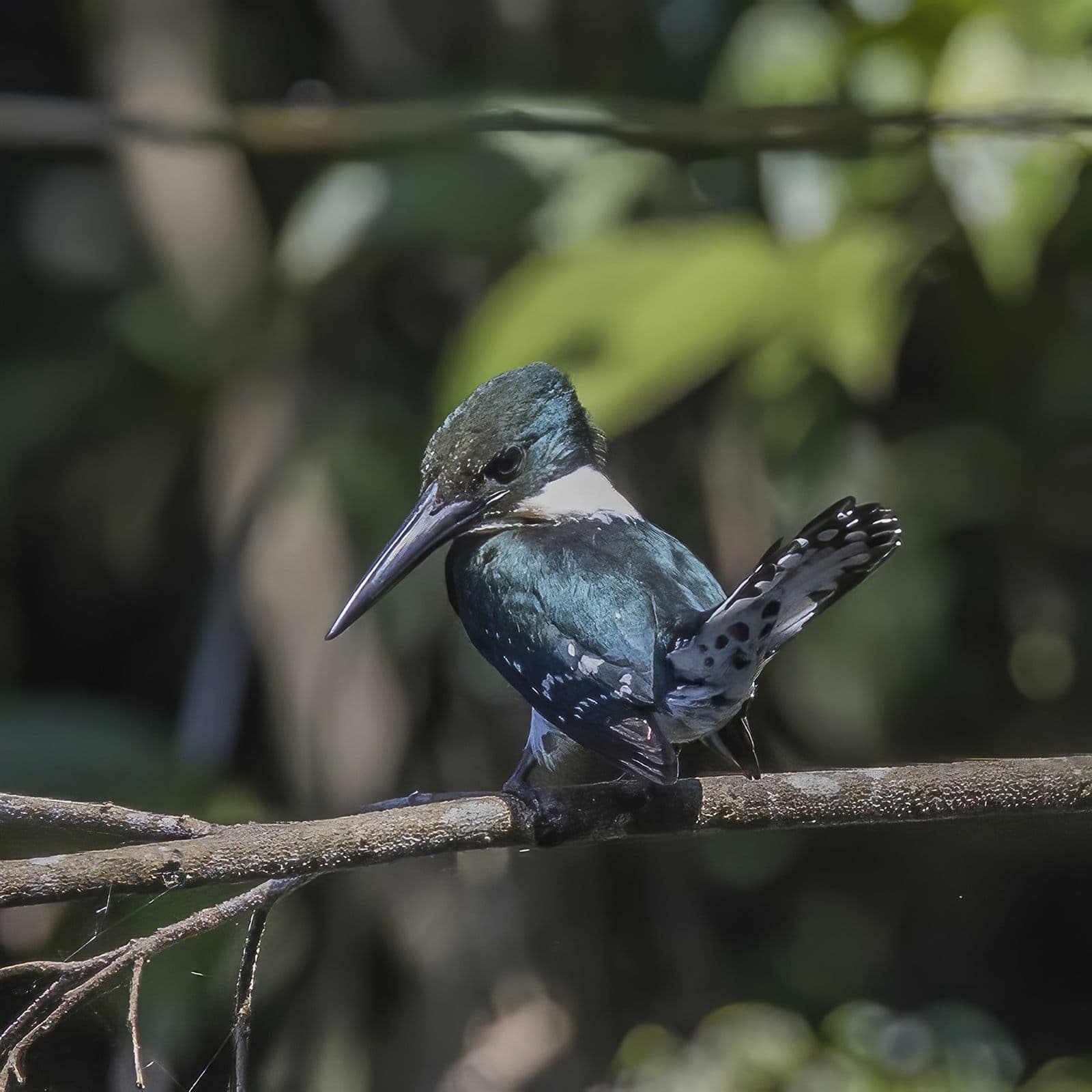
The Amazon Kingfisher is the largest of the green kingfishers found in Trinidad, a striking bottle-green and white bird typically seen perched motionless over quiet forest rivers and streams before plunging headfirst after fish.
The Amazon Kingfisher is the largest of the green kingfishers found in Trinidad, a striking bottle-green and white bird typically seen perched motionless over quiet forest rivers and streams before plunging headfirst after fish.
Identification
A medium to large kingfisher around 27 to 30 cm long, with glossy dark green upperparts, a white collar, and a heavy, long, all-black bill proportionally larger than that of the smaller Green Kingfisher with which it can be confused. Males have a broad chestnut breast band, while females show a green-spotted breast band and chestnut flanks. A shaggy crest is often raised when the bird is alert. Flight is direct and low over the water, usually accompanied by a sharp, rattling call.
Ecology
A specialist fish hunter, the Amazon Kingfisher perches quietly on branches, roots, or rocks overhanging slow-moving rivers, streams, and forest pools, watching for fish before diving head-first to seize prey in its bill. It also takes aquatic insects and occasionally small crustaceans. Nests are excavated as a horizontal tunnel dug into an earthen riverbank, ending in a small chamber, a method shared by all New World kingfishers. It is typically encountered singly or in pairs and defends a stretch of river as a feeding territory.
Status in T&T
Found on Trinidad along forested rivers, streams, and freshwater swamp margins, generally less common than the smaller Green Kingfisher and Ringed Kingfisher but reliably present at suitable watercourses. It is not threatened but depends on clean water with adequate fish stocks and undisturbed banks suitable for nest burrows. It is protected under the Conservation of Wildlife Act and is not a game species.
Threats
- Freshwater pollution reducing fish stocks
- Riverbank clearance destroying nest burrow sites
- Sedimentation from upstream development