Bird
Bird
Yellow-crowned Night-Heron
Nyctanassa violacea
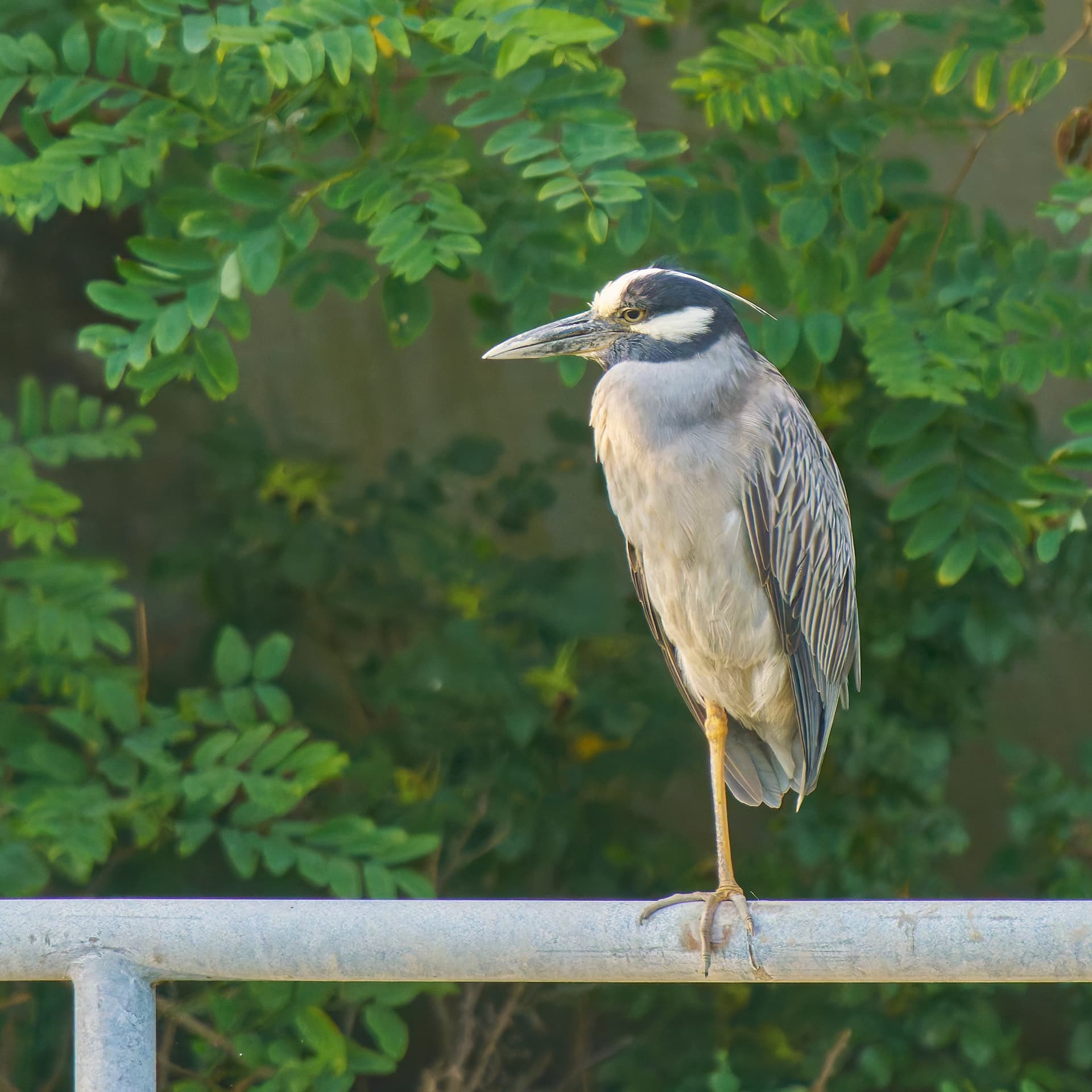
The Yellow-crowned Night-Heron is a stocky, handsome wading bird of T&T's mangroves, coastal swamps, and freshwater wetlands, named for the pale yellow-to-white crown stripe of the adult.
The Yellow-crowned Night-Heron is a stocky, handsome wading bird of T&T's mangroves, coastal swamps, and freshwater wetlands, named for the pale yellow-to-white crown stripe of the adult. Primarily crepuscular and nocturnal in its foraging habits, it is most often encountered at dusk as it leaves roost sites in mangrove stands to feed along mudflats and shallow water margins. Though less conspicuous than the day-active egrets and herons, it is a characteristic component of T&T's mangrove and coastal wetland communities on both islands.
Identification
The Yellow-crowned Night-Heron measures 55 to 70 cm with a stocky build, short neck, and relatively large head. Adults have grey body plumage, a black-and-white head pattern, a pale yellowish-white crown stripe that may extend into white plumes in breeding season, and a bold white cheek patch on a black face. The eyes are large and orange-red. The legs are orange-yellow. Juveniles are streaked brown, much less distinctive, and can be confused with the Black-crowned Night-Heron. The bill is heavy and decurved compared to other herons, an adaptation for crushing hard-shelled prey.
Ecology
The Yellow-crowned Night-Heron is highly specialised for eating crustaceans, particularly crabs, which form the majority of its diet in coastal habitats. The stout bill allows it to crush crab shells that would defeat more slender-billed herons. It also takes fiddler crabs, crayfish, frogs, and fish. Foraging occurs primarily at night and at dawn and dusk, often wading slowly in shallow water or standing motionless waiting for prey. It nests colonially or in small groups, building stick platforms in mangrove trees or other waterside vegetation.
Status in T&T
The Yellow-crowned Night-Heron is found on both Trinidad and Tobago in mangrove forests, coastal lagoons, tidal mudflats, and freshwater swamp edges. Key sites include the Caroni Swamp, Nariva, and the mangrove-lined coasts of Tobago. The species is fully protected under the Conservation of Wild Life Act and is not a game species. Mangrove destruction is the primary threat to its habitats in T&T; it is also susceptible to disturbance at colonial nest sites.
Threats
- Mangrove clearance and coastal development
- Nest colony disturbance
- Pollution of crustacean prey base