Mammal
Mammal
Wrinkle-faced Bat
Centurio senex
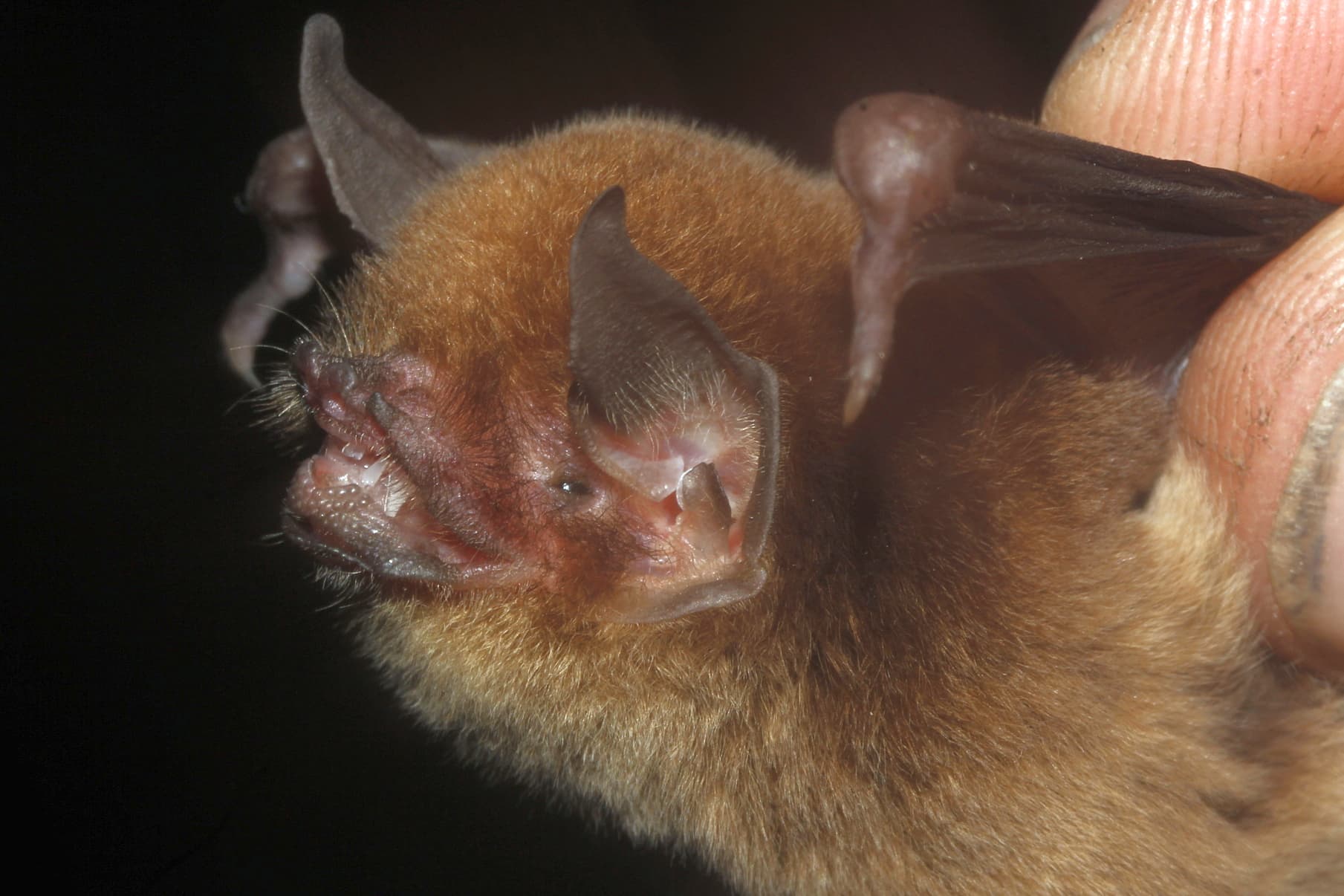
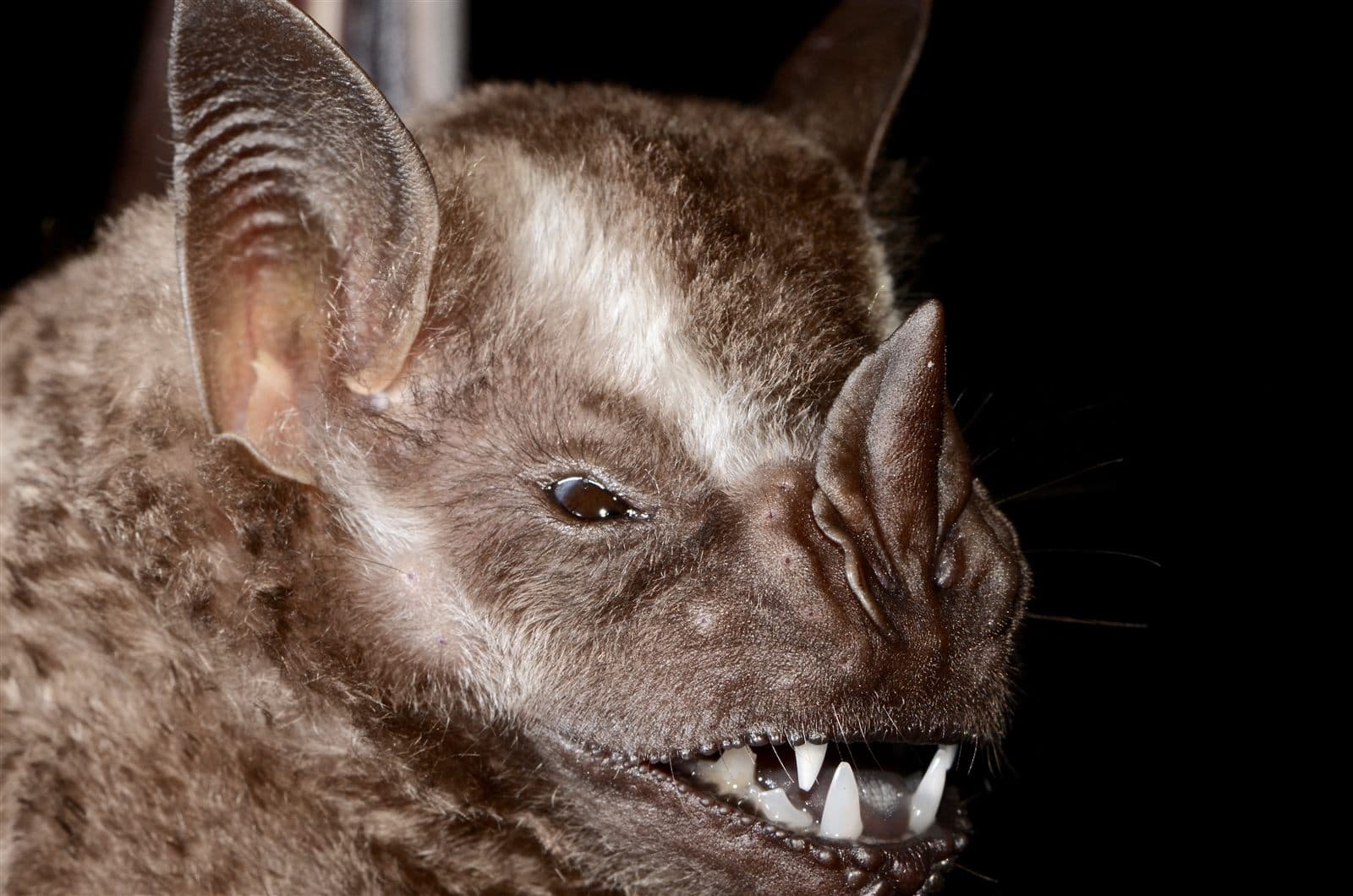
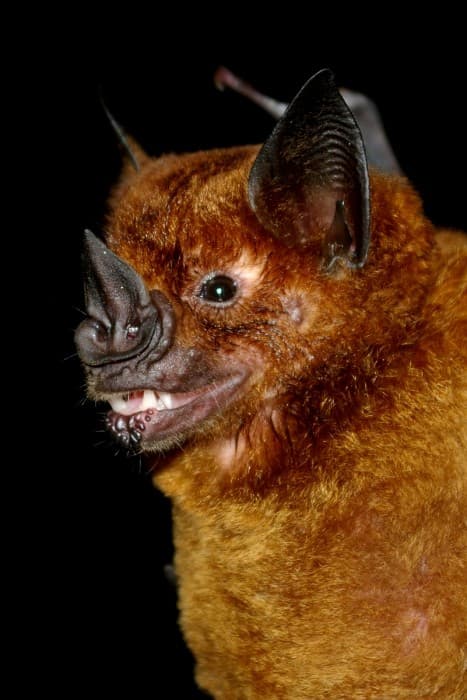
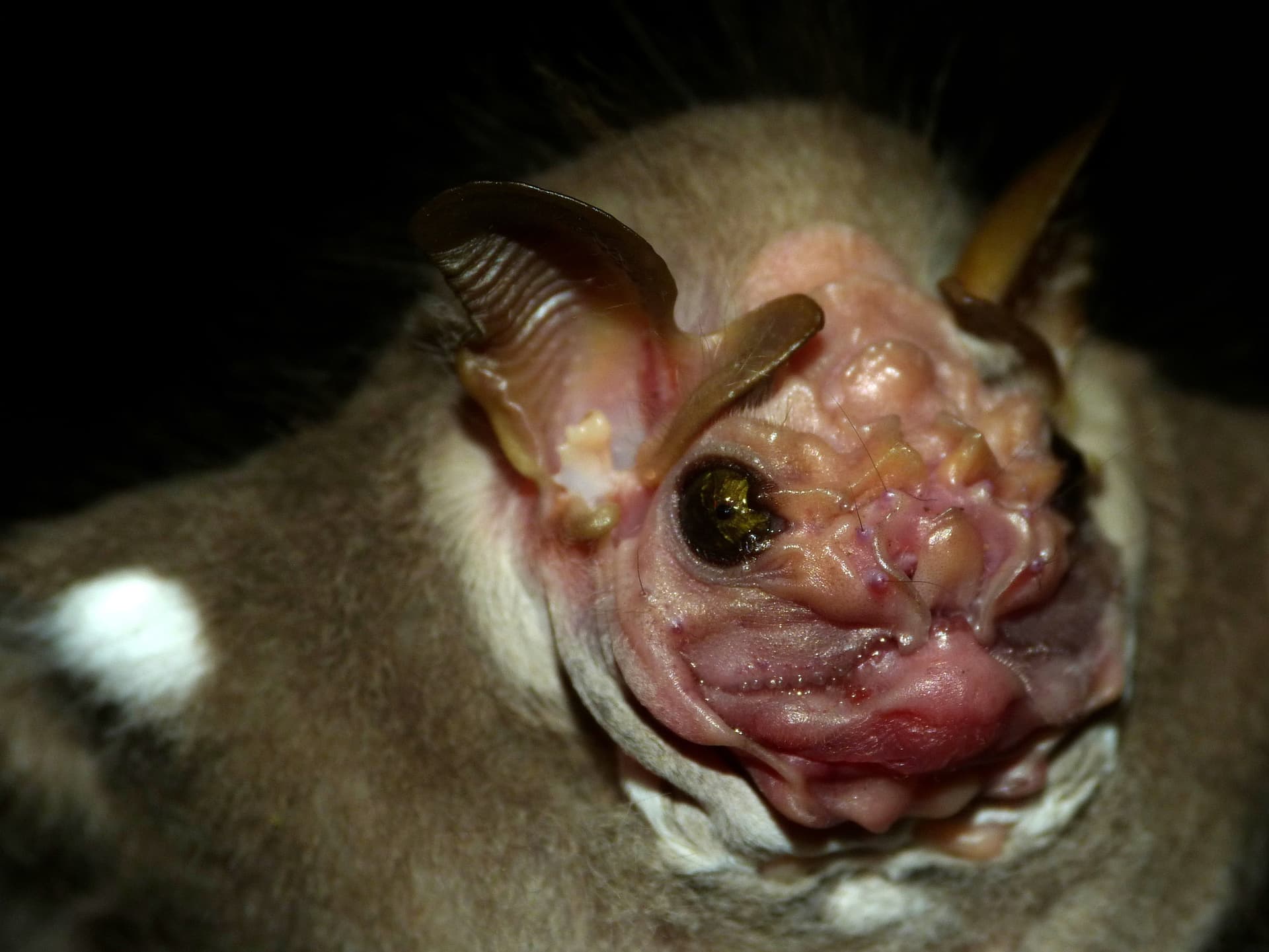
The Wrinkle-faced Bat is one of the most visually distinctive bats in Trinidad, with a hairless, deeply folded face and no visible nose-leaf, giving it an almost mask-like appearance.
The Wrinkle-faced Bat is one of the most visually distinctive bats in Trinidad, with a hairless, deeply folded face and no visible nose-leaf, giving it an almost mask-like appearance. Uncommon and rarely seen, it remains one of the more elusive fruit bats on the island.
Identification
A medium-sized bat with a forearm length of around 40 to 45 mm and a completely bare, deeply wrinkled face lacking the nose-leaf typical of most leaf-nosed bats. Males possess a loose flap of skin below the chin that can be drawn up over the face like a mask while roosting; fur is greyish brown, and the species lacks a visible tail.
Ecology
Feeds on soft, ripe fruit, favouring figs and other pulpy fruit that it can crush with unusually broad, robust molars adapted for tougher plant material than many related species handle. It roosts singly or in very small groups in dense foliage rather than caves or buildings, making it far less conspicuous than colonial fruit bats, and is thought to be naturally uncommon rather than under specific threat.
Status in T&T
Recorded in forest across Trinidad, though rarely encountered due to its solitary, well-concealed roosting habits. Not considered threatened, though poorly studied locally, and thought to depend on intact forest with abundant fig trees. It is protected as native wildlife under the Conservation of Wildlife Act.
Threats
- Loss of intact forest with mature fig trees
- Naturally low detectability hampers population monitoring