Mammal
Mammal
Common Vampire Bat
Desmodus rotundus
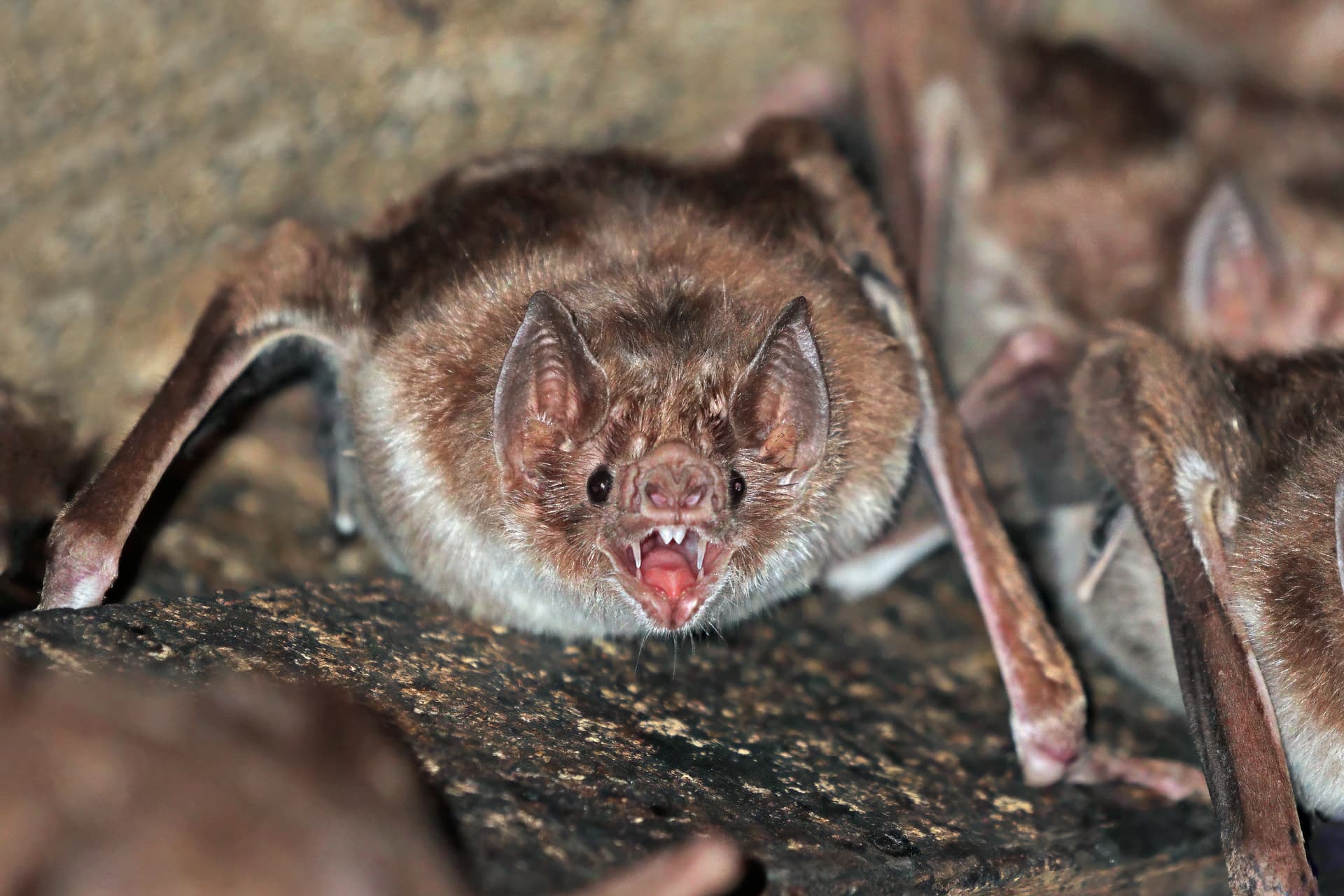
The common vampire bat is a small, leaf-nosed bat unique among mammals for living entirely on blood.
The common vampire bat is a small, leaf-nosed bat unique among mammals for living entirely on blood. Highly social and surprisingly cooperative, it is best known in Trinidad for the pioneering 1930s research there that first proved bats can transmit rabies.
Appearance
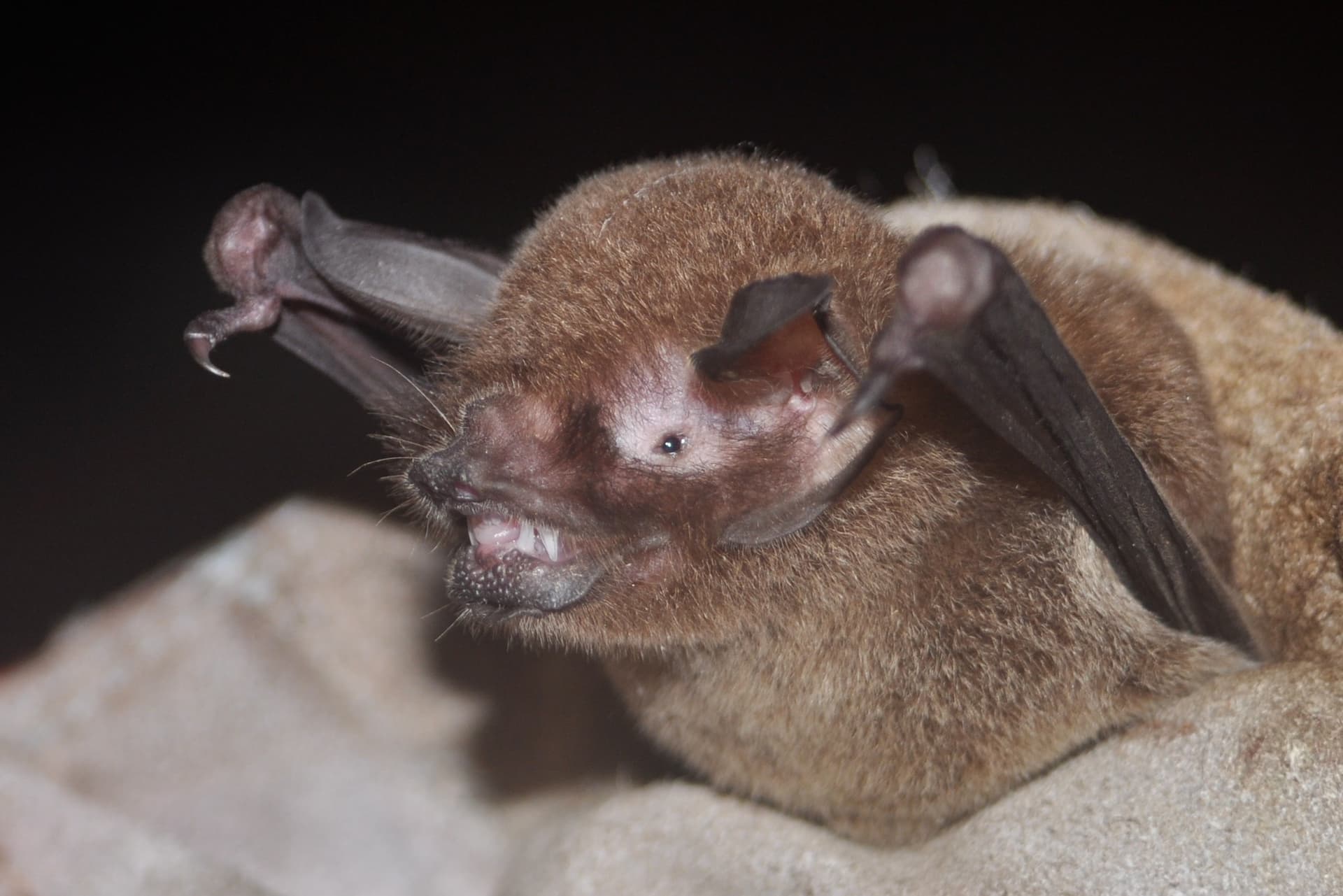
The common vampire bat is a compact bat with a body around 7 to 9 cm long, a wingspan near 35 to 40 cm, and a weight of roughly 25 to 40 g. Its fur is greyish to reddish brown, paler below, and it has a short conical muzzle rather than the elaborate nose-leaf of many relatives. The front teeth are reduced to a pair of large, razor-sharp incisors used to make a shallow cut in the skin of its host.
Behaviour
Vampire bats are strictly nocturnal, roosting by day in caves, hollow trees, and buildings in colonies that can number from a handful to hundreds. Unusually among bats, they are agile on the ground and can walk, run, and even leap, using their thumbs and folded wings to approach prey on foot. They are among the most social of all bats, performing mutual grooming and famously sharing regurgitated blood meals with roost-mates that have failed to feed, sustaining long-term reciprocal bonds.
Diet and breeding
The species feeds exclusively on blood, mainly from livestock such as cattle, horses, and poultry, lapping 20 to 30 ml per night while anticoagulants in its saliva keep the wound flowing. Females usually give birth to a single pup after a long gestation of around 7 months and nurse it for several months, with helpers in the colony sometimes sharing food with mothers. Wild vampire bats can live around 9 years, and longer in captivity.
In Trinidad and Tobago
The common vampire bat occurs in Trinidad in forests, agricultural land, and around livestock, where it is significant as a carrier of rabies; in 1932 Trinidad bacteriologist Joseph Lennox Pawan first demonstrated bat transmission of the disease here. The IUCN lists the species as Least Concern, and although managed as a livestock health concern, it is a widespread and ecologically remarkable part of the local bat fauna.