Mammal
Mammal
Common Mustached Bat
Pteronotus parnellii
The Common Mustached Bat is a small, highly social cave-dwelling bat of Trinidad, scientifically notable for its exceptionally refined echolocation system, which has made it one of the most-studied bats in auditory neuroscience research.
The Common Mustached Bat is a small, highly social cave-dwelling bat of Trinidad, scientifically notable for its exceptionally refined echolocation system, which has made it one of the most-studied bats in auditory neuroscience research.
Identification
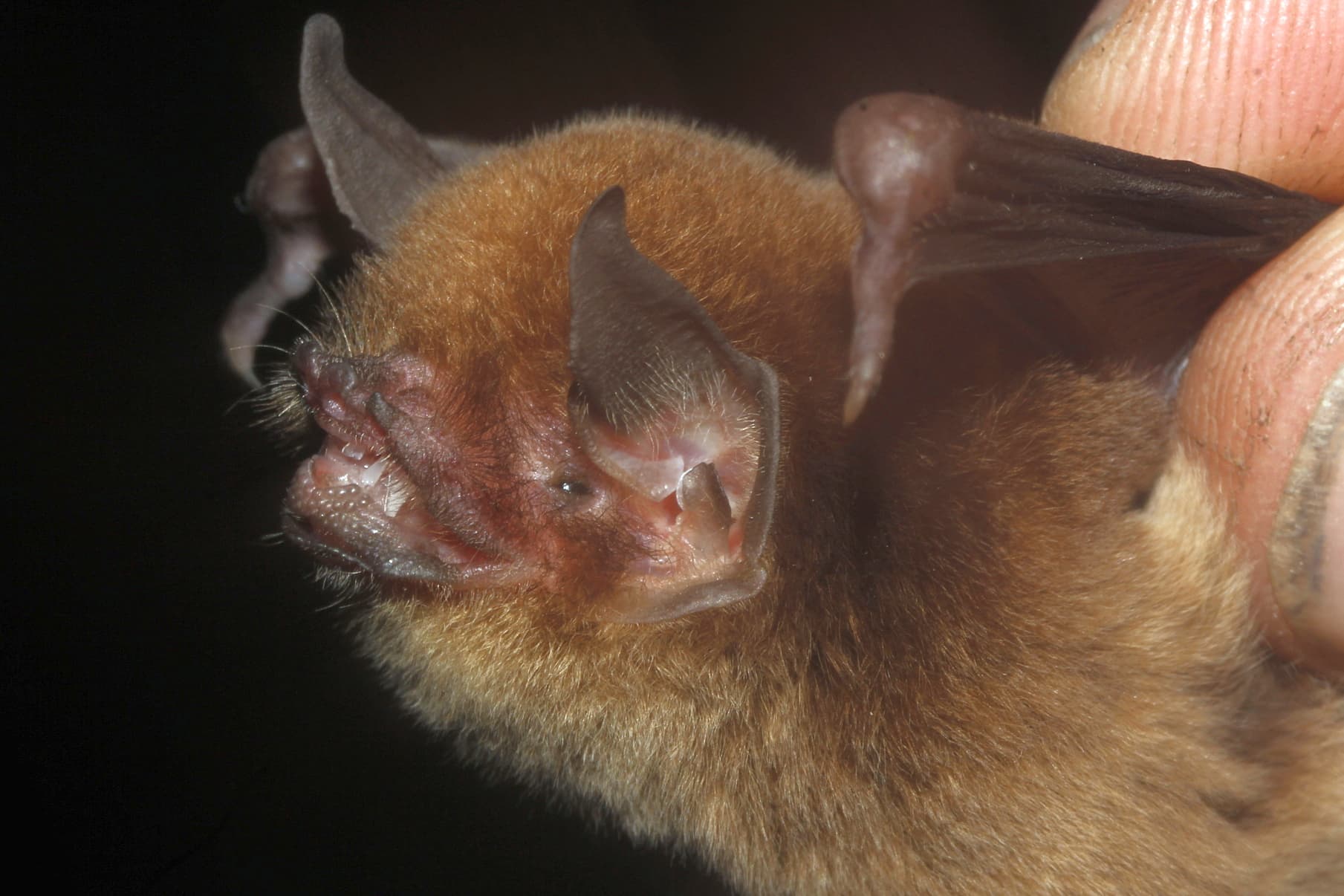
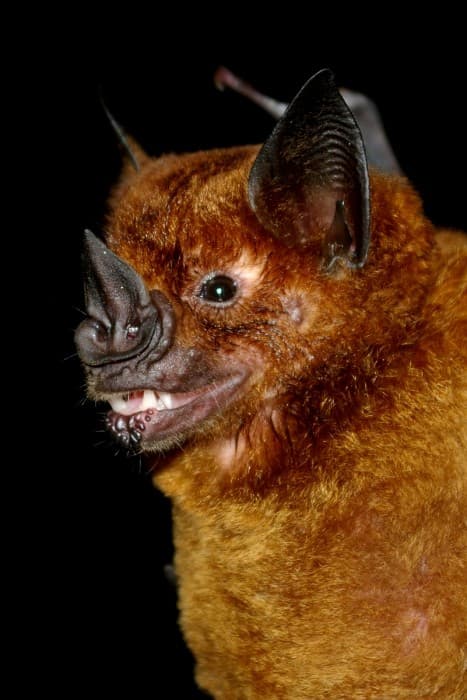
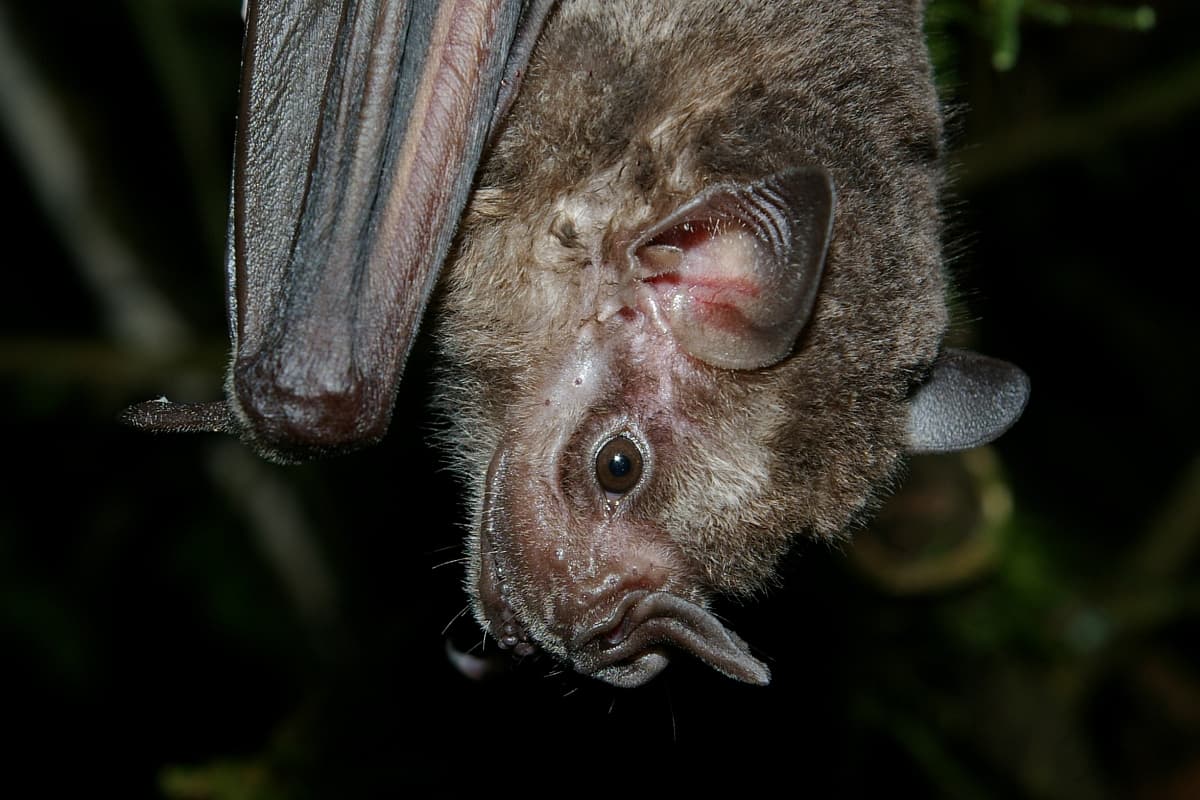
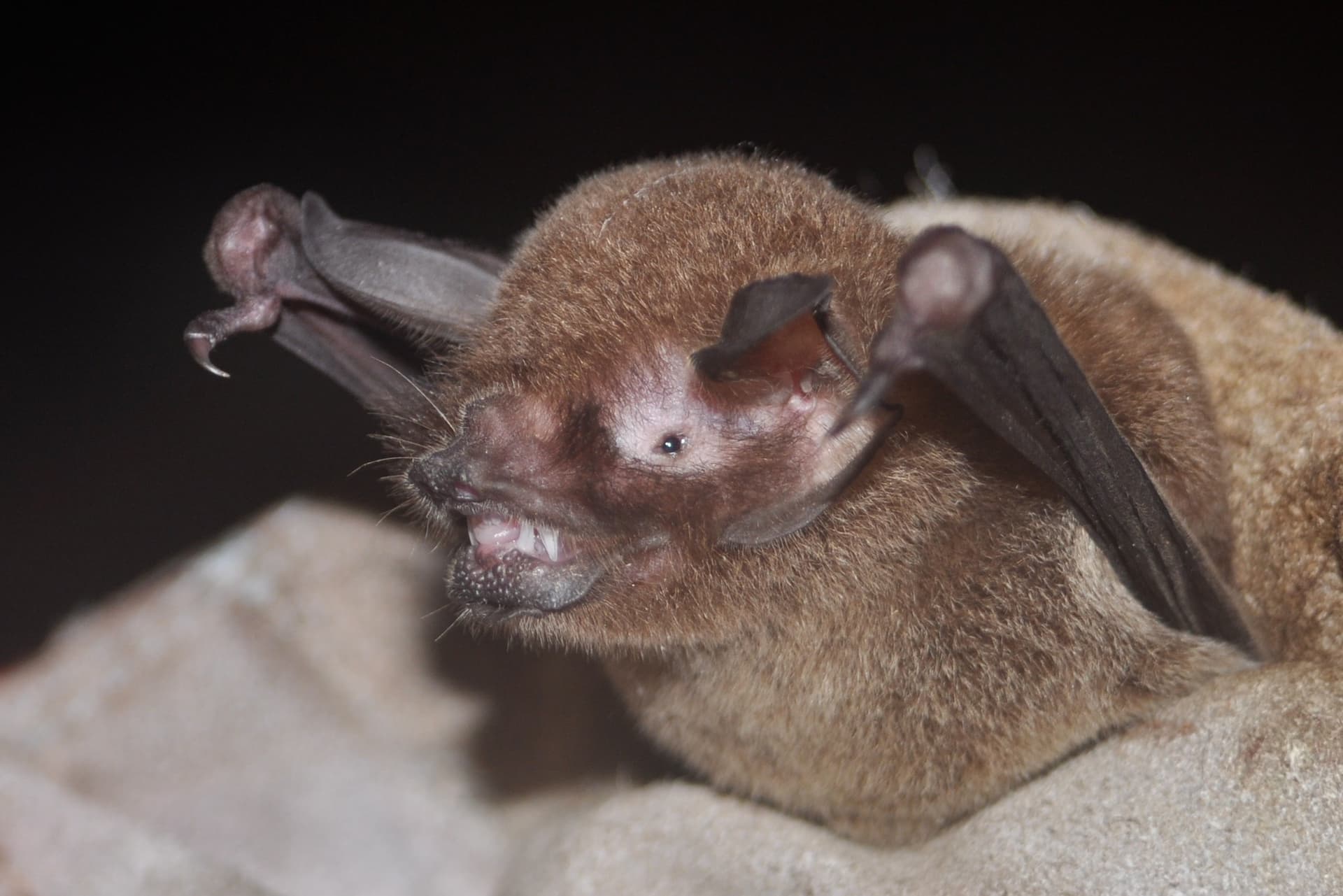
A small bat with a forearm length of around 55 to 65 mm, reddish-brown to greyish fur, and a simple, unadorned muzzle without the leaf-nose of many related Neotropical bats, though short, stiff hairs around the lips give the species its common name. Its ears are relatively short and rounded.
Behaviour
Roosts in large, dense colonies in caves, sometimes numbering in the thousands, and forages at night for flying insects caught on the wing over forest, forest edge, and open areas near its roost. It produces one of the most specialised echolocation calls known among bats, using a constant-frequency tone finely tuned to detect the wingbeat frequency of fluttering insect prey, a system that has made it a key model species in studies of the auditory brain.
Status in T&T
Found in caves across Trinidad, forming large colonies where suitable roosting sites exist. Not considered threatened, though sensitive to disturbance of cave roosts. It is protected as native wildlife under the Conservation of Wildlife Act.