Mammal
Mammal
Common Opossum
Didelphis marsupialis
Known throughout Trinidad and Tobago as the manicou, the Common Opossum is a cat-sized marsupial and one of the islands' most familiar nocturnal mammals.
Known throughout Trinidad and Tobago as the manicou, the Common Opossum is a cat-sized marsupial and one of the islands' most familiar nocturnal mammals. It is a true pouched marsupial, carrying its tiny, embryo-like young in a belly pouch, and is famous for 'playing dead' when threatened.
Appearance
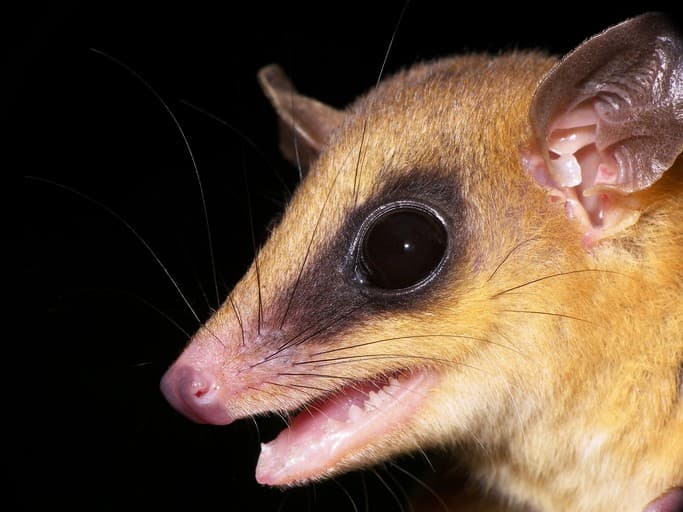
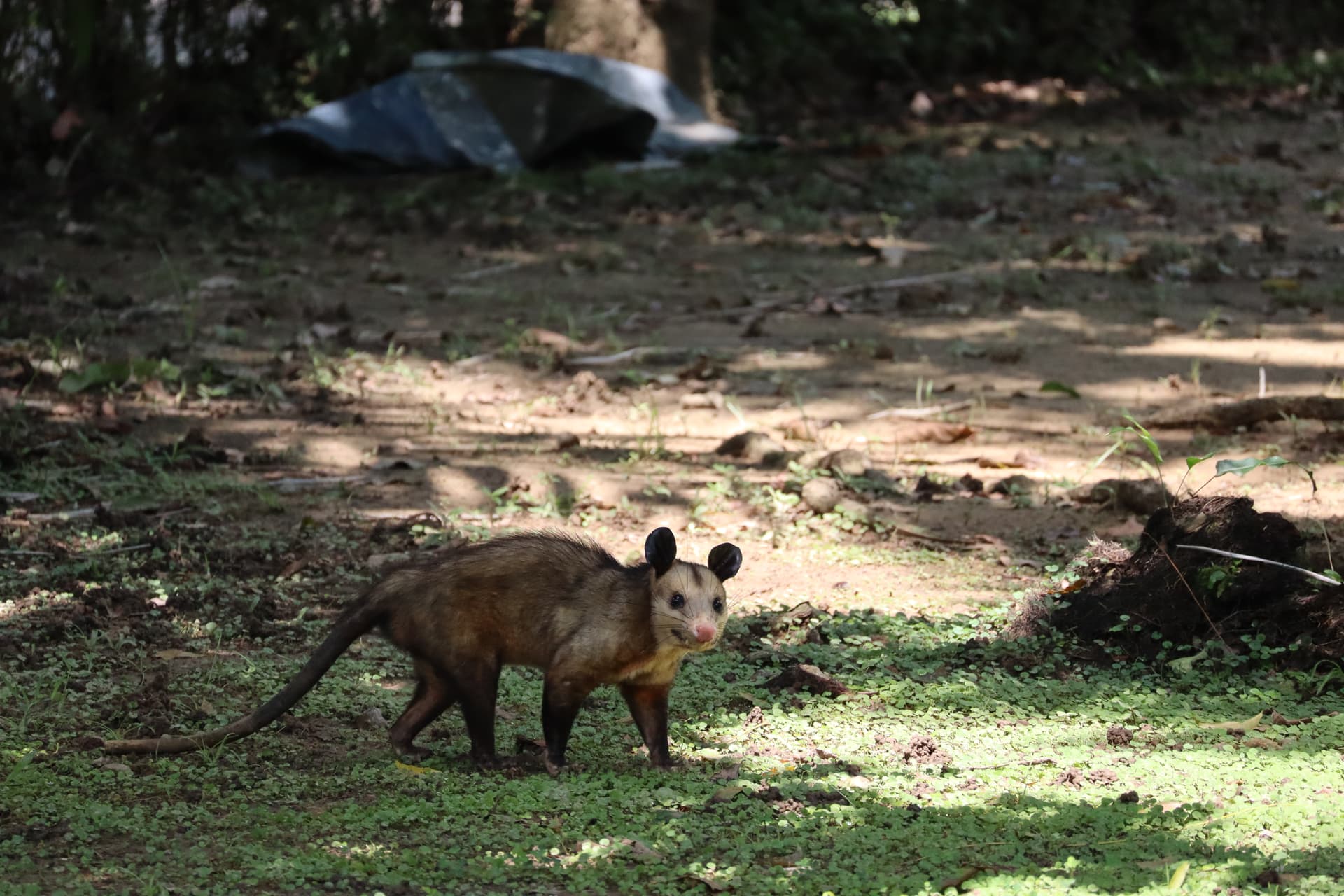
The Common Opossum is a stocky, cat-sized marsupial that typically weighs between 1 and 2 kg, with large adults heavier still and males generally bigger than females. It has a pale, grizzled grey-brown coat, a paler head, and distinctive black ears that give it the alternative name black-eared opossum. The long, scaly, prehensile tail is naked over most of its length and is used as a fifth limb when climbing.
Its pointed snout, naked ears, and bare tail give it a rat-like appearance to the untrained eye, but it is unrelated to rodents.
Behaviour
The manicou is strictly nocturnal, sheltering by day in tree hollows, burrows, or any dark, sheltered space and emerging after dark to forage. It is an agile climber, using its prehensile tail and grasping hind feet to move through trees, but it also travels and feeds on the ground. When cornered it may hiss and bare its teeth, and if that fails it can collapse into an involuntary death-feigning state, lying limp with its mouth open, which is the origin of the phrase 'playing possum'.
Diet and breeding
It is an opportunistic omnivore, eating fruit, insects, small vertebrates, eggs, carrion, and human food scraps, which makes it a frequent visitor to gardens and farms. As a marsupial it has a very short gestation of around 13 to 14 days, after which the thumbnail-sized, embryo-like young crawl into the mother's pouch and attach to her teats. A litter may number a dozen or more, and the young ride on the mother's back once they outgrow the pouch.
In Trinidad and Tobago
The manicou is widespread and common in forests, secondary growth, agricultural land, and the edges of settlements across both islands. It is one of the most popular wild meats locally, but under the Conservation of Wild Life Act the manicou is classified as vermin (Third Schedule), not a game species, so it falls outside the regulated hunting season and licensing that apply to game animals. The species is classified as Least Concern internationally and faces no broad conservation threat.