Mammal
Mammal
Trinidad White-fronted Capuchin
Cebus albifrons trinitatis
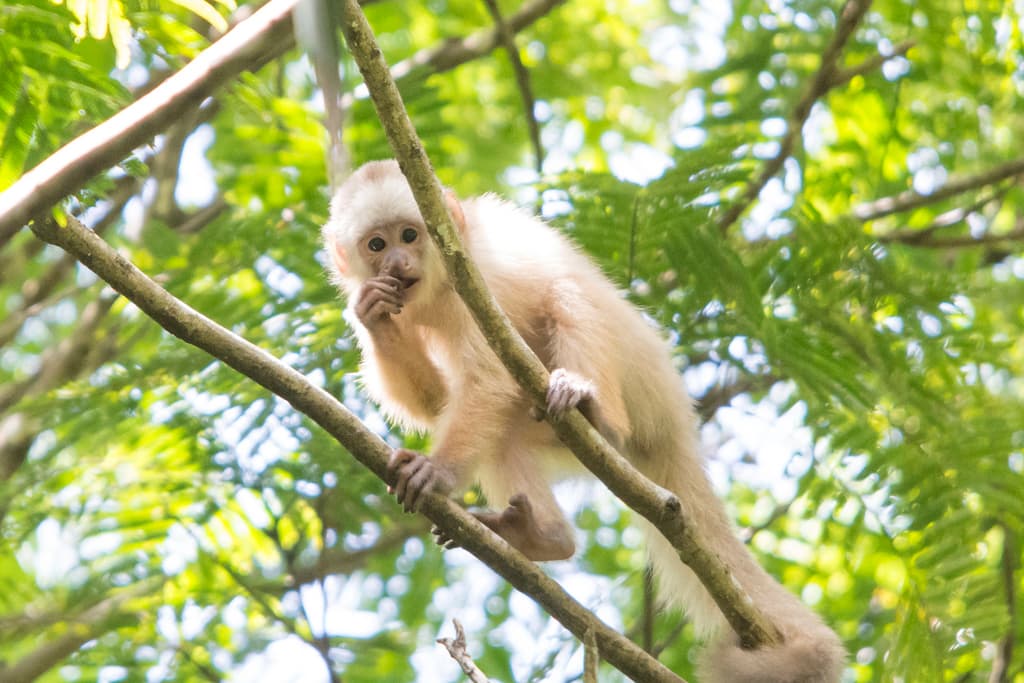
Photo: Jerome Foster (drjayf) · Nariva Swamp, Trinidad (CC BY-NC-ND 4.0)
The Trinidad White-fronted Capuchin is a highly intelligent, socially complex primate found only in Trinidad's forests, the island's sole endemic monkey subspecies.
The Trinidad White-fronted Capuchin is a highly intelligent, socially complex primate found only in Trinidad's forests, the island's sole endemic monkey subspecies. Classified as Endangered, this small capuchin faces mounting pressure from deforestation, forest fragmentation, and illegal capture for the pet trade. Its survival depends on the protection of Trinidad's remaining lowland and submontane forests.
Identification
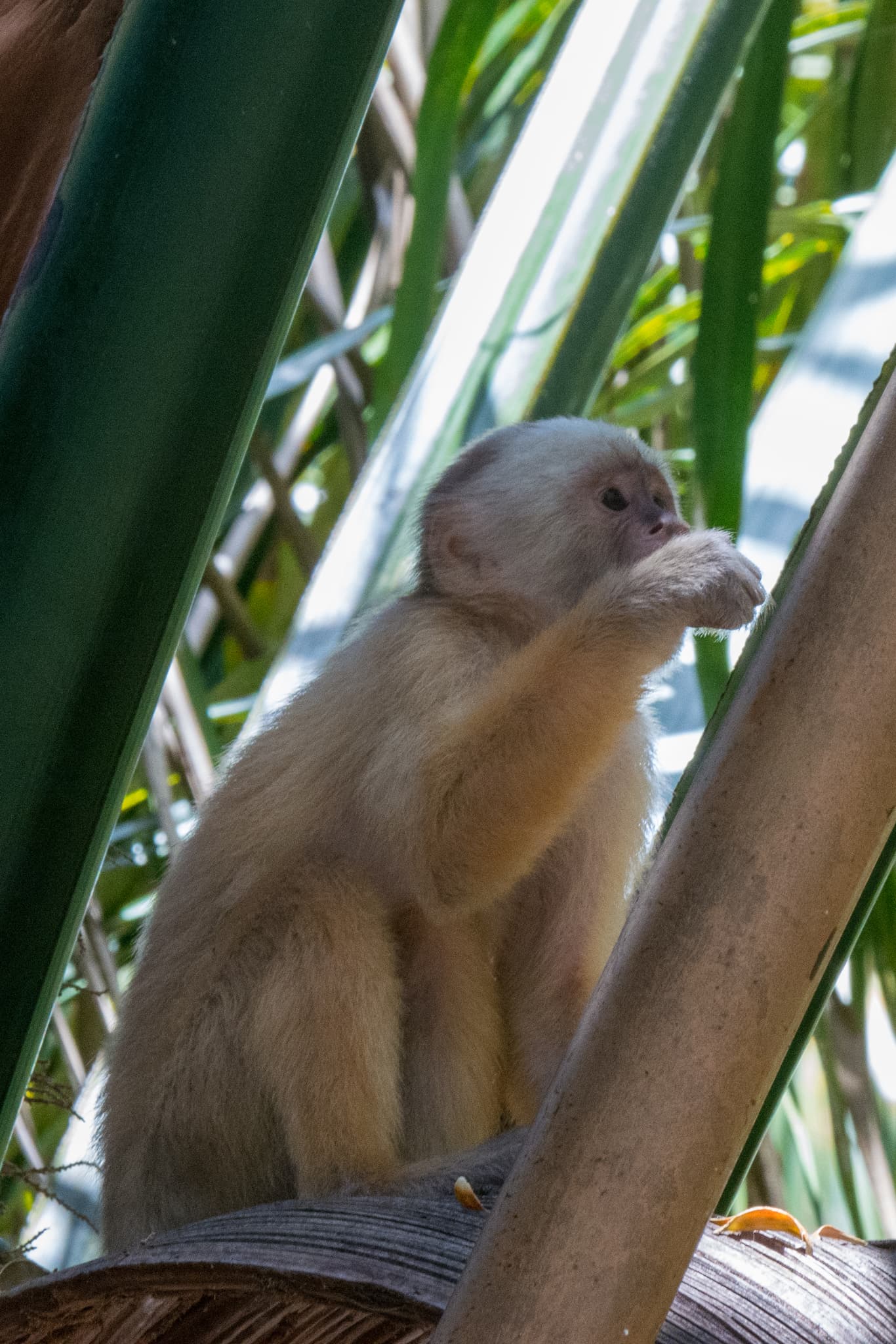
The Trinidad White-fronted Capuchin is a medium-sized New World monkey distinguished by its pale creamy-white forehead and facial cap contrasting with a brown or tawny body. Adults typically weigh between 1.5 and 3 kg, with males somewhat larger than females. The subspecies is endemic to Trinidad and is considered genetically and morphologically distinct from mainland South American populations of Cebus albifrons, reflecting the island's biogeographic isolation. It is the only primate endemic to Trinidad and Tobago.
Ecology
In Trinidad, this capuchin inhabits lowland tropical forests and submontane forests, with populations concentrated in the Northern Range, the island's primary forested mountain chain, as well as forested areas in the Central Range and Nariva Swamp environs. The species is diurnal and highly arboreal, travelling in cohesive social groups of roughly 6 to 20 individuals. Groups occupy large home ranges and depend on extensive, connected forest for foraging. As omnivores, capuchins consume fruit, seeds, insects, small vertebrates, and plant material, and play an important ecological role as seed dispersers for a range of forest tree species.
Conservation
The Trinidad White-fronted Capuchin is listed as Critically Endangered at the subspecies level, driven primarily by ongoing habitat loss through agricultural encroachment, logging, and residential development, coupled with severe forest fragmentation that isolates populations and reduces genetic exchange. The illegal pet trade poses a particularly acute threat: infant capuchins are taken from the wild after their mothers are killed. Although the subspecies is fully protected under Trinidad and Tobago's Conservation of Wildlife Act (COWA) and is on CITES Appendix II, enforcement remains a challenge. No large-scale captive breeding or reintroduction programme is currently active, making in-situ forest protection the critical conservation priority.
Threats
- Deforestation
- Forest fragmentation
- Illegal pet trade
- Habitat loss from agricultural encroachment
- Logging and residential development
- Small isolated populations with reduced genetic diversity
Conservation status
This species has a dedicated entry in the Biodiversity Atlas with full legal and conservation context.
See Trinidad White-fronted Capuchin in Biodiversity →