Mammal
Mammal
Collared Peccary
Pecari tajacu
The collared peccary, called quenk in Trinidad, is a sociable, pig-like hoofed mammal that travels the forest in noisy herds.
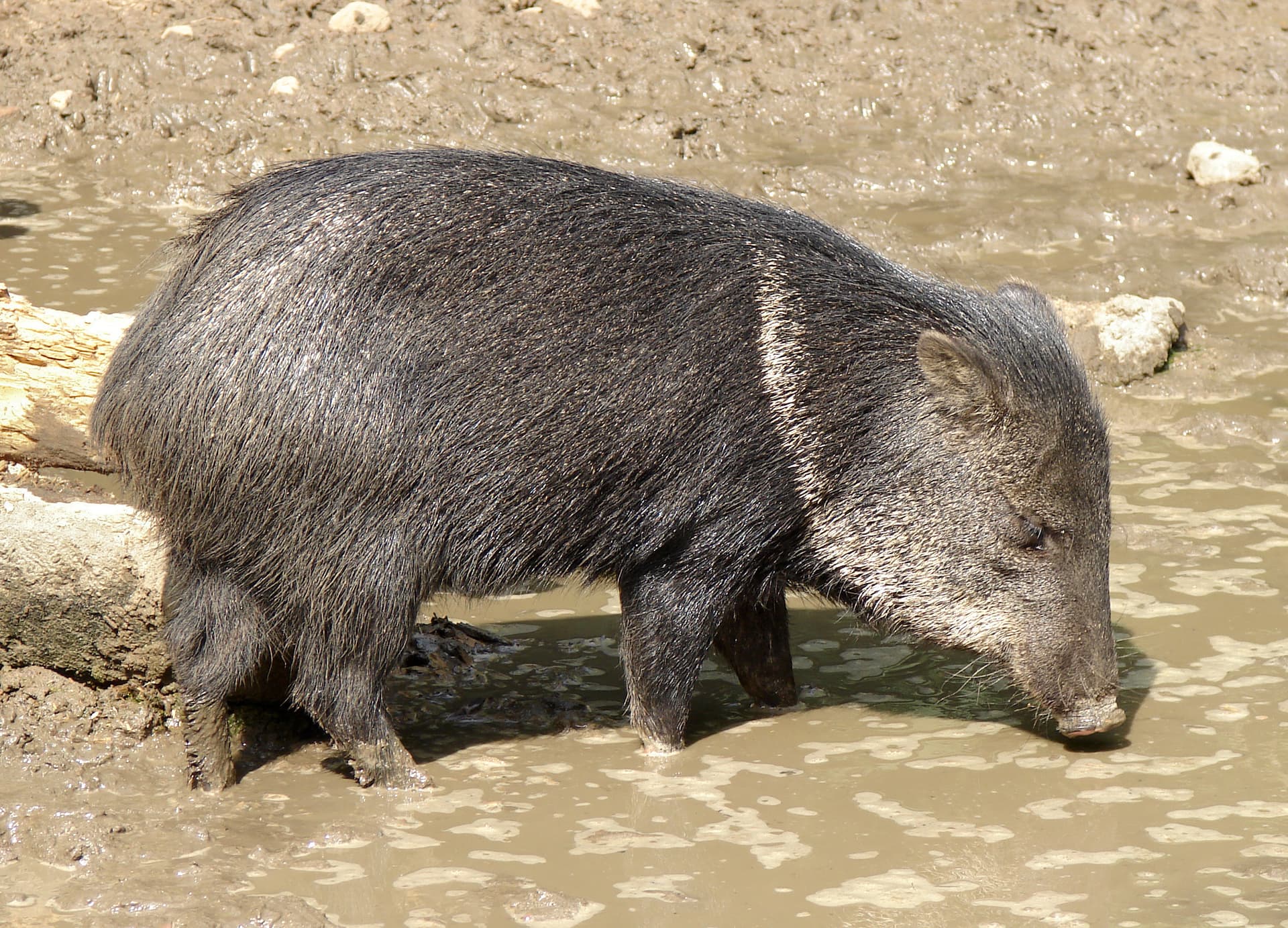
The collared peccary, called quenk in Trinidad, is a sociable, pig-like hoofed mammal that travels the forest in noisy herds. Named for the pale band of hair around its neck and shoulders, it is Trinidad's only native peccary and a well-known game animal.
Appearance
The collared peccary stands about 50 to 60 cm at the shoulder and is roughly 1 to 1.5 m long, weighing 15 to 30 kg. Its coarse, grizzled grey-black bristles bear a distinctive whitish collar running from the shoulders across the lower neck. Though pig-like in form, peccaries differ from true pigs in having a single dewclaw on the hind foot, straight downward-pointing canine tusks, and a scent gland on the rump.
Behaviour
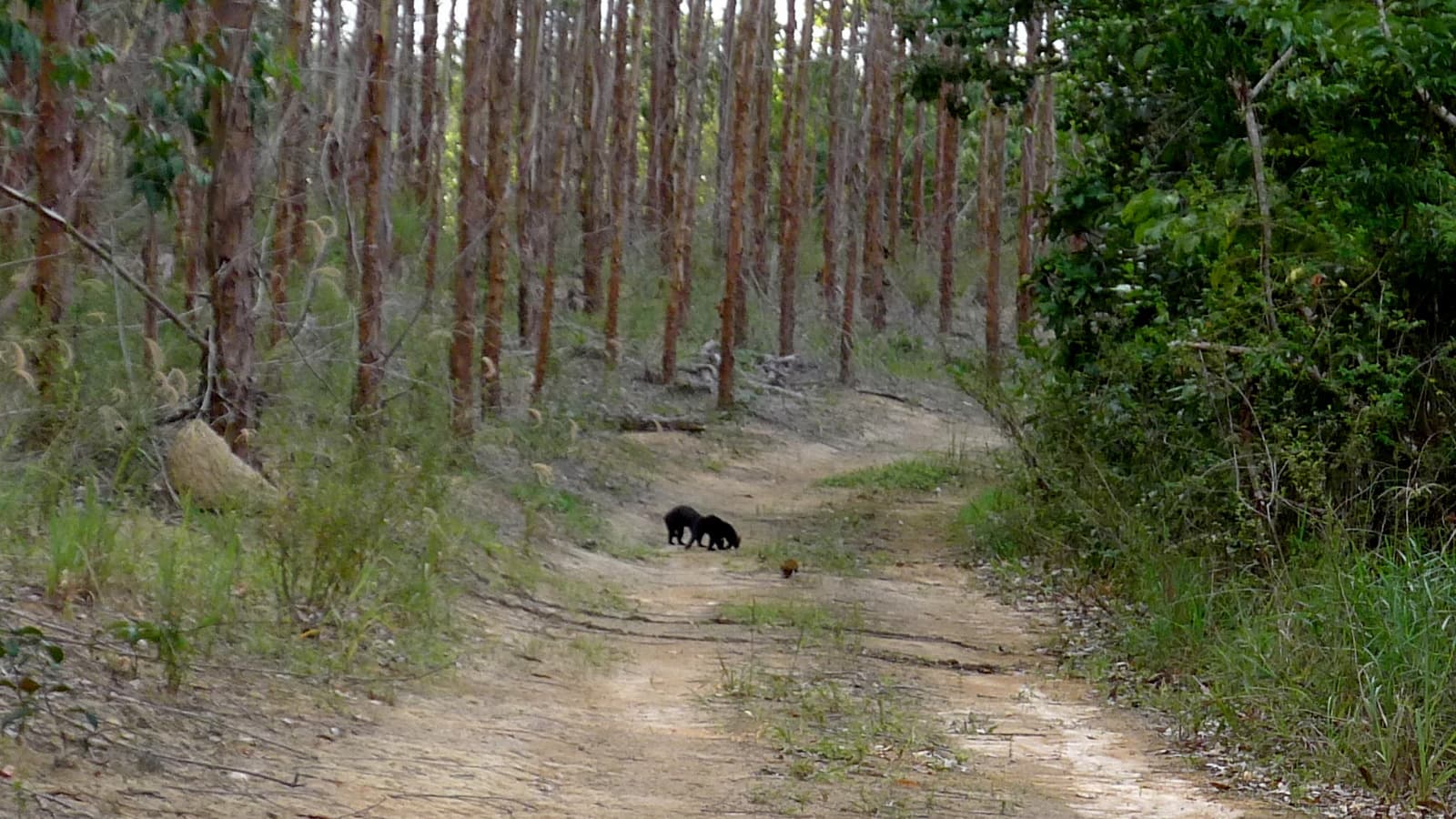
Quenk are highly social and live in herds of 6 to 30 or more animals that forage, rest, and defend territory together. They are active mainly by day, communicating through grunts, squeals, and tooth-clacking, and they mark herd members and territory with a musky secretion from the dorsal scent gland, which gives them a strong odour. When threatened they may charge or clack their tusks, but they generally flee into dense cover.
Diet and breeding
The collared peccary is an omnivore, rooting for fruits, seeds, tubers, roots, and cacti, and also taking insects, worms, small vertebrates, and carrion. Breeding can occur year-round, with females usually producing two precocial young after a gestation of around 140 to 150 days; the young can run within a few hours of birth. Wild peccaries typically live around 8 to 10 years, and herd cooperation helps protect the vulnerable young.
In Trinidad and Tobago
Trinidad is the only Caribbean island where the collared peccary occurs naturally, where it ranges through forested areas; it once lived on Tobago but is now extremely rare or extirpated there due to overhunting. The IUCN lists the species as Least Concern across its wide American range, but in Trinidad and Tobago it is a hunted game species regulated under the Conservation of Wildlife Act, with hunting allowed only in season under licence.