Mammal
Mammal
Velvety Free-tailed Bat
Molossus molossus
The Velvety Free-tailed Bat is the small, fast-flying bat most likely to be seen streaking over Trinidad and Tobago's towns and villages at dusk.
The Velvety Free-tailed Bat is the small, fast-flying bat most likely to be seen streaking over Trinidad and Tobago's towns and villages at dusk. A colonial insect hunter that readily roosts in roofs and building eaves, it is probably the most familiar bat to most people on the islands even if rarely identified by name.
Identification
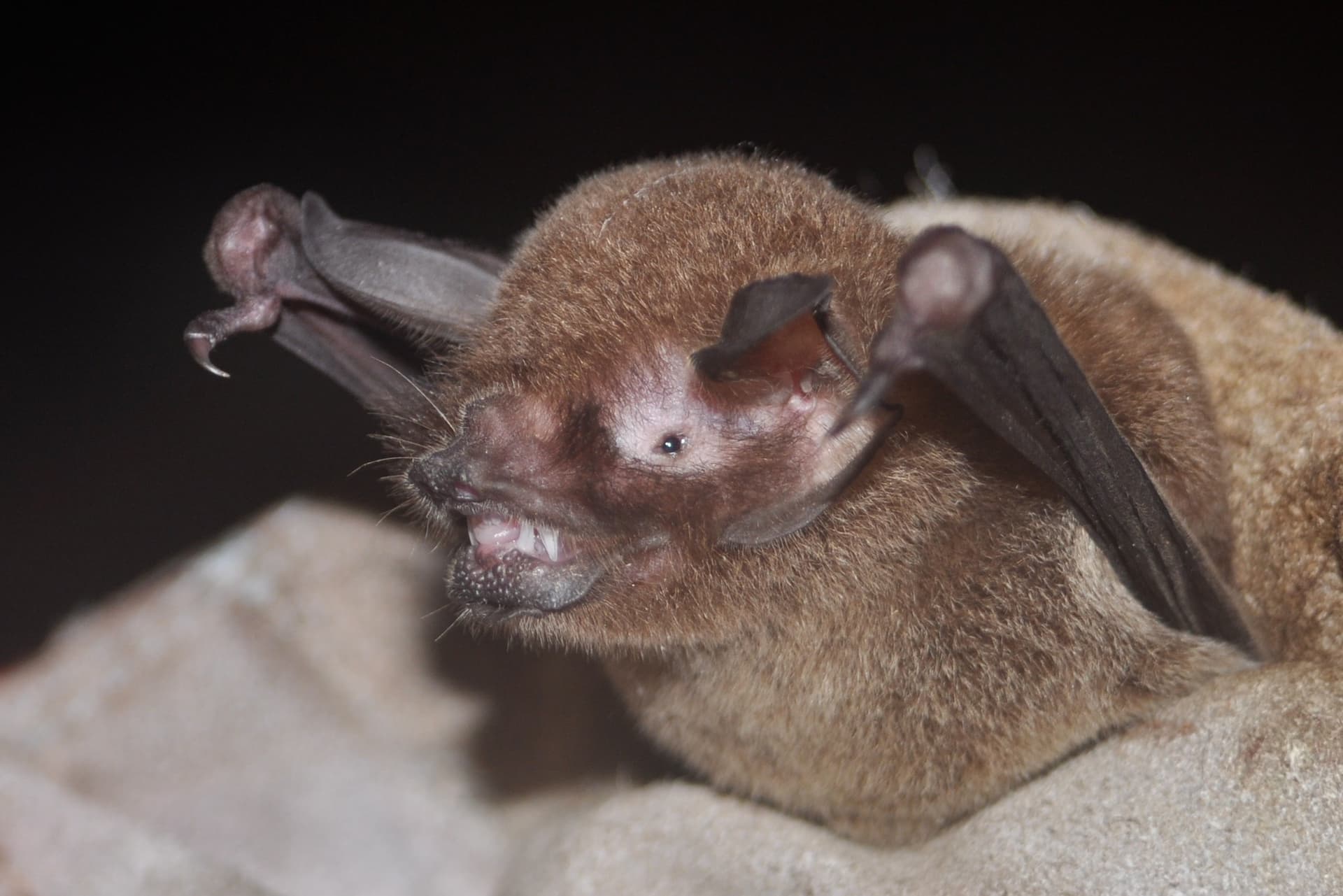
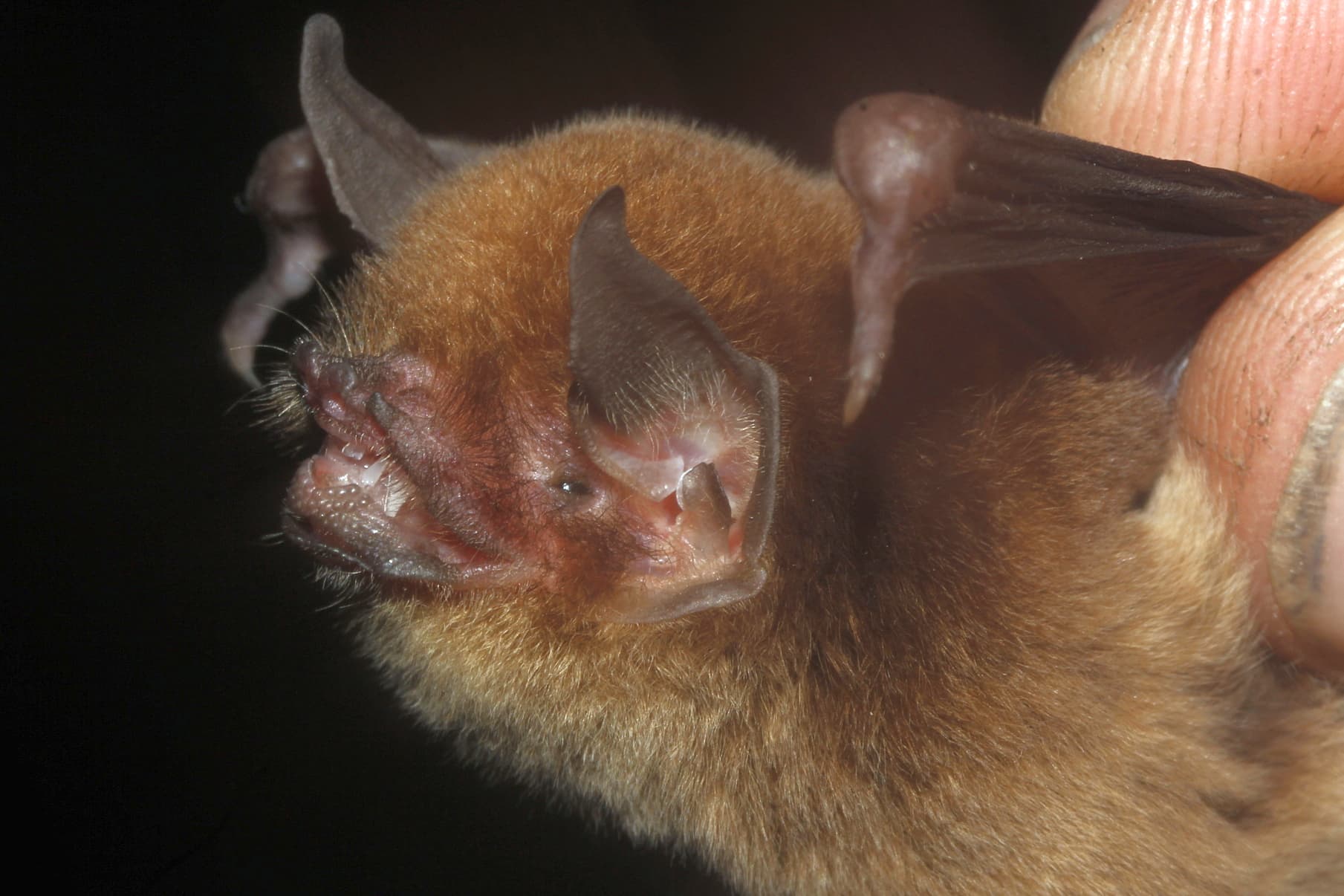
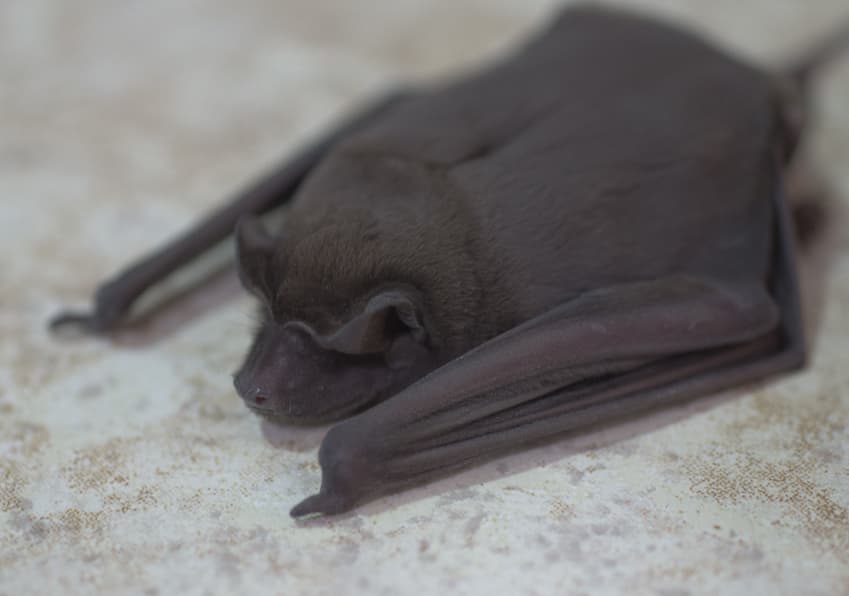
A small bat with a body length of around 8 to 10 cm and short, dense, velvety fur ranging from dark brown to reddish. As a free-tailed bat, roughly a third of its tail extends free beyond the edge of the tail membrane, a key feature distinguishing it from leaf-nosed bats. Its wings are long and narrow, built for fast, direct flight rather than manoeuvring through dense vegetation.
Ecology
An aerial insectivore, it forages in open air over streets, gardens, and forest edge, taking moths, beetles, and other flying insects on the wing, often around streetlights. Highly colonial, it roosts in tight clusters of a few dozen to several thousand individuals in roof spaces, wall cavities, palm fronds, and tree hollows, and is one of the bat species most tolerant of, and dependent on, human structures.
Status in T&T
Abundant and widespread across both islands in urban, agricultural, and forest-edge habitats. Not threatened, and valuable for natural insect control around settlements, though roosts in buildings are sometimes removed by residents unaware of the ecological benefit. It is protected as native wildlife under the Conservation of Wildlife Act.
Threats
- Roost removal from buildings by residents unaware of ecological value
- Pesticide reduction of insect prey