Bird
Bird
Swallow-tailed Kite
Elanoides forficatus
The Swallow-tailed Kite is among the most spectacular raptors to visit Trinidad and Tobago, a bird of arresting elegance combining crisp black-and-white plumage with a deeply forked tail and effortless mastery of the air.
The Swallow-tailed Kite is among the most spectacular raptors to visit Trinidad and Tobago, a bird of arresting elegance combining crisp black-and-white plumage with a deeply forked tail and effortless mastery of the air. It does not breed in T&T but passes through as a seasonal visitor, typically seen in small groups over forested hills during its migration between North and South America. When one appears over the canopy, its combination of precision aerial manoeuvrability and graceful swallow-like flight makes it unmistakable.
Identification
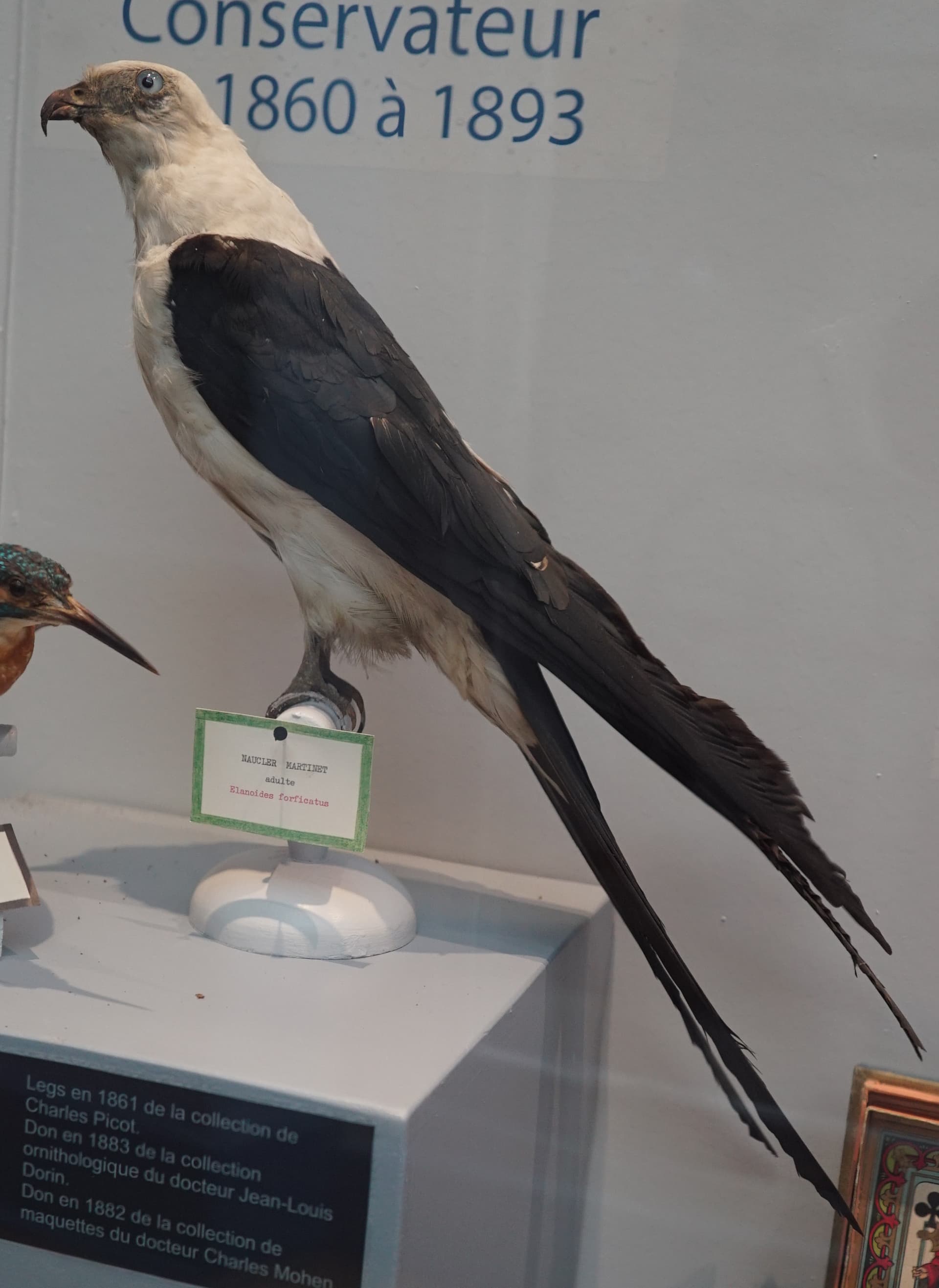
The Swallow-tailed Kite is a medium-large raptor measuring 50 to 65 cm with a wingspan of 112 to 135 cm. The body plumage is sharply bicoloured: pure white head, neck, and underparts contrasting with glossy black-green back, wings, and the long, deeply forked tail that gives the species its name. The tail fork can exceed 20 cm in depth. In flight, the bird presents a distinctive silhouette, frequently twisting the tail to steer. The feet are relatively weak as the bird catches much of its prey on the wing and rarely needs a powerful grip.
Ecology
Swallow-tailed Kites are aerial foragers, taking large insects, lizards, frogs, small snakes, and nestling birds directly from the foliage or in flight without landing, often eating prey while still airborne. They are highly social, congregating in large pre-migratory roosts before southward departures. In T&T the species is primarily a non-breeding visitor, though nesting has been suspected in Trinidad's Northern Range. Sightings peak during the Northern Hemisphere breeding season, when birds from South American populations move north, and again in late northern summer when North American breeders head south.
Status in T&T
The Swallow-tailed Kite is an uncommon to occasionally common seasonal visitor to both Trinidad and Tobago. It is most often seen soaring over forested hills and the Northern Range. The species is fully protected under the Conservation of Wild Life Act and is not a game species. Its forest dependence, migratory habits, and sensitivity to large-scale deforestation on its South American wintering grounds mean its regional status is linked to conservation efforts well beyond T&T's borders.
Threats
- Tropical deforestation on migration routes
- Roost disturbance during staging
- Illegal shooting