Marine Mammal
Marine Mammal
Spinner Dolphin
Stenella longirostris
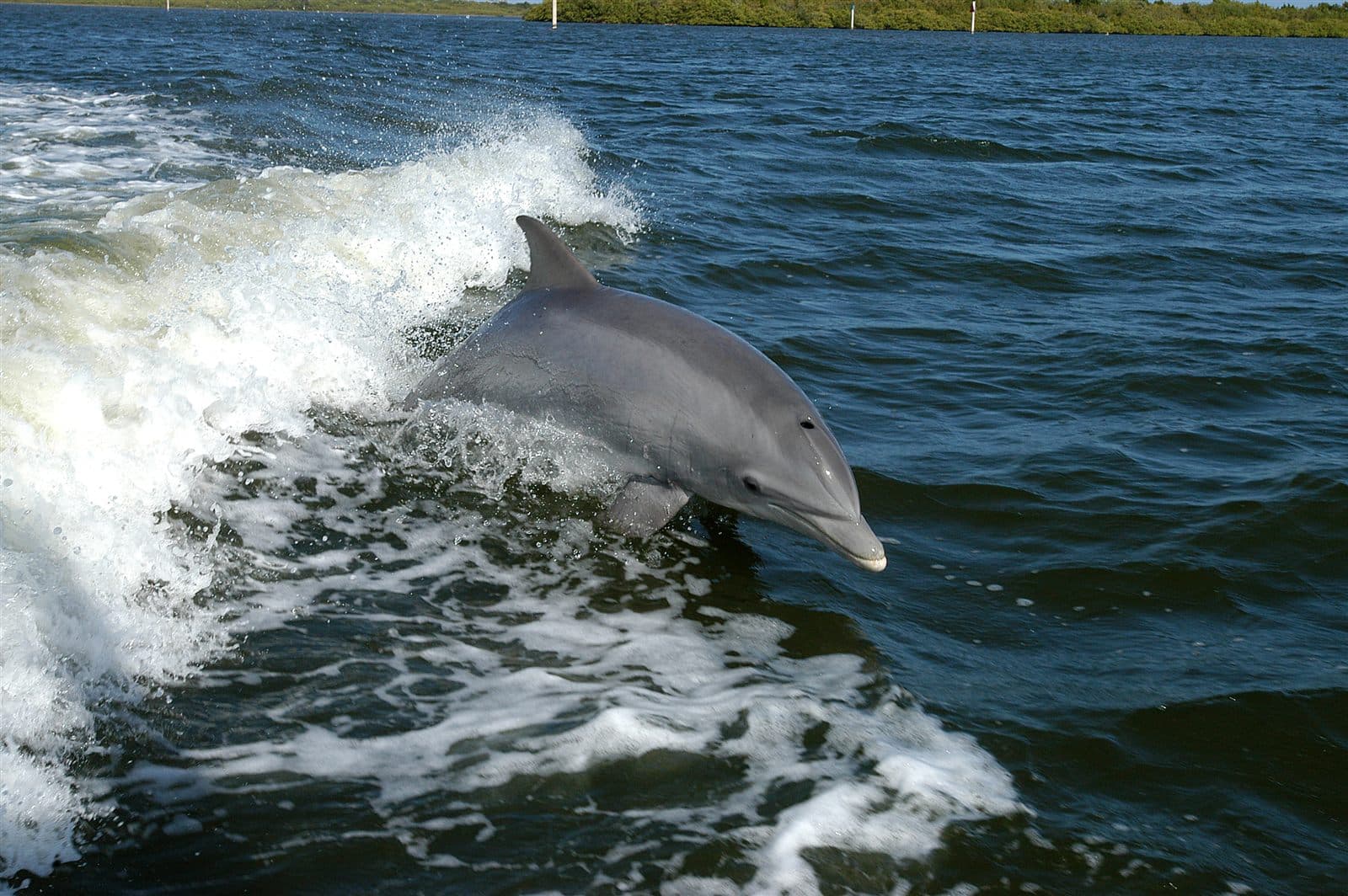
The Spinner Dolphin is named for its extraordinary aerial displays, leaping clear of the water and spinning several times along its body axis before re-entering with a splash.
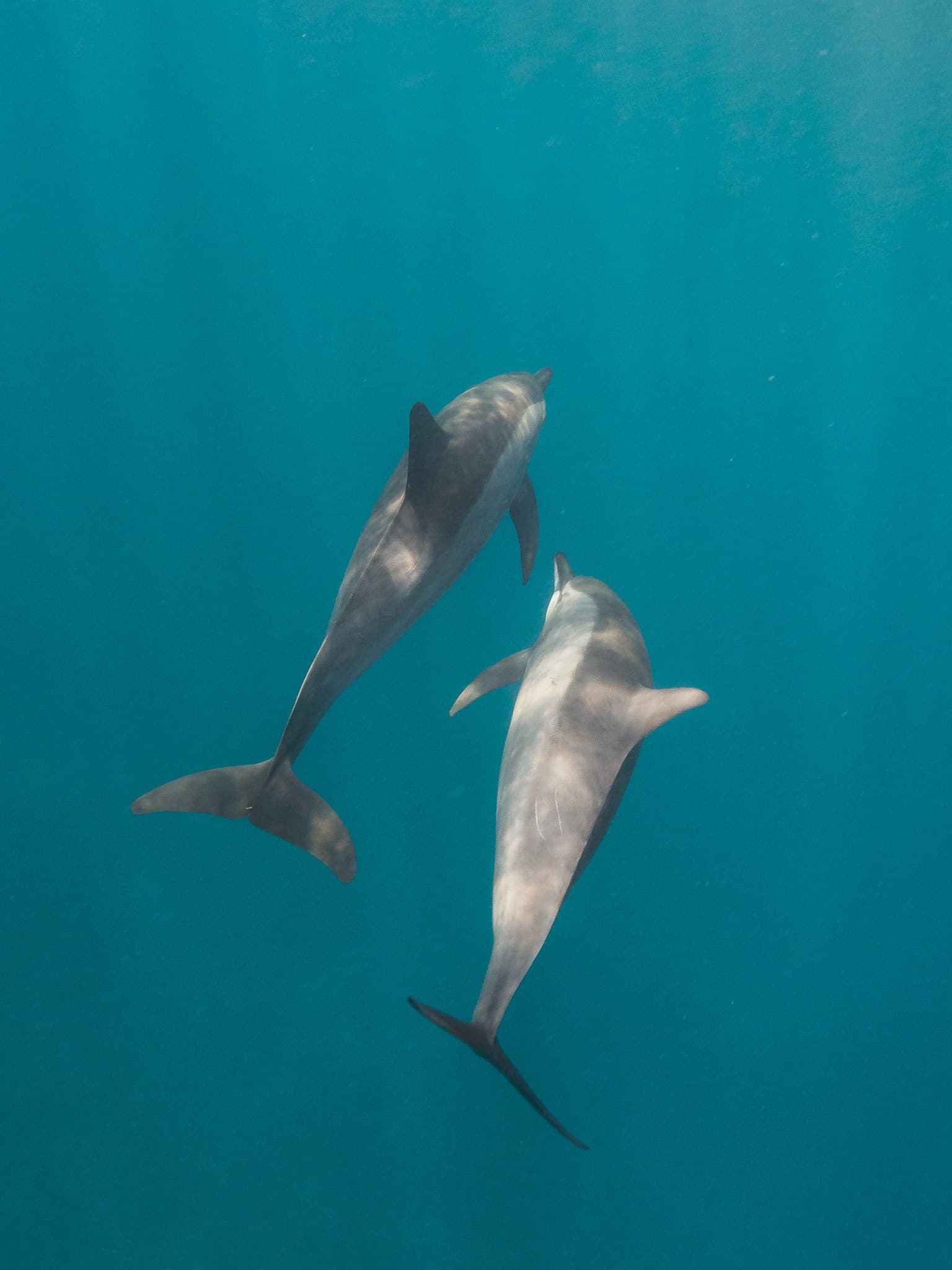
The Spinner Dolphin is named for its extraordinary aerial displays, leaping clear of the water and spinning several times along its body axis before re-entering with a splash. Smaller and slimmer than the more familiar Bottlenose Dolphin, it travels in large, active pods through the offshore waters around Trinidad and Tobago.
Identification
A slender, small dolphin measuring around 1.3 to 2.3 metres, with a long, thin beak and a distinctive three-part colour pattern: dark grey on the back, lighter grey on the flanks, and pale grey to white on the belly. The dorsal fin is often slightly forward-curved or triangular. Its signature behaviour, spinning rapidly along its longitudinal axis while airborne, sometimes completing several rotations per leap, is unique among dolphins and gives the species its common name.
Ecology
Spinner Dolphins are highly social, typically travelling in pods ranging from a few dozen to several hundred individuals, and are primarily nocturnal feeders, resting in shallower, sheltered waters by day and moving offshore at night to hunt small mesopelagic fish and squid that migrate toward the surface after dark. The characteristic spinning leaps are thought to serve communication, parasite removal, and social bonding functions, though the exact purpose remains debated among researchers. Groups are frequently encountered by boats travelling between Trinidad and Tobago and around Tobago's offshore banks.
Status in T&T
Spinner Dolphins are regularly recorded in the deeper waters of the Tobago and Trinidad passage and around offshore banks, and are a popular sighting on marine wildlife tours. The species is not globally threatened, though some regional populations face pressure from bycatch in tuna purse-seine fisheries elsewhere in their range; this is not currently considered a major issue in T&T waters. It is protected under the Conservation of Wildlife Act and internationally under CITES Appendix II.
Threats
- Bycatch in purse-seine and gillnet fisheries (regionally, elsewhere in range)
- Vessel disturbance from wildlife tourism
- Underwater noise pollution