Marine Mammal
Marine Mammal
Melon-headed Whale
Peponocephala electra
Despite its name, the Melon-headed Whale is a member of the oceanic dolphin family, a sleek dark cetacean of deep tropical seas.
Despite its name, the Melon-headed Whale is a member of the oceanic dolphin family, a sleek dark cetacean of deep tropical seas. It travels in some of the largest groups of any dolphin and is occasionally recorded in the waters and on the beaches of Trinidad and Tobago.
Appearance
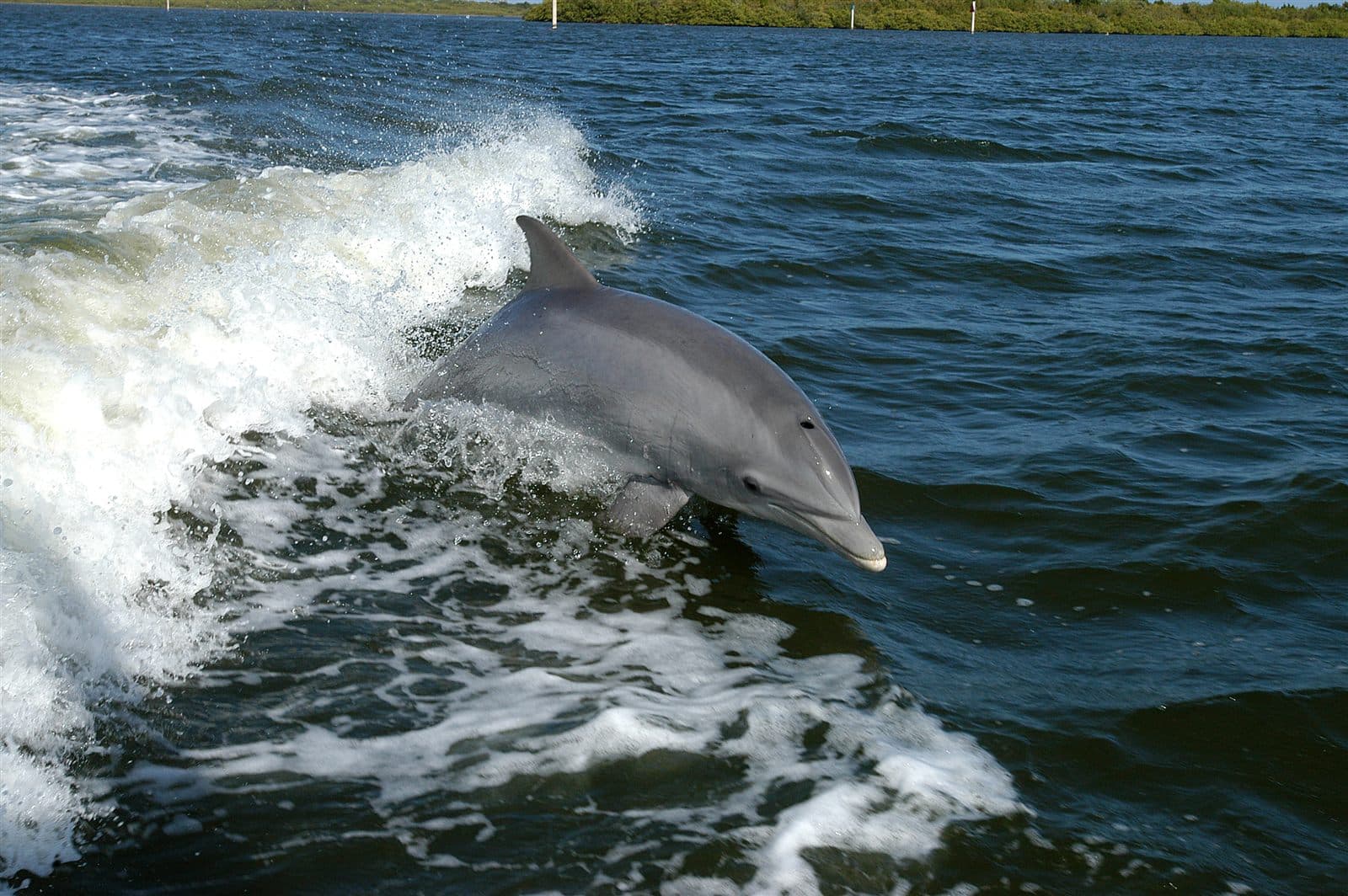
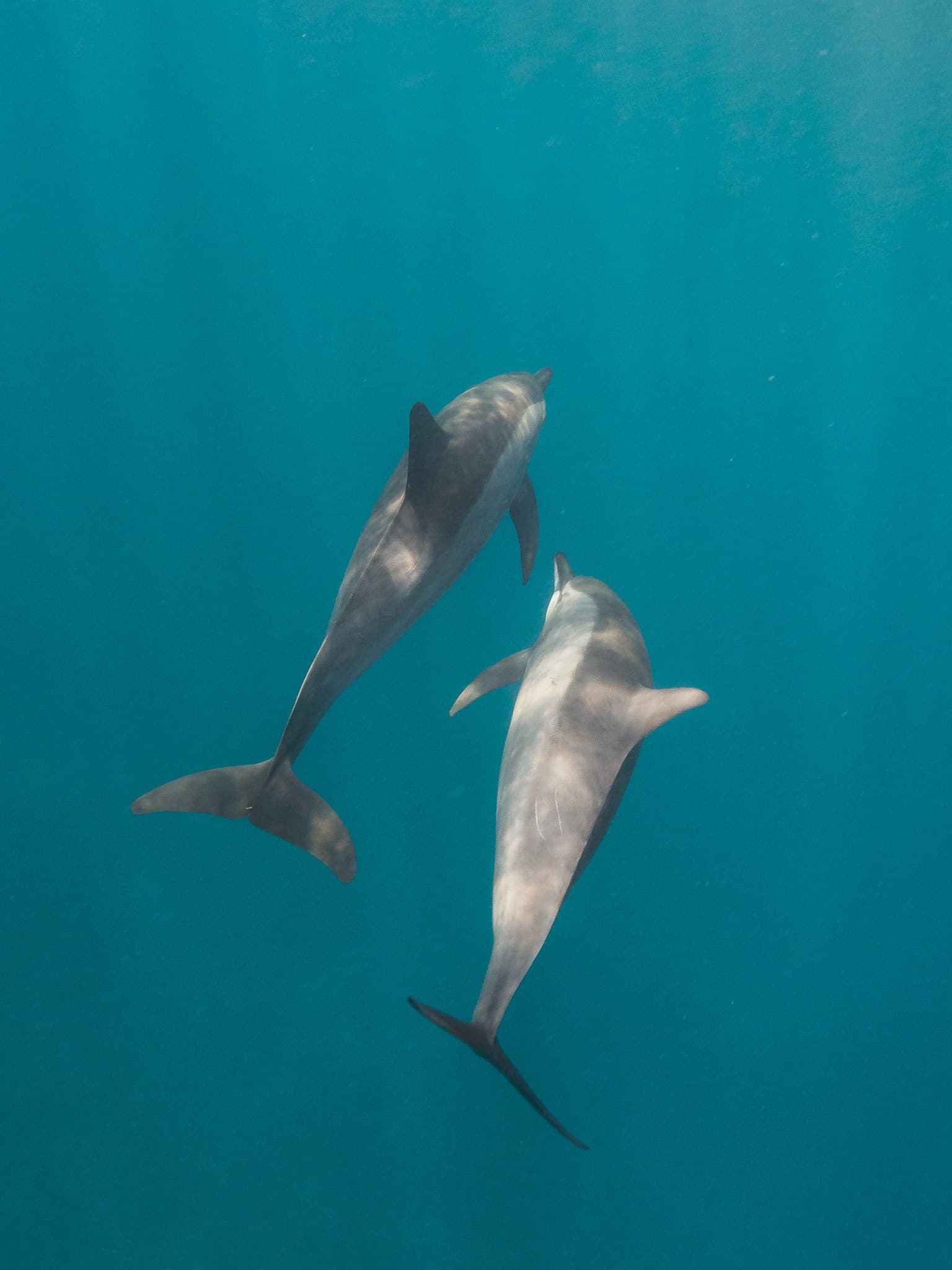
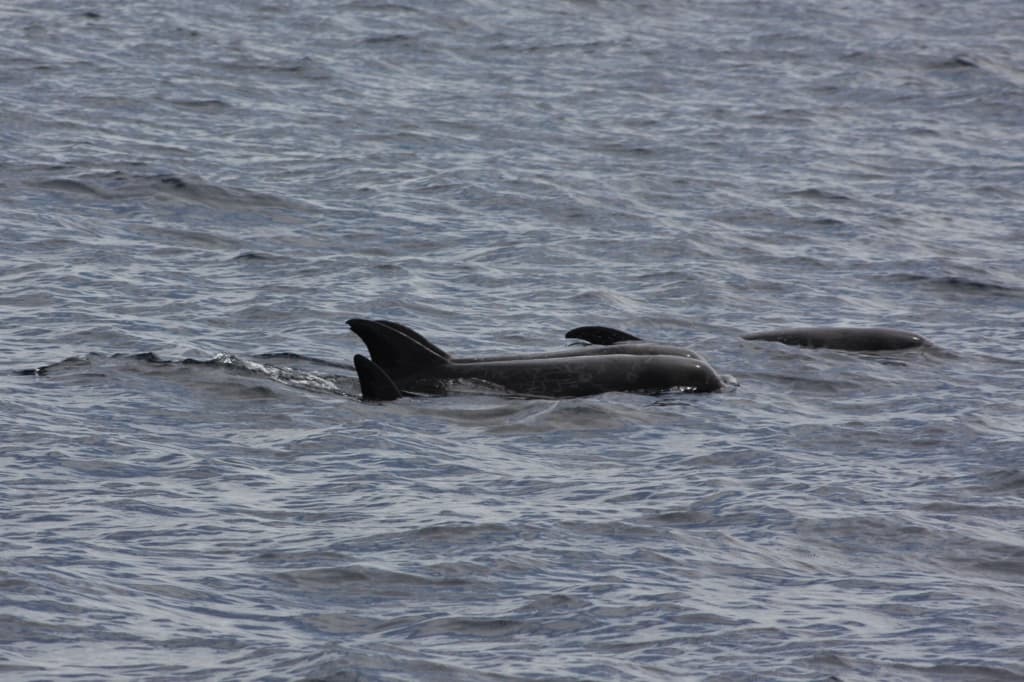
It has a torpedo-shaped, robust body about 2.3 to 2.7 m long and up to roughly 210 kg, with a rounded, conical head that tapers to a faint or absent beak. The body is charcoal to dark grey, often with a darker dorsal 'cape', whitish lips, and a dark facial mask running from the eye to the melon. The tall, sickle-shaped (falcate) dorsal fin sits near the middle of the back, and the pointed flippers help distinguish it from the similar pygmy killer whale.
Behaviour
Melon-headed Whales are highly social, deep-water animals usually found far offshore over steep drop-offs. They form herds of several hundred to over a thousand, which move and rest together and often travel in tight, fast-swimming subgroups. They are known for energetic surfacing, leaping and bow-riding, and frequently associate with other cetaceans such as Fraser's dolphins.
Mass strandings of the species are documented worldwide, sometimes linked to disturbance or disease.
Diet and breeding
The diet is dominated by squid and small mid-water fish, with some shrimp, much of it caught at depth and likely at night when prey rises in the water column. Like other oceanic dolphins it uses echolocation, focused through the fatty 'melon' on its forehead, to detect prey in dark water. Females give birth to a single calf after a gestation of roughly 12 months, and calves are nursed for an extended period within the social group.
In Trinidad and Tobago
The Melon-headed Whale is an offshore species in T&T waters, rarely seen from land but documented through several strandings on Trinidad's Atlantic east coast, some linked to parasitic infections of the nervous system. As a deep-water predator it forms part of the open-ocean food web around the islands. Globally the IUCN lists it as Least Concern; all cetaceans are protected under Trinidad and Tobago law.