Marine Mammal
Marine Mammal
Bottlenose Dolphin
Tursiops truncatus
The Bottlenose Dolphin is the most familiar and frequently sighted cetacean in Trinidad and Tobago's waters, recognised the world over for its intelligence, social complexity, and readiness to approach boats and bow-ride.
The Bottlenose Dolphin is the most familiar and frequently sighted cetacean in Trinidad and Tobago's waters, recognised the world over for its intelligence, social complexity, and readiness to approach boats and bow-ride. Resident and visiting groups are regularly encountered off both islands, particularly around Tobago, where they are a highlight of local marine tour operations.
Identification
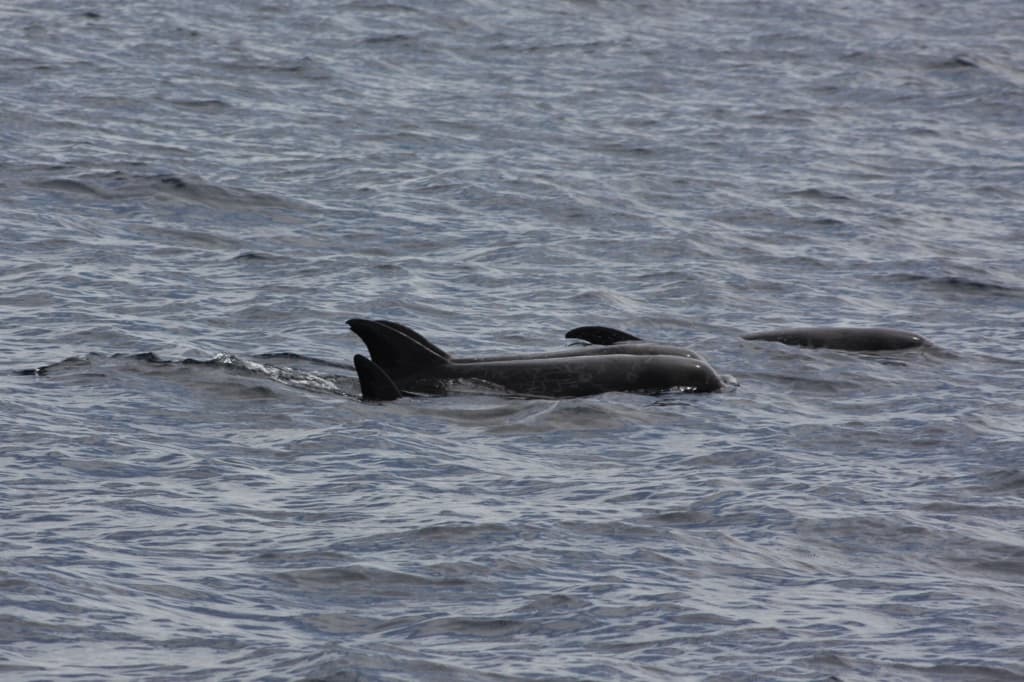
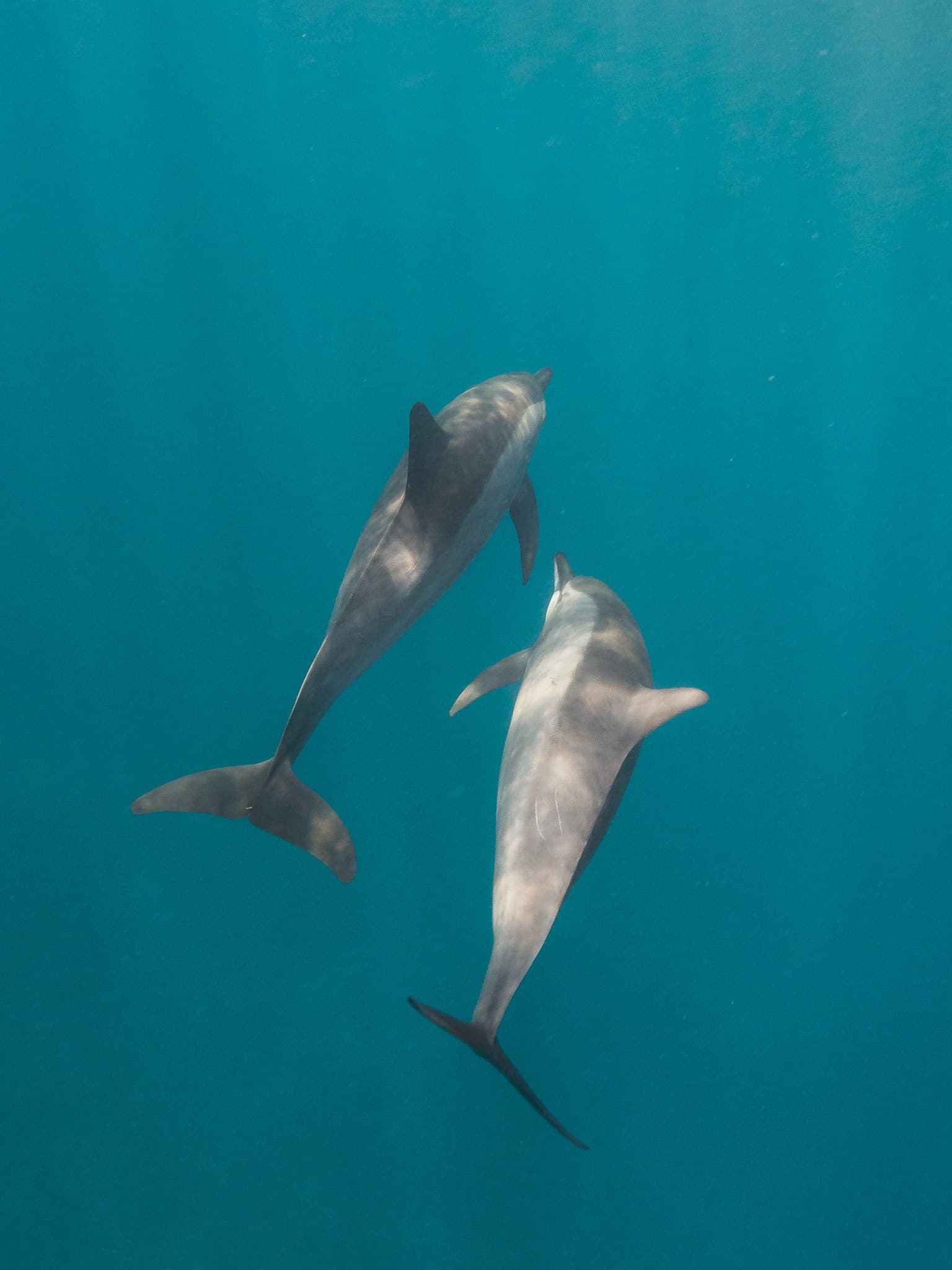
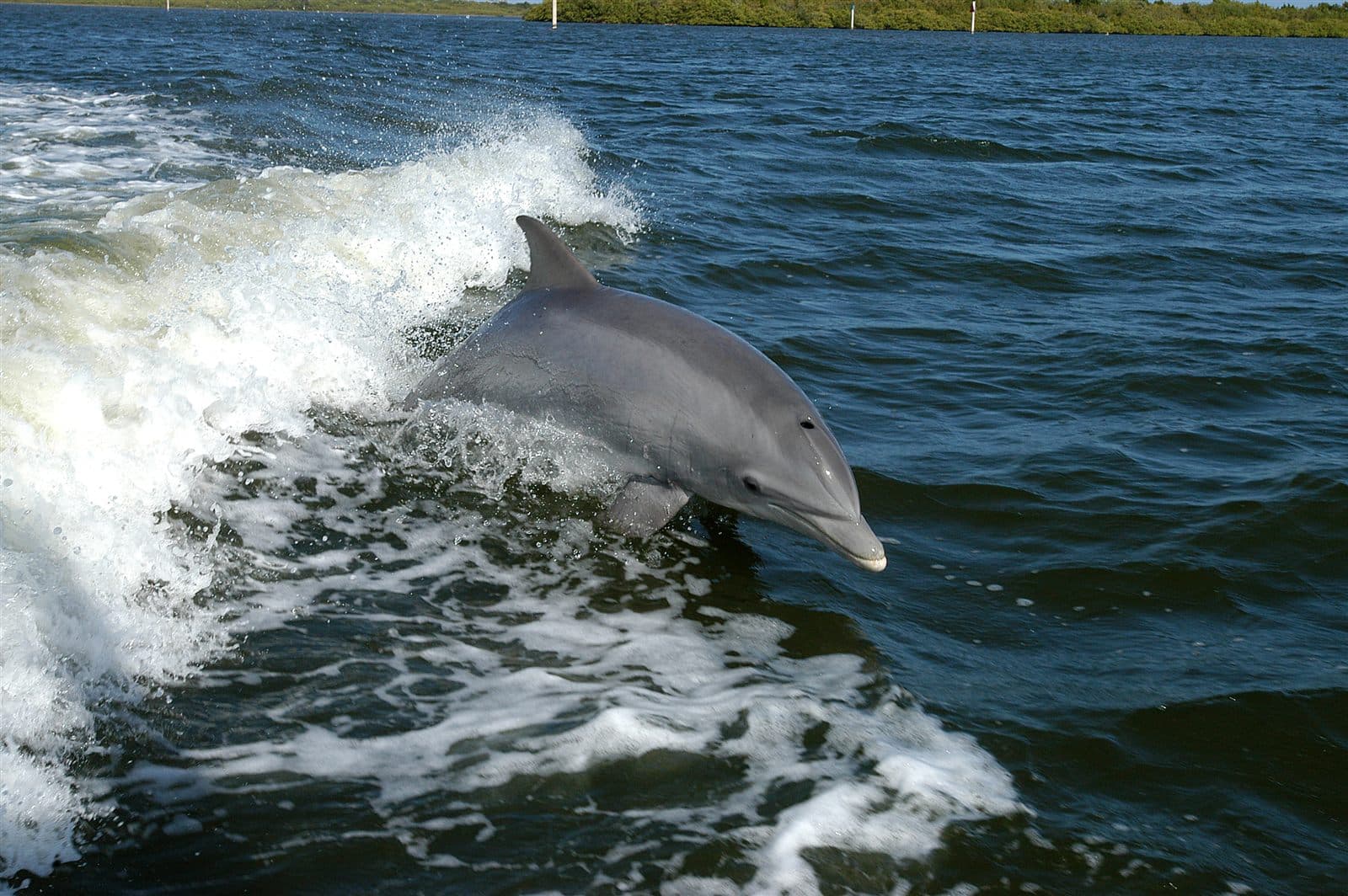
A robust, grey dolphin with a short, well-defined beak, or "bottlenose", and a curved, prominent dorsal fin. Adults typically measure 2 to 4 metres in length, with colouration ranging from dark grey on the back to lighter grey on the flanks and pale grey to white on the belly, providing effective countershading camouflage. It is highly social, typically encountered in pods of a few to over a dozen individuals, and is known for spectacular aerial behaviour including leaping, breaching, and bow-riding the pressure wave of boats.
Ecology
Bottlenose Dolphins are highly adaptable predators, feeding on a wide range of fish, squid, and crustaceans, often using cooperative hunting techniques and, in some populations, herding fish into shallows or against the surface to concentrate prey. They are among the most intelligent marine mammals, exhibiting complex social bonds, individual signature whistles used for recognition, and, in some populations elsewhere, tool use. In T&T waters they are found both nearshore, especially around Tobago's coastline and offshore banks, and further out over the continental shelf.
Status in T&T
Bottlenose Dolphins are regularly sighted year-round in T&T waters and are a significant draw for marine wildlife tourism, particularly boat tours out of Tobago. The species is not globally threatened, but local populations face pressure from vessel strikes, entanglement in fishing gear, underwater noise from boat traffic, and pollution. As a cetacean, it is protected under the Conservation of Wildlife Act and benefits from international protections including CITES Appendix II, which regulates trade in the species.
Threats
- Vessel strikes and boat traffic disturbance
- Entanglement in fishing gear
- Underwater noise pollution
- Marine plastic and chemical pollution