Bird
Bird
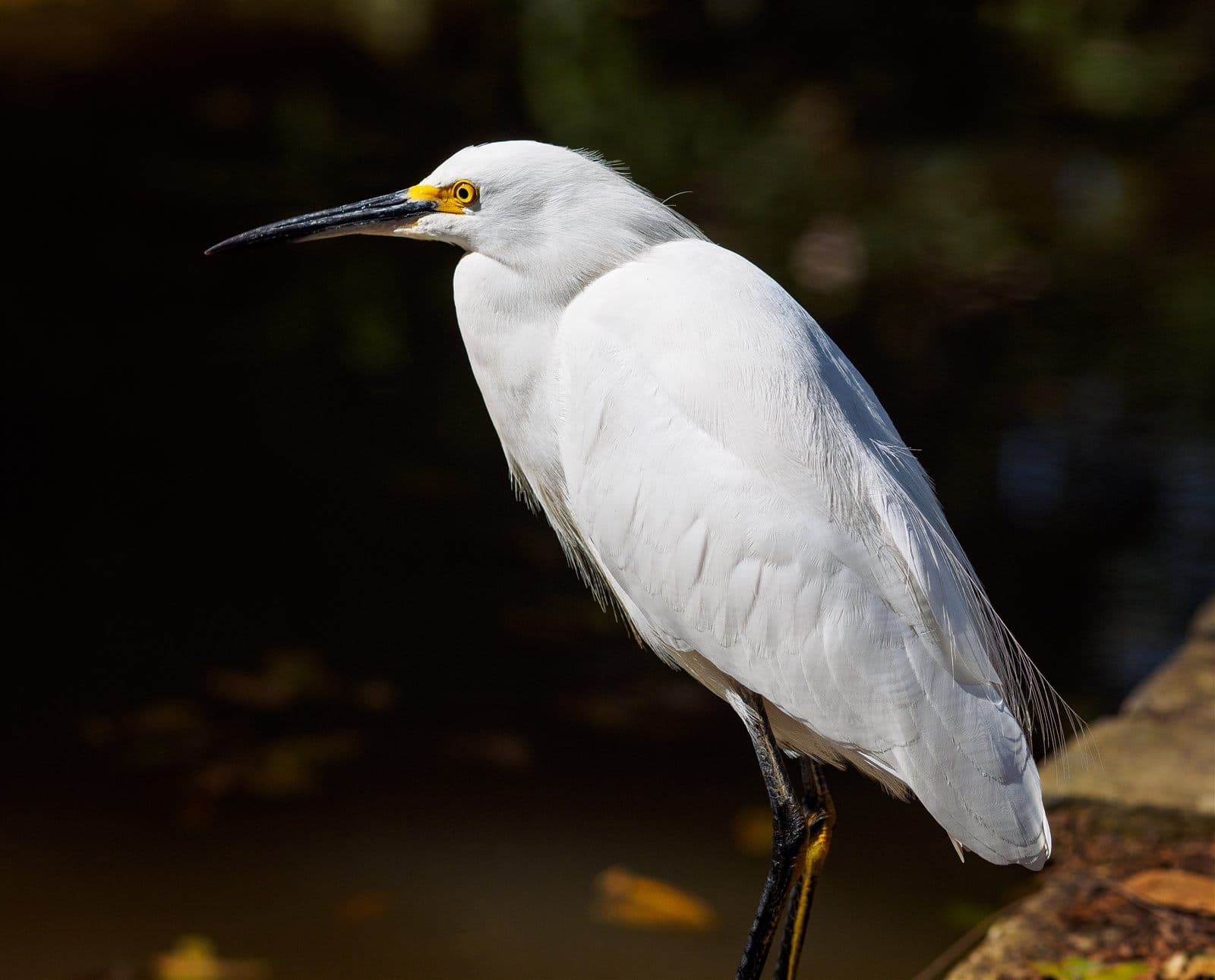
Snowy Egret
Egretta thula
The Snowy Egret is a small, elegant, pure white heron found in wetlands and coastal waters across Trinidad and Tobago, easily recognised by its slender black bill, black legs, and bright yellow feet, described by the vivid nickname "golden slippers".
The Snowy Egret is a small, elegant, pure white heron found in wetlands and coastal waters across Trinidad and Tobago, easily recognised by its slender black bill, black legs, and bright yellow feet, described by the vivid nickname "golden slippers".
Identification
A small, slender egret standing around 56 to 66 cm tall, entirely white with a thin black bill, black legs, and contrasting bright yellow feet, the last a key field mark distinguishing it from similarly sized white herons. During the breeding season it develops fine, recurved plumes on the head, neck, and back. It is an active, restless forager, frequently seen running, hopping, and stirring shallow water with its feet to flush prey.
Ecology
The Snowy Egret feeds on small fish, crustaceans, and aquatic insects in shallow water, using an active foraging style of running, wing-flicking, and foot-stirring to disturb and flush prey, in contrast to the still-hunting technique of larger herons. It forages in a wide range of wetland habitats, from mangrove creeks and mudflats to freshwater marshes and rice fields, and nests colonially in mixed-species heronries, often alongside other egrets and herons.
Status in T&T
Common in coastal and freshwater wetlands across both Trinidad and Tobago, including Caroni Swamp and Nariva Swamp. It is not threatened, though historically the species was heavily hunted worldwide for its ornamental breeding plumes before international protections ended the plume trade in the early twentieth century. It is protected under the Conservation of Wildlife Act and is not a game species.
Threats
- Wetland pollution and habitat degradation
- Colonial nesting site disturbance