Bird
Bird
Black-necked Stilt
Himantopus mexicanus
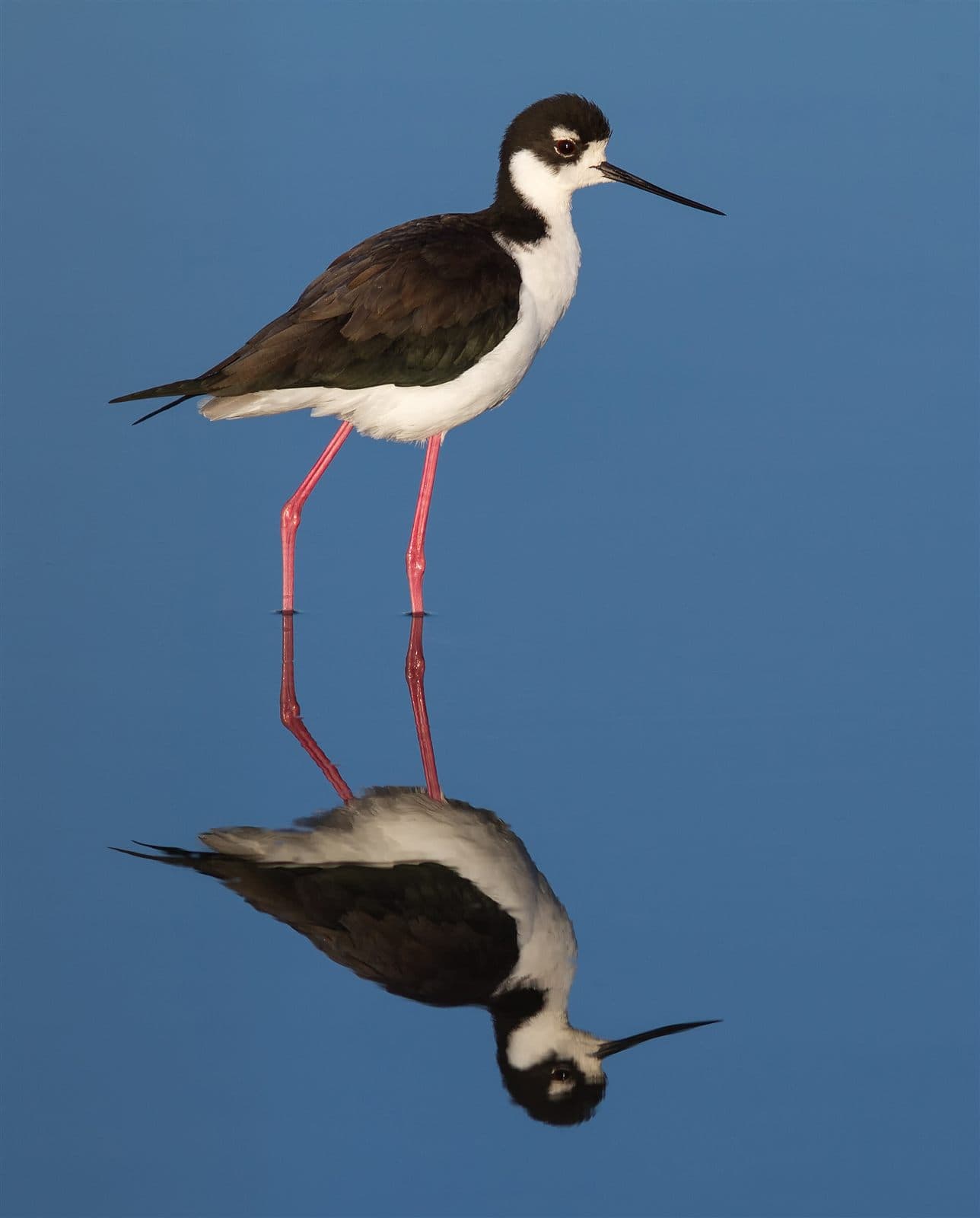
The Black-necked Stilt is an unmistakable wader of shallow wetlands and salt pans in Trinidad and Tobago, its extraordinarily long, thin pink legs, the longest relative to body size of any bird apart from flamingos, allowing it to wade into water too deep for most other shorebirds.
The Black-necked Stilt is an unmistakable wader of shallow wetlands and salt pans in Trinidad and Tobago, its extraordinarily long, thin pink legs, the longest relative to body size of any bird apart from flamingos, allowing it to wade into water too deep for most other shorebirds.
Identification
A slender wader around 33 to 40 cm long, boldly patterned black above and white below, with a long, straight black bill and extraordinarily long, thin pink legs that trail well beyond the tail in flight. The stark black-and-white plumage combined with the vivid leg colour makes this one of the most easily identified shorebirds in T&T.
Ecology
The Black-necked Stilt forages by wading in shallow fresh, brackish, or saline water, picking small aquatic invertebrates, insects, and occasionally small fish from the water surface and mud with its needle-like bill. It is highly vocal and aggressively defends nesting areas, mobbing potential predators with loud, repeated calls. Nests are simple scrapes on the ground near water, sometimes lined with vegetation, often placed on exposed mudflats, salt pan edges, or low islands.
Status in T&T
Found in coastal wetlands, salt pans, and shallow lagoons on both Trinidad and Tobago, including areas around Caroni Swamp and coastal salt flats. It is not threatened. It is protected under the Conservation of Wildlife Act and is not a game species; wetland drainage and coastal development are the main pressures on its local habitat.
Threats
- Wetland drainage and coastal development
- Nest disturbance on exposed ground near human activity