Bird
Bird
Great Blue Heron
Ardea herodias
The Great Blue Heron is a tall, statuesque wading bird that visits Trinidad and Tobago as a non-breeding migrant from North America, standing motionless for long periods at the edge of wetlands, lagoons, and coastal mudflats before striking at fish with lightning speed.
The Great Blue Heron is a tall, statuesque wading bird that visits Trinidad and Tobago as a non-breeding migrant from North America, standing motionless for long periods at the edge of wetlands, lagoons, and coastal mudflats before striking at fish with lightning speed.
Identification
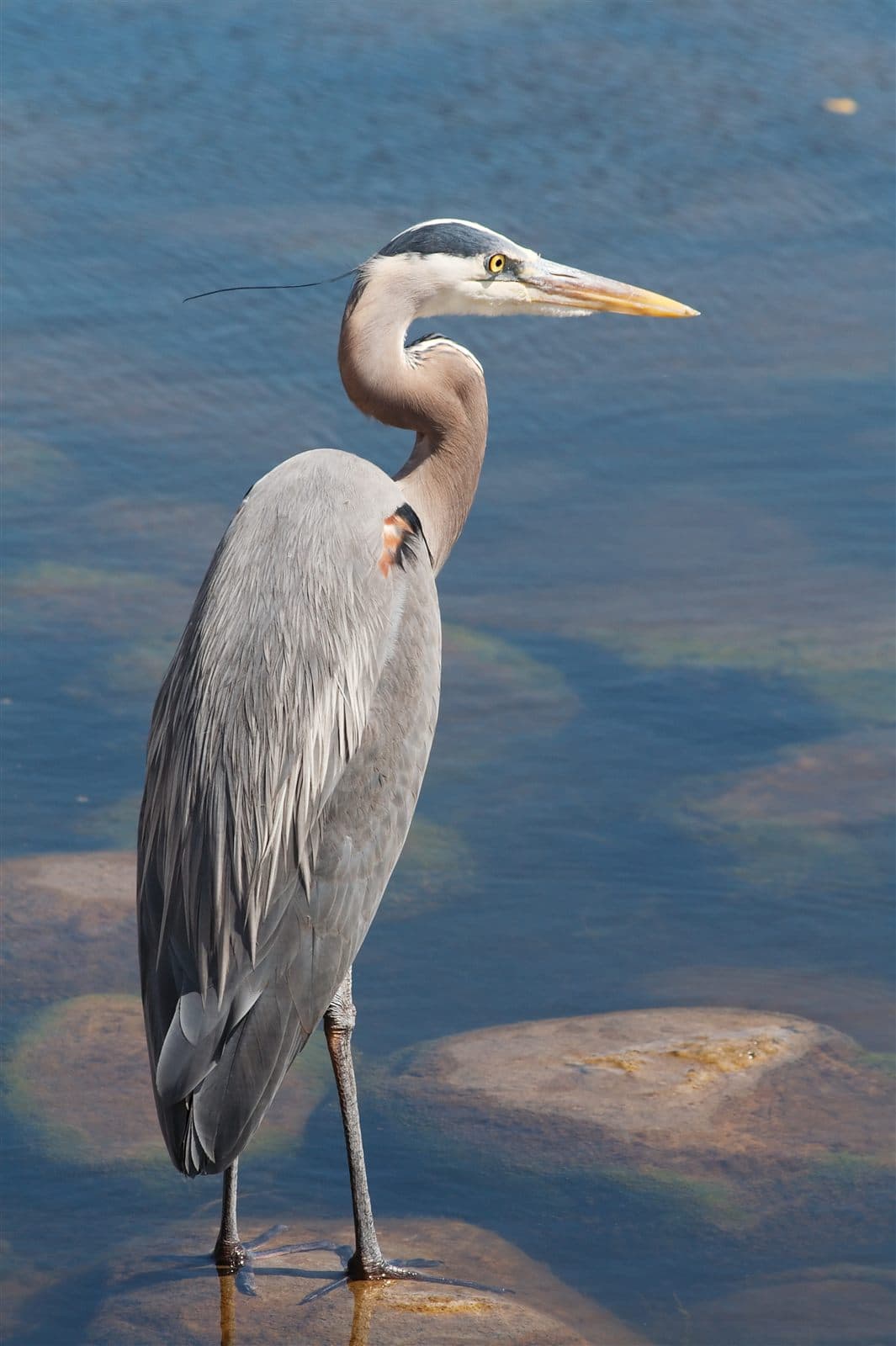
The largest heron recorded in T&T, standing up to 1.3 metres tall with a wingspan approaching 2 metres. Plumage is blue-grey overall with a white crown bordered by a black stripe extending into long plumes at the back of the head, a long yellowish bill, and long, dark legs. In flight it holds its neck in a tight "S" curve, typical of herons, with slow, deep wingbeats.
Ecology
A patient, solitary hunter, the Great Blue Heron stands motionless or wades slowly through shallow water, striking with its long bill to spear or grasp fish, frogs, crustaceans, and occasionally small mammals or birds. It favours a wide range of wetland edges, from mangrove creeks and swamp margins to open mudflats and lagoons, generally foraging alone even where other waterbirds gather in numbers. Individuals defend feeding territories along a stretch of shoreline against other herons.
Migration
The Great Blue Heron does not breed in T&T; birds recorded here are non-breeding visitors from breeding populations in North America, present mainly during the northern autumn and winter months before returning north to breed. Sightings in T&T are generally of single individuals rather than flocks, reflecting the species' solitary, non-breeding presence outside its true breeding range.
Threats
- Wetland habitat loss and pollution at wintering sites
- Disturbance of feeding areas