Bird
Bird
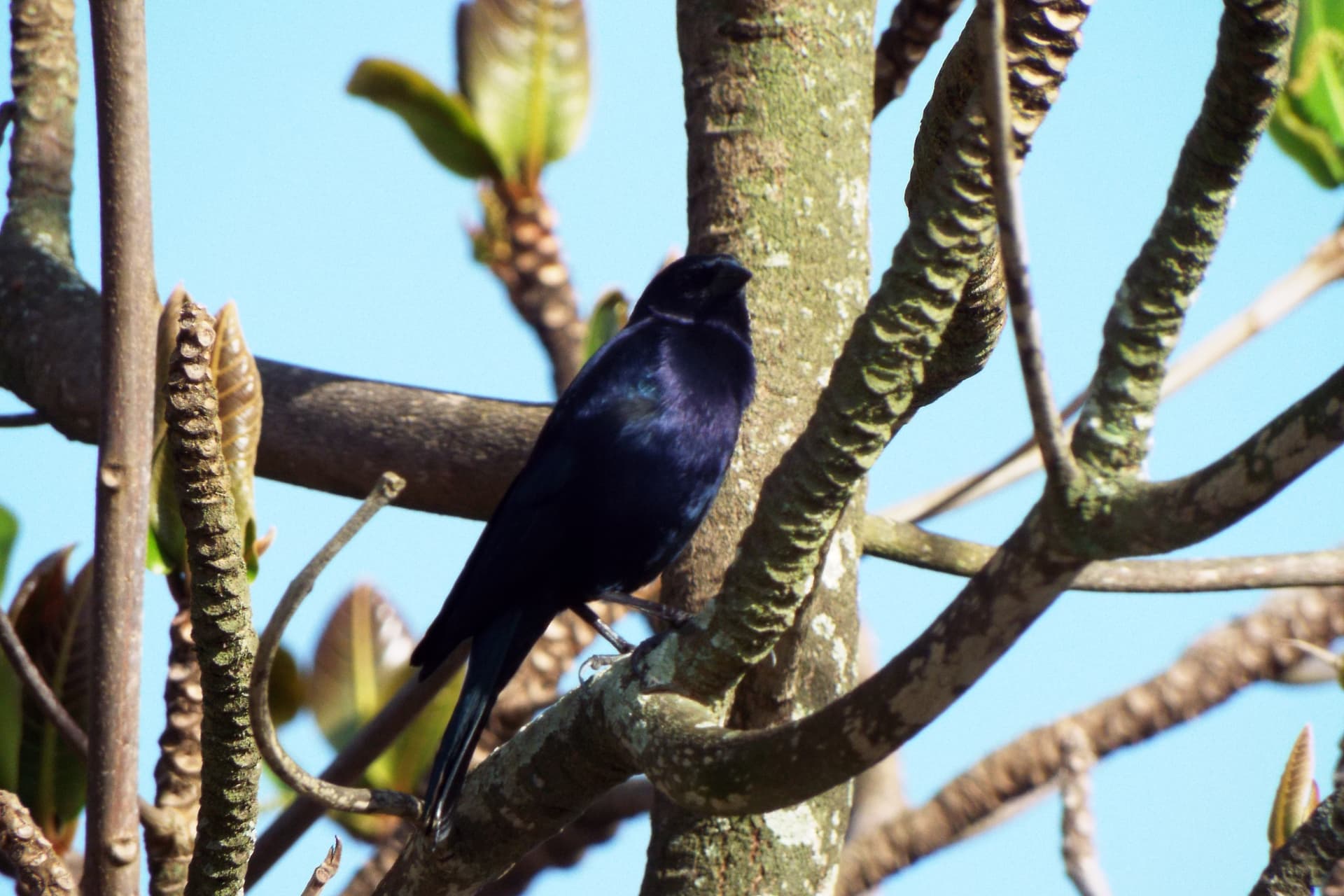
Shiny Cowbird
Molothrus bonariensis
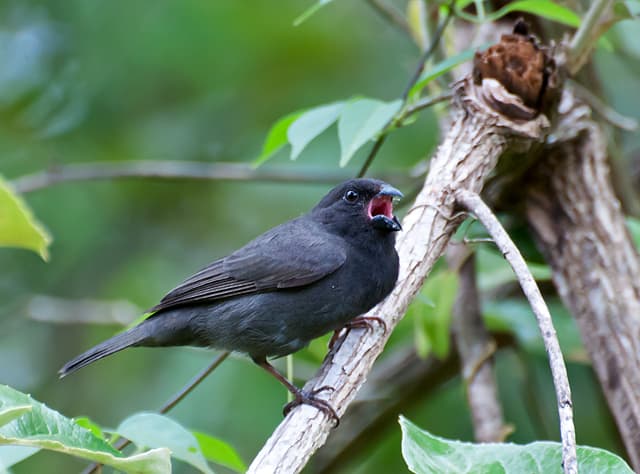
The Shiny Cowbird is a glossy blackbird and a generalist brood parasite, laying its eggs in the nests of a very wide range of host songbirds across Trinidad rather than relying on a single host species as some cowbirds do.
The Shiny Cowbird is a glossy blackbird and a generalist brood parasite, laying its eggs in the nests of a very wide range of host songbirds across Trinidad rather than relying on a single host species as some cowbirds do.
Identification
A medium-sized blackbird around 18 to 22 cm long. Males are entirely glossy purple-black with a slender, pointed bill; females are considerably plainer, greyish-brown above and paler below, with a fainter facial pattern, often causing confusion with female Shiny Cowbirds being mistaken for sparrows or other drab songbirds.
Ecology
An obligate brood parasite that lays its eggs in the nests of a very broad range of host songbirds, including seedeaters, finches, and other small passerines, rather than specialising on one host as the Giant Cowbird does with oropendolas. Host parents raise the cowbird chick, often at the expense of their own young. Adults forage on the ground in open country and around livestock, taking seeds and insects.
Status in T&T
Common in open country, pasture, and savanna across Trinidad, tracking the wide range of small songbird hosts it parasitises. Not considered threatened at a global level, and it is protected as native wildlife under the Conservation of Wildlife Act, though its broad parasitism can locally affect the breeding success of some host species.
Threats
- Can locally reduce breeding success of parasitised host songbird species