Bird
Bird
Fork-tailed Palm-Swift
Tachornis squamata
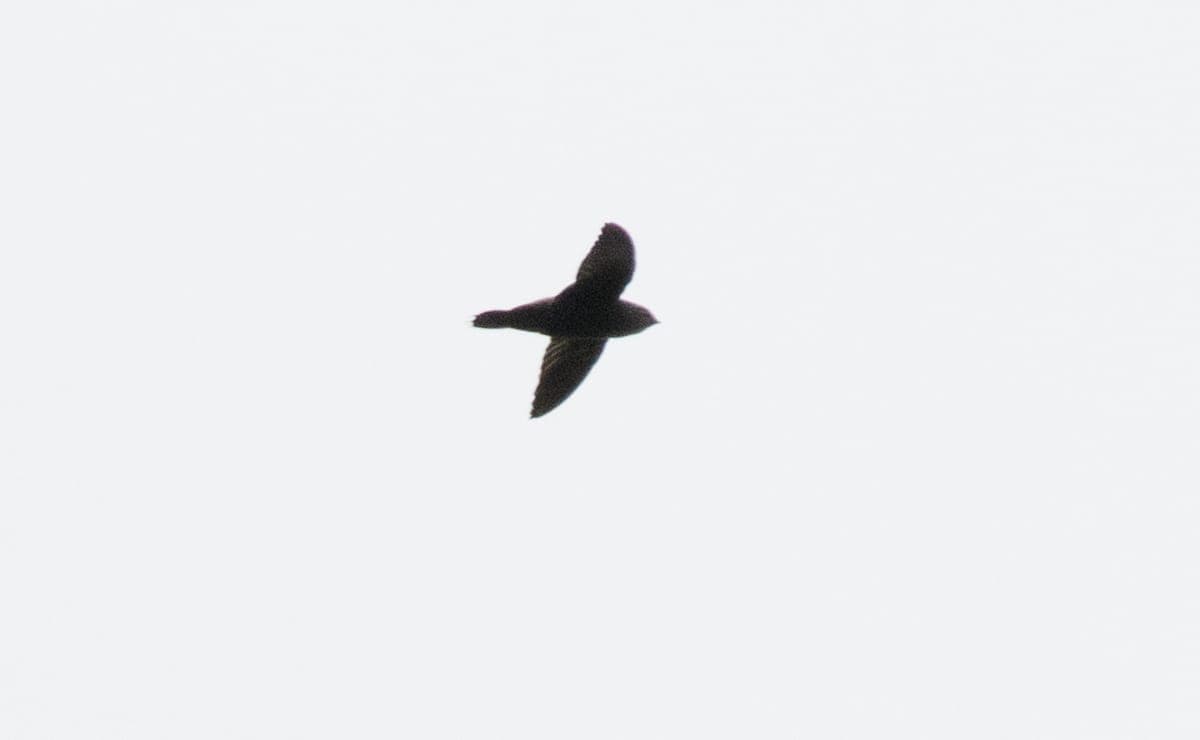
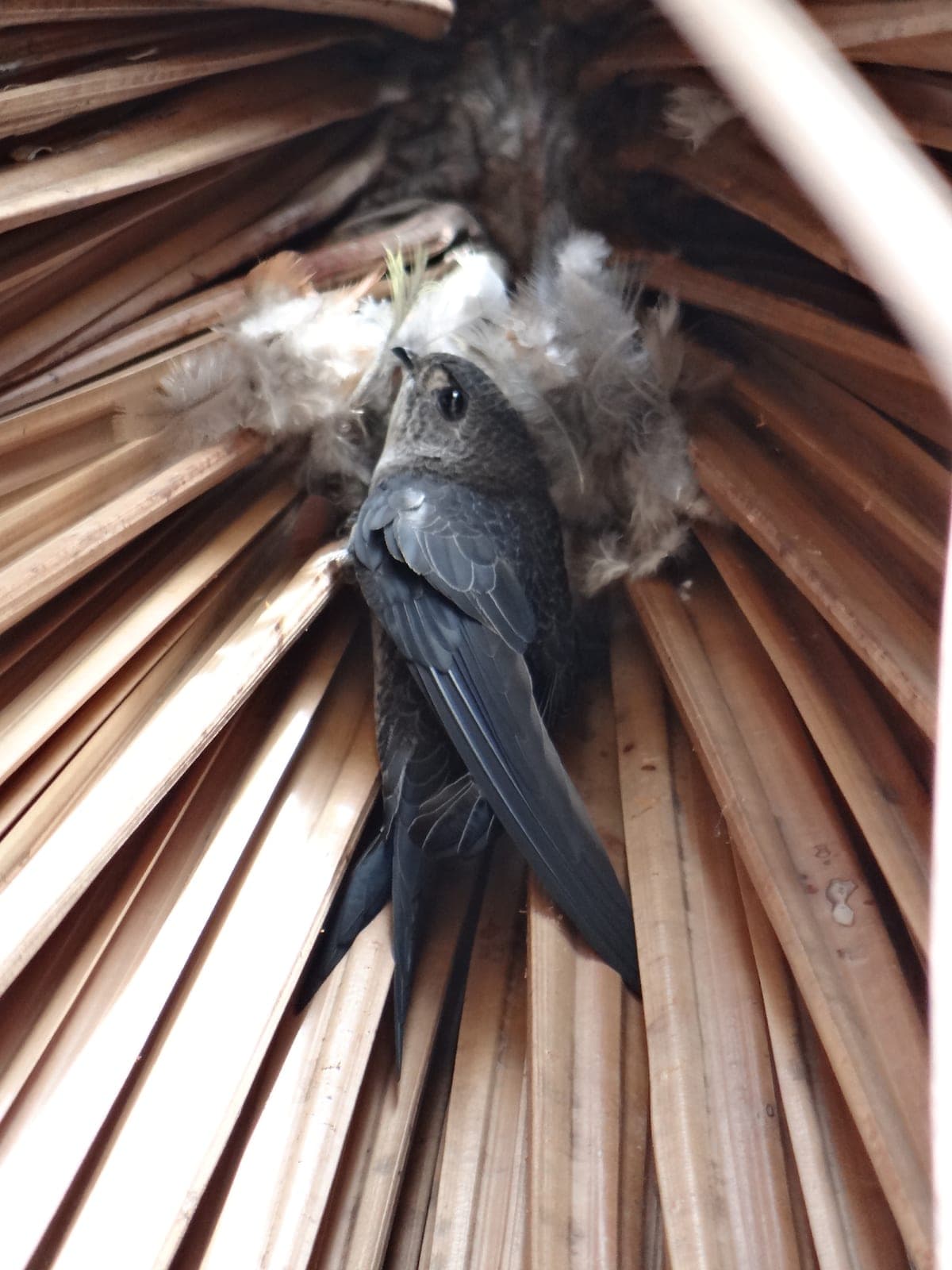
The Fork-tailed Palm-Swift is a tiny, slender swift closely tied to palm trees in Trinidad, nesting and roosting exclusively on the underside of dead palm fronds, from which it also takes its common name.
The Fork-tailed Palm-Swift is a tiny, slender swift closely tied to palm trees in Trinidad, nesting and roosting exclusively on the underside of dead palm fronds, from which it also takes its common name.
Identification
A very small, slender swift around 12 to 14 cm long including a long, deeply forked tail, with dark brownish-grey upperparts and paler, streaked underparts. Its narrow wings and long forked tail give it a more graceful, tern-like flight silhouette than the stockier Chaetura swifts.
Behaviour
Almost entirely dependent on palm trees, roosting and nesting exclusively on the underside of dead, drooping palm fronds, to which it glues a small nest with saliva. It forages on the wing for flying insects over savanna, forest edge, and open areas with scattered palms, often in small groups near its palm roost.
Status in T&T
Common wherever palm trees, especially Moriche and other native palms, are present across Trinidad. Not considered threatened. It is protected as native wildlife under the Conservation of Wildlife Act.
Threats
- Removal of dead palm fronds used for roosting and nesting