Bird
Bird
Rufous-browed Peppershrike
Cyclarhis gujanensis
The Rufous-browed Peppershrike is a stocky, heavy-billed songbird of Trinidad's forest edge and gardens, more often heard than seen, its loud, clear, whistled phrases a familiar sound of semi-open woodland despite its habit of remaining hidden in dense foliage.
The Rufous-browed Peppershrike is a stocky, heavy-billed songbird of Trinidad's forest edge and gardens, more often heard than seen, its loud, clear, whistled phrases a familiar sound of semi-open woodland despite its habit of remaining hidden in dense foliage.
Identification
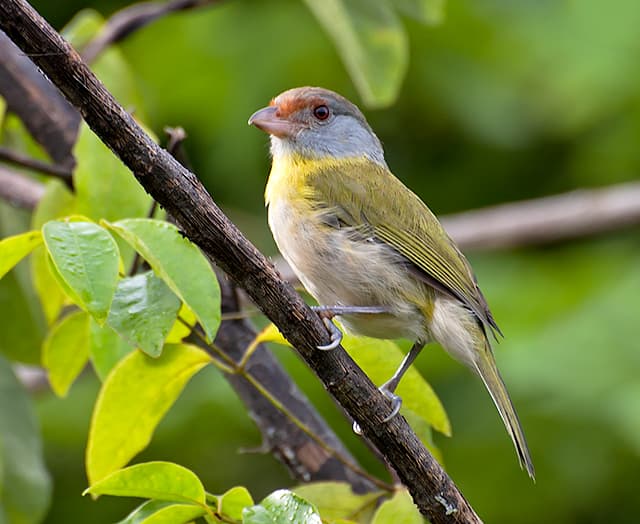
A stocky, thrush-sized bird around 15 to 16 cm long, olive-green above with a distinctive rufous-orange stripe over the eye and a grey crown, pale yellowish throat and breast, and a notably heavy, hooked, shrike-like bill unusual among small songbirds, used for handling large insects and fruit. Its stocky build and heavy bill distinguish it readily from the region's more slender warblers and vireos.
Ecology
The Rufous-browed Peppershrike feeds on large insects, spiders, and fruit, foraging deliberately through dense foliage at forest edge, garden trees, and secondary growth, using its heavy bill to subdue larger prey items than most similarly sized songbirds can manage. It is usually detected by its loud, clear, whistled song, often delivered in short repeated phrases from a concealed perch, rather than by direct observation, as it tends to remain hidden within dense vegetation.
Status in T&T
Common in forest edge, gardens, and secondary growth across Trinidad. It is not threatened and adapts well to disturbed and semi-open habitat. It is protected under the Conservation of Wildlife Act and is not a game species.
Threats
- No significant threats; tolerates disturbed and semi-open habitat