Bird
Bird
Black-throated Mango
Anthracothorax nigricollis
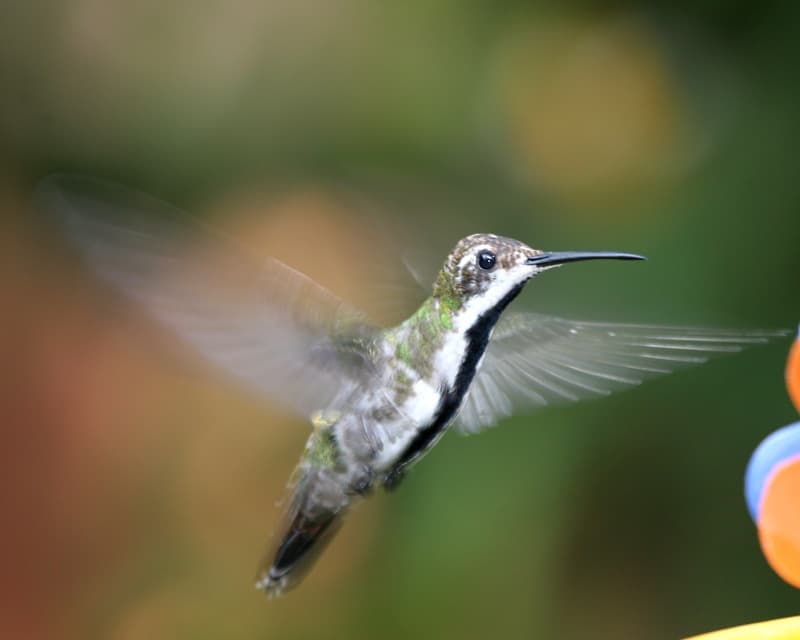
The Black-throated Mango is a striking, medium-sized hummingbird found across Trinidad and Tobago, the male showing a bold black stripe down the throat and belly bordered by iridescent green, one of the more distinctively marked hummingbirds of the region.
The Black-throated Mango is a striking, medium-sized hummingbird found across Trinidad and Tobago, the male showing a bold black stripe down the throat and belly bordered by iridescent green, one of the more distinctively marked hummingbirds of the region.
Identification
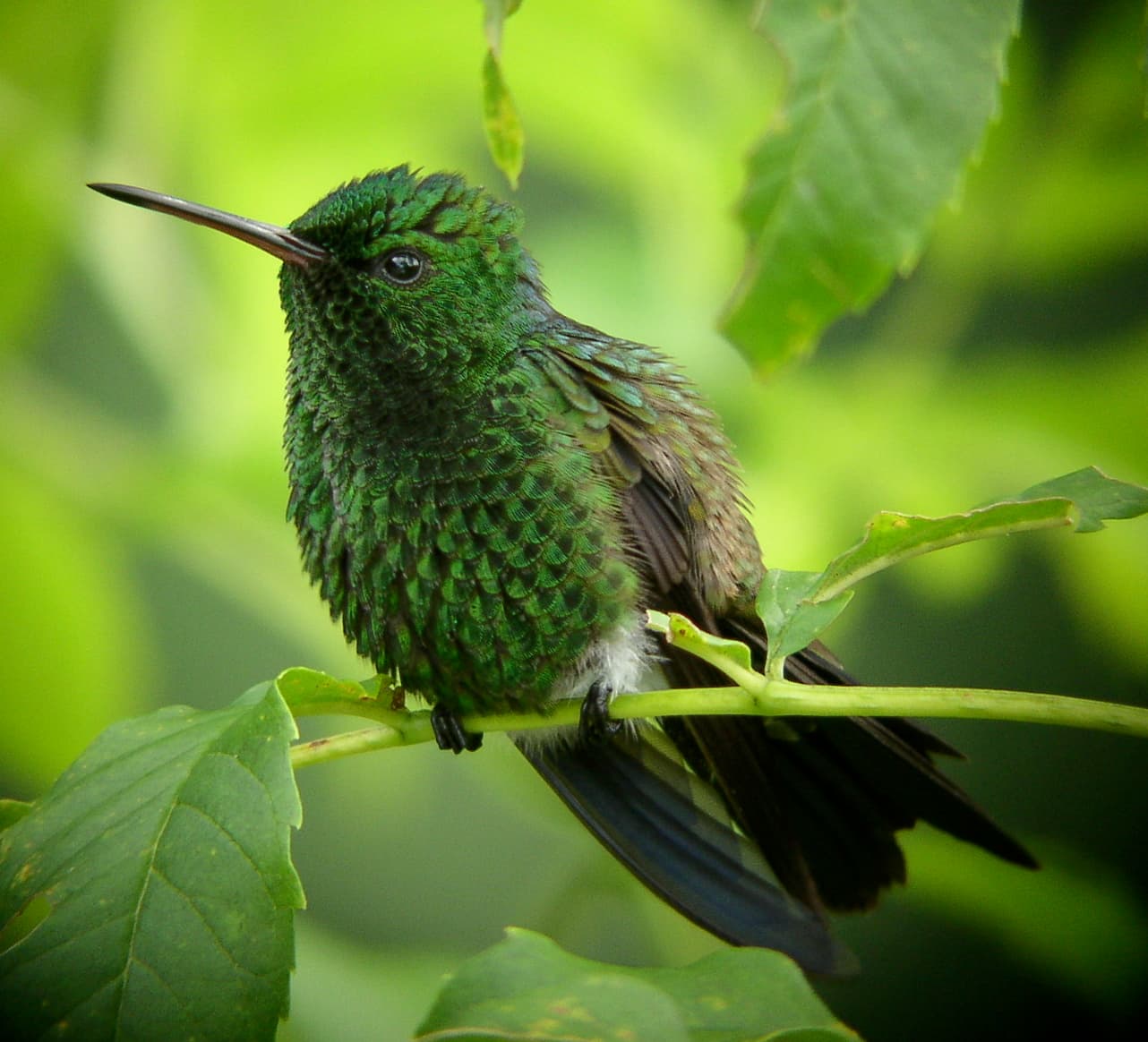
A medium-sized hummingbird around 11 to 12 cm long. The male has an iridescent bronze-green back and a broad black stripe running from the chin down the centre of the underparts, bordered by shimmering green-blue on the sides of the throat and breast. The female lacks the solid black stripe, instead showing a thinner dark central line bordered by white on a paler underside. The tail is broad and slightly forked, often showing maroon-purple tones.
Ecology
The Black-throated Mango feeds on nectar from a range of flowering trees and shrubs at forest edge, gardens, and open woodland, defending favoured flowering sources from other hummingbirds, and takes small insects caught in flight. It builds a small, neat cup nest of plant down bound with spider web, typically saddled on a thin, often bare horizontal branch, sometimes over water or open ground.
Status in T&T
Common across both Trinidad and Tobago in forest edge, gardens, and semi-open woodland with flowering trees. It is not threatened and adapts well to gardens and cultivated landscapes. It is protected under the Conservation of Wildlife Act and is not a game species.
Threats
- No major threats; adapts well to garden and cultivated habitat