Bird
Bird
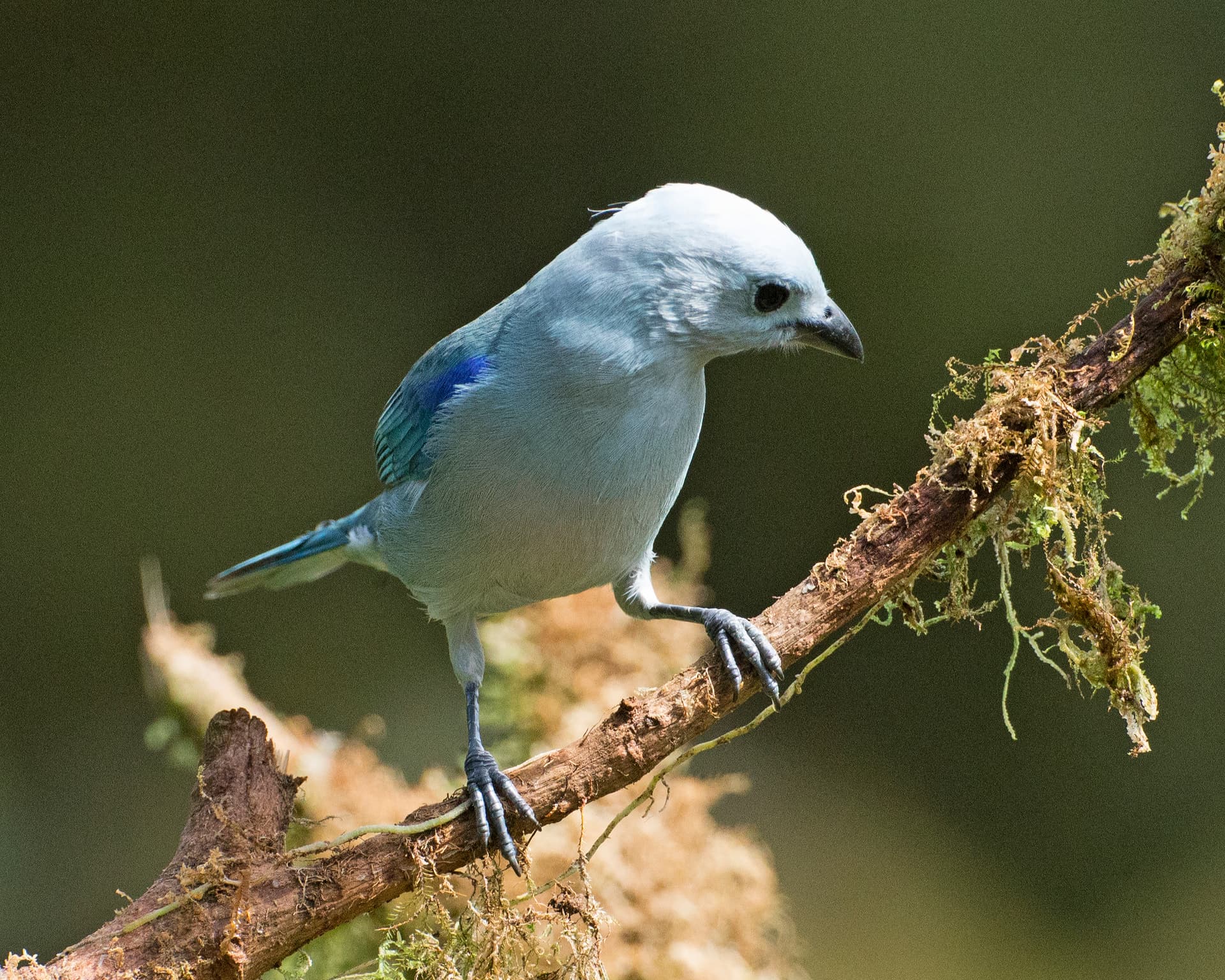
Blue-gray Tanager
Thraupis episcopus
Photo: Joseph C Boone · Tandayapa, Ecuador (CC BY-SA 4.0)
The Blue-gray Tanager is one of the most common and instantly recognisable birds in Trinidad and Tobago, a medium-sized tanager of soft powder-blue and grey plumage that is a permanent fixture in gardens, forest edges, and fruit trees across both islands.
The Blue-gray Tanager is one of the most common and instantly recognisable birds in Trinidad and Tobago, a medium-sized tanager of soft powder-blue and grey plumage that is a permanent fixture in gardens, forest edges, and fruit trees across both islands. Tame, bold, and highly adaptable, the blue-gray tanager has thrived alongside human settlement and is typically one of the first birds seen by visitors arriving in T&T. Its gentle appearance and confiding behaviour have made it a well-loved garden companion throughout the Caribbean and northern South America.
Identification
The Blue-gray Tanager is 16 to 18 cm long. The plumage is a clean combination of powder-blue and grey: the head, underparts, and rump are soft light blue; the back and wings are darker grey-blue; and the wing coverts may show turquoise or violet-blue edging depending on subspecies. The bill is short, slightly curved, and pale grey. The eye is dark. Sexes are similar, with females slightly duller. The species is virtually unmistakable within T&T given its distinctive coloration and ubiquitous presence. It typically occurs in pairs that remain together year-round.
Ecology
Blue-gray Tanagers are frugivores and nectarivores of exceptional versatility, feeding on a wide range of small fruits, bananas, papayas, and other garden produce as well as nectar from large flowers, and supplementing their diet with insects. They are year-round residents that maintain loose pair territories in gardens and forest edges, regularly visiting fruit feeders and fruiting ornamental trees. The cup nest is built in a tree or on a ledge, sometimes on building structures, and both sexes share incubation of two eggs. The species has benefited from urbanisation and the planting of fruiting ornamental trees in gardens across T&T.
Status in T&T
The Blue-gray Tanager is found on both Trinidad and Tobago and is one of the most numerous landbirds on both islands. It is fully protected under the Conservation of Wild Life Act and is not a game species. Its ability to thrive in gardens, parks, and secondary growth means it is among the least threatened birds in T&T and is often the gateway species through which people in T&T first engage with local birdwatching.
Threats
- Garden pesticide use reducing insect prey
- Nest predation by introduced mammals