Bird
Bird
Rufous-breasted Hermit
Glaucis hirsuta
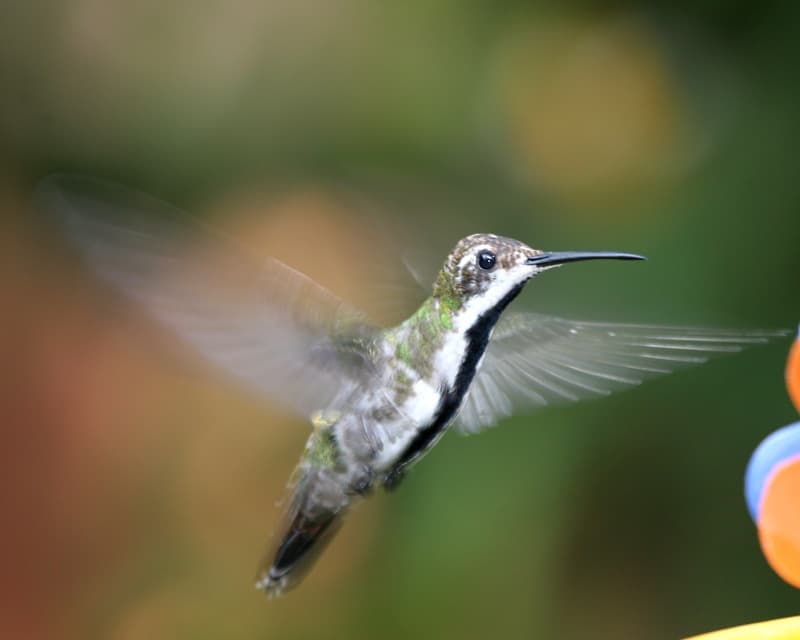
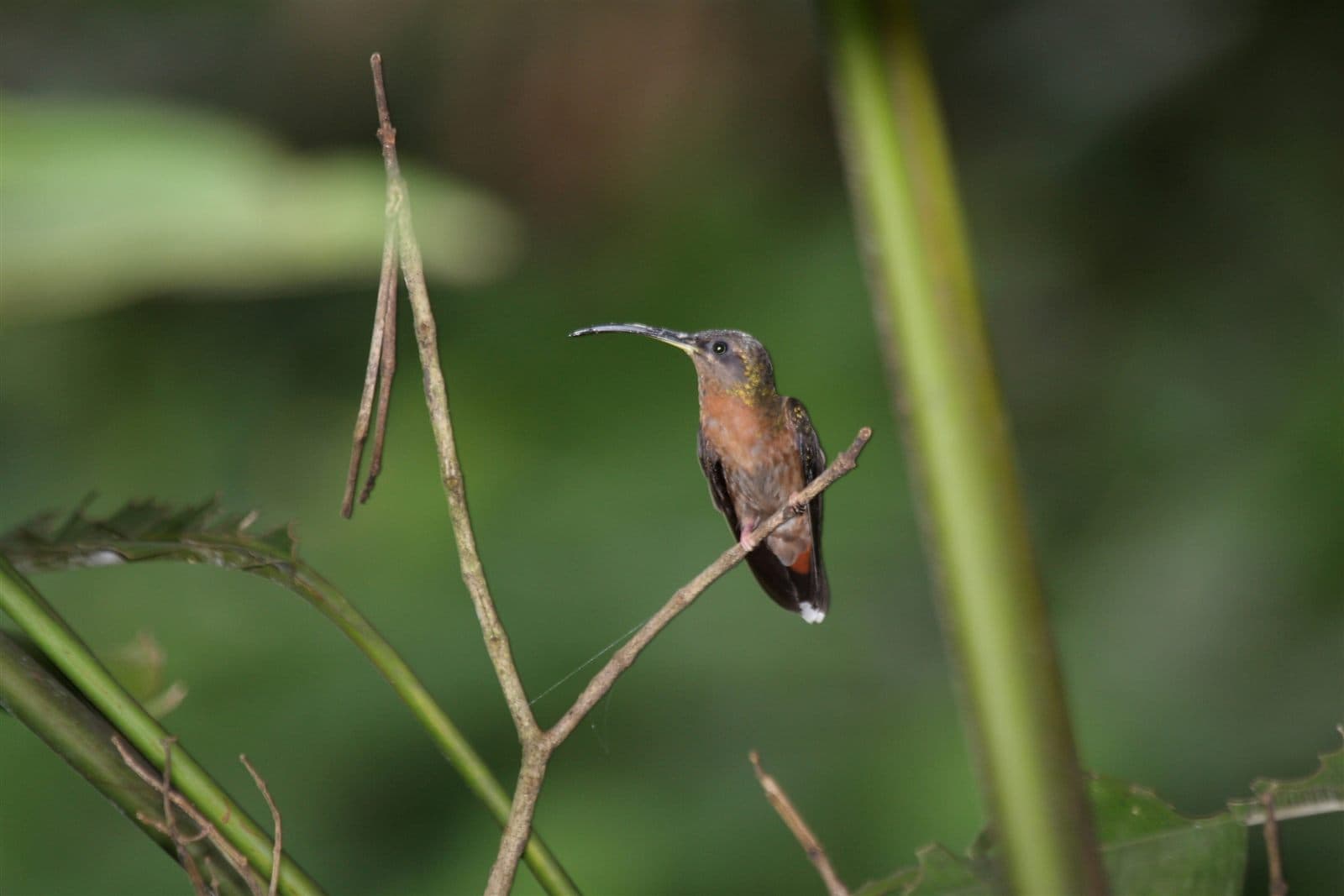
The Rufous-breasted Hermit is a warm, richly coloured hummingbird of Trinidad and Tobago's forest understorey, a member of the "hermit" group that, unlike most hummingbirds, does not defend a fixed flower territory but instead patrols a regular circuit, or trapline, of scattered flowers through the shaded forest interior.
The Rufous-breasted Hermit is a warm, richly coloured hummingbird of Trinidad and Tobago's forest understorey, a member of the "hermit" group that, unlike most hummingbirds, does not defend a fixed flower territory but instead patrols a regular circuit, or trapline, of scattered flowers through the shaded forest interior.
Identification
A medium-sized hummingbird around 10 to 11 cm long, with a rich rufous-cinnamon breast and underparts, a bronze-green back, and a distinctively long, strongly decurved bill typical of hermits. The tail is long and graduated, with rufous and blackish central feathers tipped white. Unlike most brightly iridescent hummingbirds, hermits tend toward duller, warmer tones suited to life in shaded forest understorey.
Ecology
The Rufous-breasted Hermit feeds on nectar from a wide variety of understorey flowers, following a regular trapline route between scattered flowering plants rather than defending a single feeding territory, and supplements its diet with small insects and spiders gleaned from foliage and spider webs. It builds a distinctive cone-shaped nest suspended from the underside of a large leaf, typically of Heliconia or similar broad-leaved understorey plants, often over water or a stream.
Status in T&T
Common in forest understorey and forest edge on both Trinidad and Tobago, especially where Heliconia and other suitable flowering understorey plants are abundant. It is not threatened. It is protected under the Conservation of Wildlife Act and is not a game species.
Threats
- Forest understorey clearance reducing flowering plant density