Bird
Bird
Ruddy Ground Dove
Columbina talpacoti
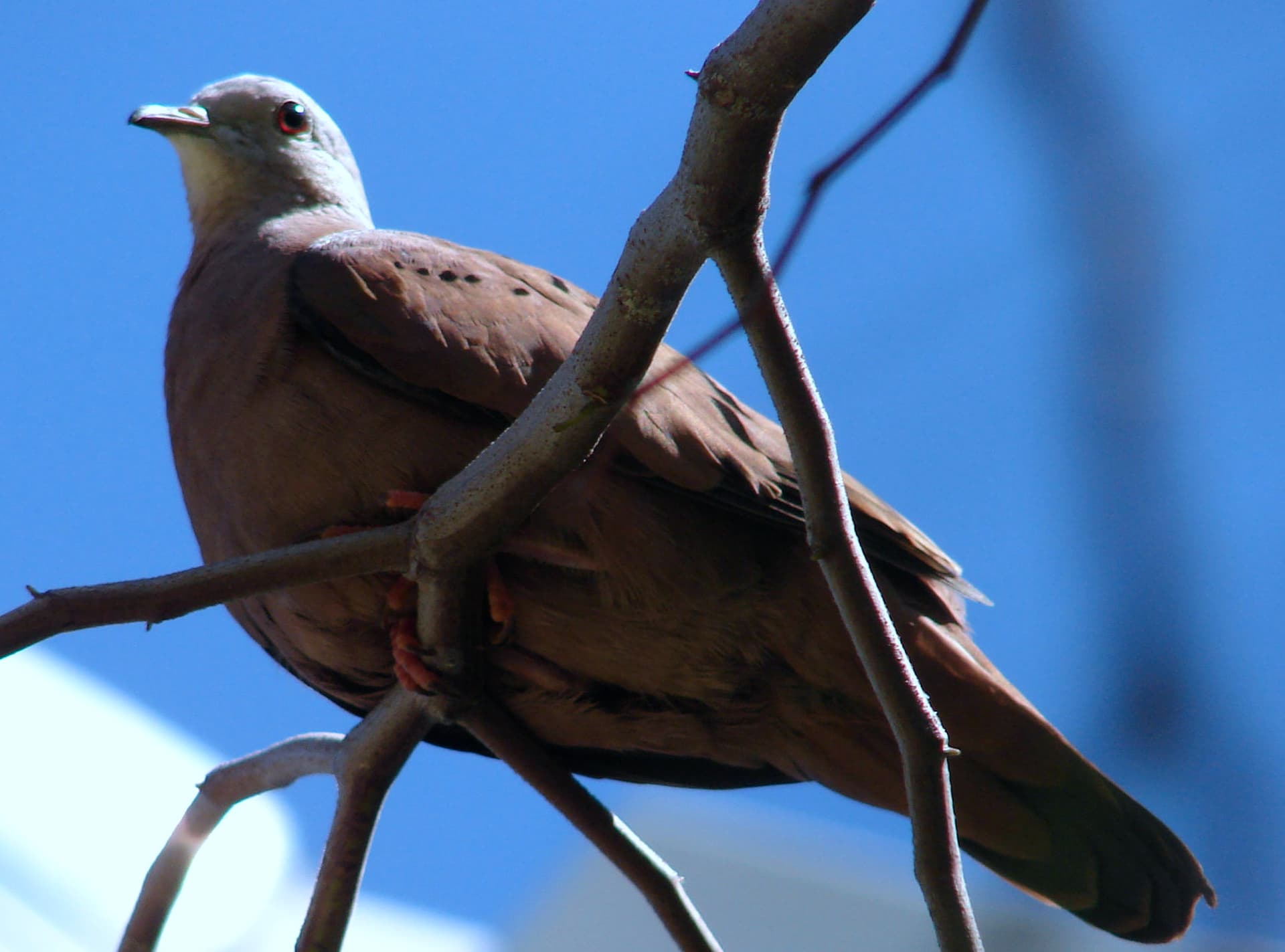
The Ruddy Ground Dove is one of the smallest and most abundant doves in Trinidad and Tobago, a warm reddish-brown bird constantly seen feeding on the ground in gardens, yards, and roadsides across both islands.
The Ruddy Ground Dove is one of the smallest and most abundant doves in Trinidad and Tobago, a warm reddish-brown bird constantly seen feeding on the ground in gardens, yards, and roadsides across both islands.
Identification
A small dove around 16 to 18 cm long. Males are a rich rufous-chestnut overall with a blue-grey crown and black spotting on the wing coverts; females are duller greyish-brown with the same wing spotting, lacking the male's warm colour. Both sexes are compact and short-tailed, with a small black bill and pinkish legs. It is often seen walking and pecking on open ground, bobbing its head as it moves.
Ecology
A ground forager, the Ruddy Ground Dove feeds almost entirely on small seeds and grains picked from bare soil, lawns, and cleared ground, often in small flocks alongside other ground-feeding doves. It builds a flimsy, loosely constructed twig nest low in a shrub or small tree and breeds year-round given suitable conditions, producing several broods annually. The soft, repetitive cooing call is a familiar background sound of gardens and open country throughout the day.
Status in T&T
Abundant across both Trinidad and Tobago in gardens, agricultural land, roadsides, and any open ground with bare soil, thriving alongside human settlement. It is not threatened. It is protected under the Conservation of Wildlife Act and is not a game species, though larger native doves are sometimes hunted seasonally under permit; this species is not typically targeted due to its small size.
Threats
- No significant threats; thrives alongside human settlement