Bird
Bird
Palm Tanager
Thraupis palmarum
The Palm Tanager is one of the most familiar garden and roadside birds across Trinidad and Tobago, its subdued olive-grey plumage and constant chattering calls a fixture of yards, parks, and plantations island-wide.
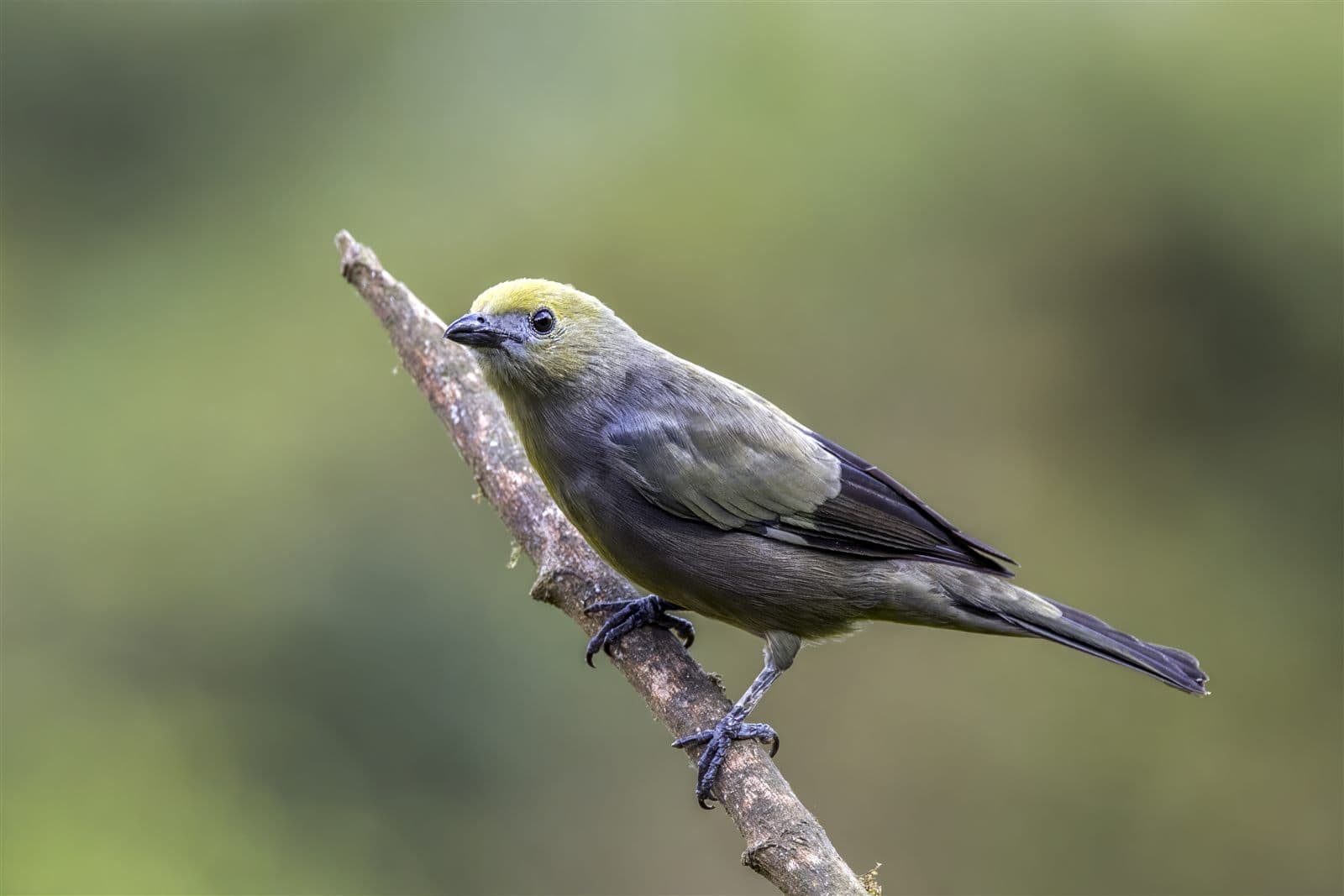
The Palm Tanager is one of the most familiar garden and roadside birds across Trinidad and Tobago, its subdued olive-grey plumage and constant chattering calls a fixture of yards, parks, and plantations island-wide. Often seen alongside its more colourful relative the Blue-gray Tanager, it is a reliable, everyday presence in nearly any green space with fruiting trees.
Identification
A medium-sized tanager around 18 cm long, with drab olive-grey to greenish-grey plumage overall, slightly darker on the wings and tail, and paler on the underparts. It lacks the bright blue tones of the closely related Blue-gray Tanager, appearing comparatively plain, though the plumage takes on a subtle greenish sheen in good light. The bill is short and conical, typical of tanagers. Sexes look alike.
Ecology
An adaptable omnivore, the Palm Tanager feeds on fruit, berries, nectar, and small insects, foraging in pairs or small flocks through garden trees, forest edge, and plantations, and frequently visiting flowering and fruiting trees alongside other tanagers, honeycreepers, and orioles. It builds an open cup nest, often in palm crowns, from which it takes its common name, as well as in other trees around buildings and gardens. Its call is a thin, wheezy chattering, frequently given in duet or chorus with its mate.
Status in T&T
Abundant and conspicuous across both Trinidad and Tobago in virtually every habitat with trees, from deep forest edge to city gardens and coastal coconut plantations. It is not threatened and thrives alongside human settlement. It is protected under the Conservation of Wildlife Act and is not a game species.
Threats
- No significant threats; benefits from garden and plantation habitat