Bird
Bird
Roseate Spoonbill
Platalea ajaja
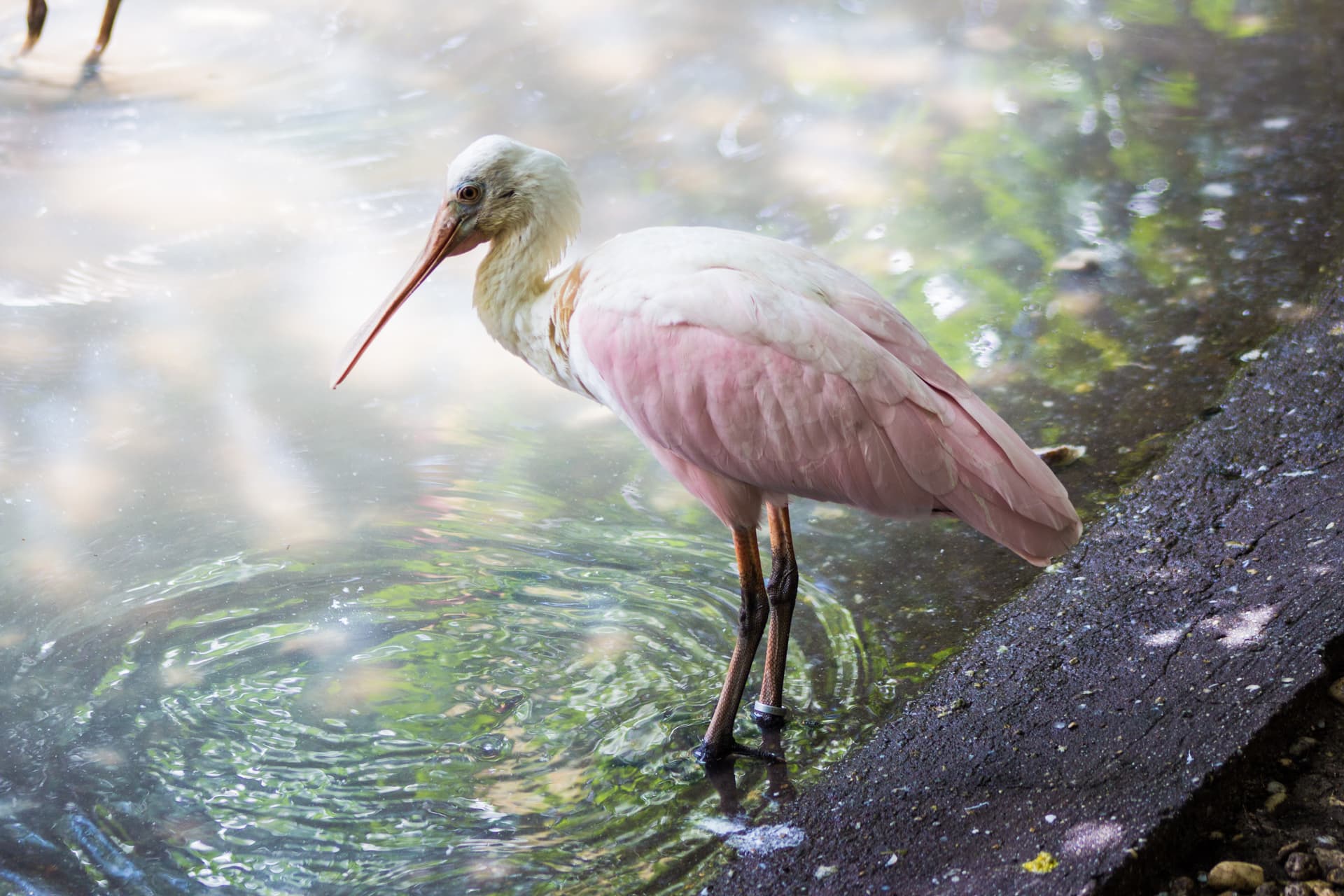
The Roseate Spoonbill is one of T&T's most visually spectacular waterbirds, combining vivid rose-pink plumage with the extraordinary spatula-shaped bill that gives the species its name.
The Roseate Spoonbill is one of T&T's most visually spectacular waterbirds, combining vivid rose-pink plumage with the extraordinary spatula-shaped bill that gives the species its name. An unmistakable presence in shallow coastal lagoons, mangrove edges, and freshwater swamps, it feeds by sweeping its bill from side to side through the water to detect and capture prey by touch. Once heavily hunted for its feathers, it has recovered across much of its range and is now an occasional but always memorable visitor to wetland sites on both islands.
Identification
The Roseate Spoonbill is a large wading bird measuring 71 to 86 cm with a wingspan of 120 to 133 cm. The plumage is unmistakable: pale pink body, brighter deep rose-pink wings and lower back, red shoulder epaulettes, and a bare greenish head in adults. The elongated, flattened, spoon-shaped bill is pale yellowish. Juveniles are paler, with white feathering on the head and a less vivid pink tone that intensifies with age. In flight, the long neck is held outstretched, unlike herons. Groups in flight show a dramatic pink-and-white colour pattern visible from considerable distances.
Ecology
Roseate Spoonbills feed by tactile sweeping, wading through shallow water and moving the partially open bill rapidly from side to side, snapping shut when it contacts prey. This technique allows foraging in turbid water where visual hunting would be ineffective. Diet includes small fish, crustaceans, aquatic insects, frogs, and molluscs. They are gregarious, often feeding in mixed flocks with herons and egrets. The pink colouration derives from carotenoid pigments obtained from crustacean prey. They nest colonially in mangroves or other waterside trees.
Status in T&T
The Roseate Spoonbill is an uncommon visitor to Trinidad and Tobago, most frequently recorded in coastal lagoons, mangrove margins, and the Caroni and Nariva wetland systems on Trinidad. It is not a confirmed breeding species in T&T. The species is fully protected under the Conservation of Wild Life Act and is not a game species. Loss of shallow coastal wetlands and mangrove destruction are the primary threats to its habitat in the region.
Threats
- Coastal wetland loss and mangrove clearance
- Disturbance of colonial nesting sites
- Water pollution reducing prey availability