Mammal
Mammal
Robinson's Mouse Opossum
Marmosa robinsoni
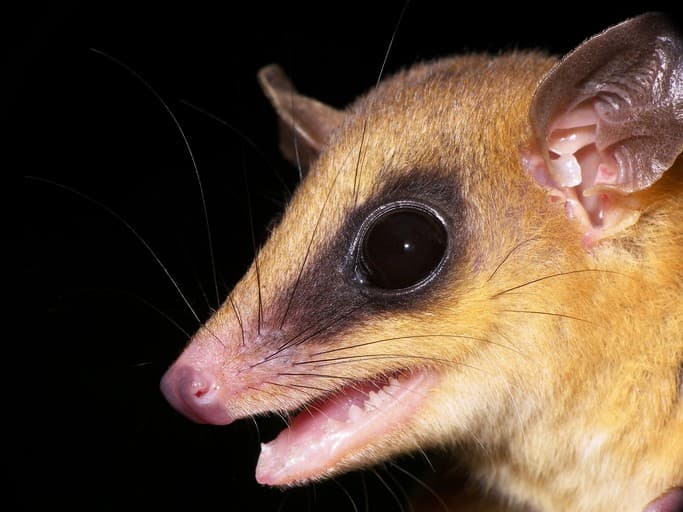
Robinson's Mouse Opossum is a tiny, big-eyed nocturnal marsupial, no larger than a mouse, that lives in the drier woodlands of Trinidad and Tobago.
Robinson's Mouse Opossum is a tiny, big-eyed nocturnal marsupial, no larger than a mouse, that lives in the drier woodlands of Trinidad and Tobago. Unlike its larger cousin the manicou, it has no pouch at all: the female carries her young clinging directly to her teats and then on her back.
Appearance
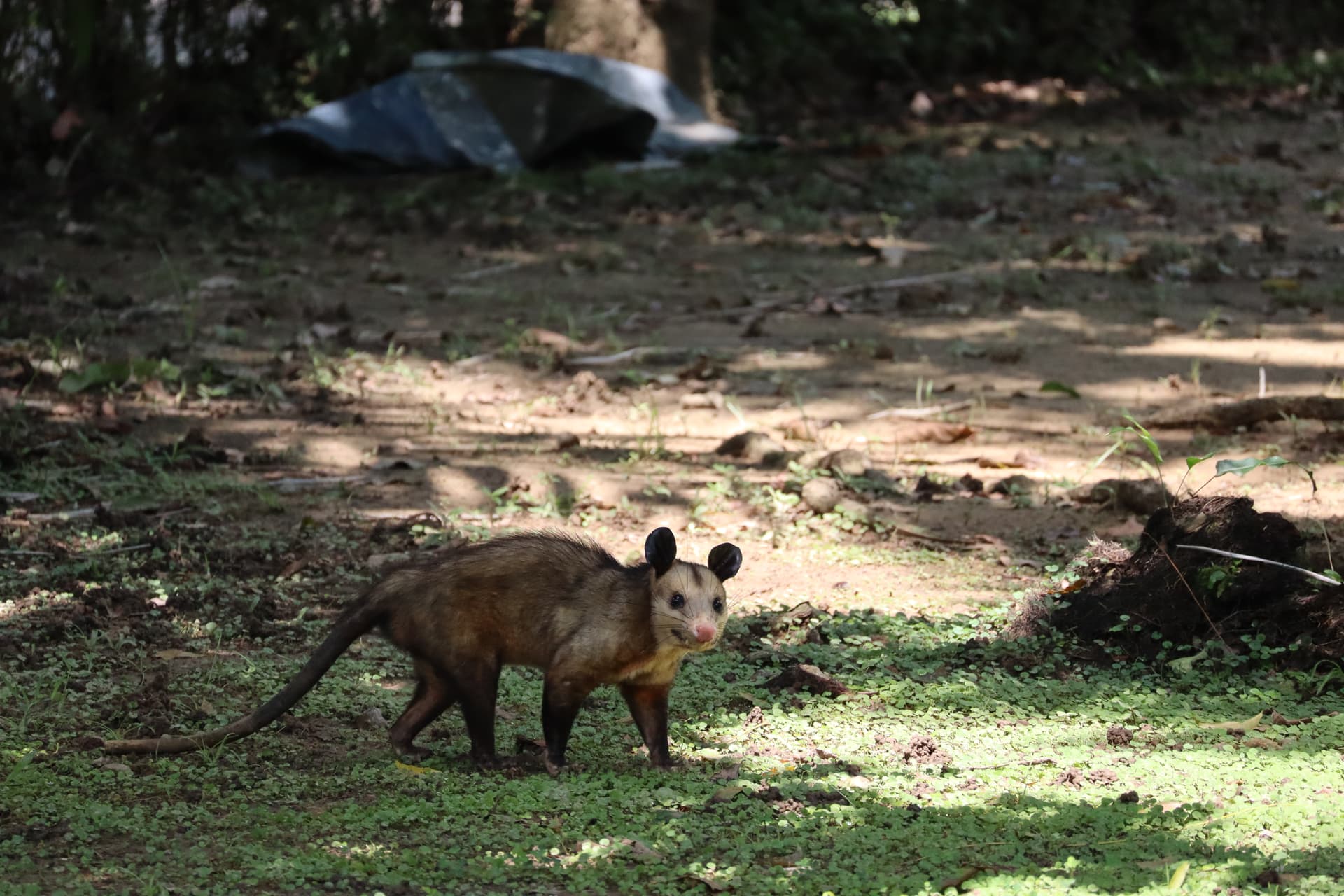
This is a small, delicately built marsupial, with adults reaching only about 15 cm in body length and weighing around 75 g. It has large, thin, membranous ears, prominent dark eyes ringed by a mask of darker fur, and a long, slender, prehensile tail that exceeds the body in length. The fur is yellowish to greyish brown above and pale buff below.
Behaviour
Robinson's Mouse Opossum is strictly nocturnal, emerging around sunset and remaining intermittently active until dawn, often beginning the night with careful grooming of its face and snout. It is an agile, largely arboreal climber, using its prehensile tail to move through shrubs and trees in search of food. It is solitary and secretive, sheltering by day in tree cavities, abandoned bird nests, or dense vegetation.
Diet and breeding
It feeds mainly on insects but also takes fruit, including the fruit of columnar cacti, and small vertebrates, making it an effective insect predator in dry woodland. Being pouchless, the female produces a large litter of up to about 14 young after a very short gestation of around 14 days; the tiny young attach to her exposed teats and are later carried on her back. The young become independent at roughly two months of age.
In Trinidad and Tobago
The species favours dry forest, scrub, savanna edges, and deciduous woodland, and occurs on both Trinidad and Tobago, the islands' populations being closely linked to those of nearby Venezuela. It is far less often seen than the manicou because of its small size and secretive habits. It is classified as Least Concern and is not considered threatened.